Pandemic flashbacks as hantavirus group touches down
Duncan Murray and Kat Wong |
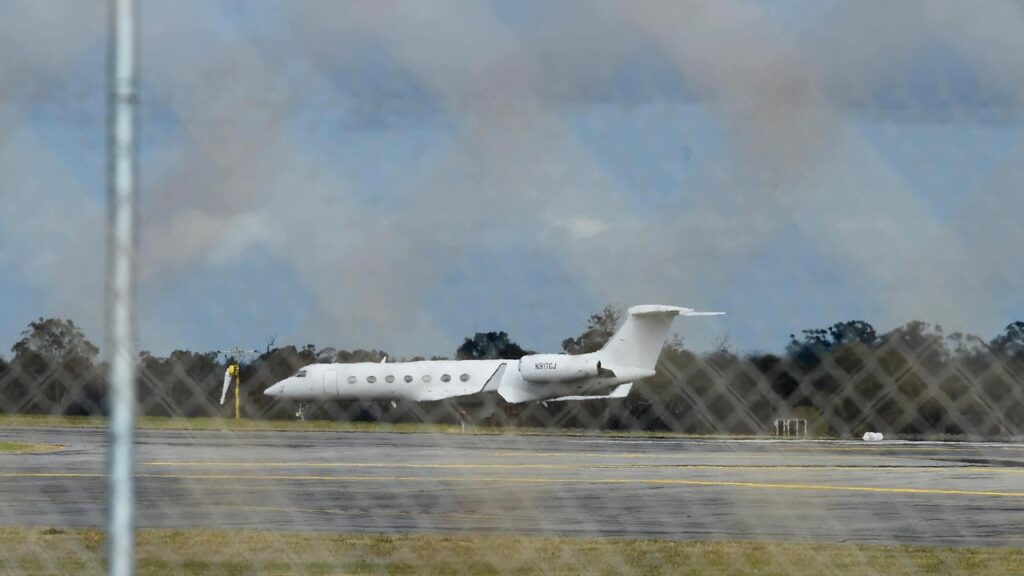
Hidden behind a veil of protective clothing, a group of passengers from a hantavirus-affected cruise ship have been shuttled into quarantine after touching down in Australia.
Four Australian citizens, one permanent resident and one New Zealander, who were evacuated from the cruise ship MV Hondius, landed at RAAF Base Pearce near Perth about 1pm AEST on Friday.
In scenes harking back to the COVID-19 pandemic, the PPE-clad group were shuttled in a van past gathered media to a nearby quarantine centre, built towards the end of the global pandemic.
All passengers are in good health and showed no symptoms, Health Minister Mark Butler told media on Friday.
The group will remain at the Centre for National Resilience next to the base for at least three weeks, with the 500-bed facility offering TV, wi-fi and balconies.
The crew on board the flight will also remain in isolation until negative virus test results have been returned for all passengers, which may take up to 24 hours.
Three of the passengers live in NSW while the other two reside in Queensland.
It is unclear when they will be permitted to return home as their quarantine could be extended pending advice from chief health officers.
So far only 11 confirmed cases have been recorded globally from the latest outbreak, with three deaths associated with those cases.
MV Hondius docked in Tenerife on Sunday after three people aboard died and others were confirmed to have tested positive for the virus, which is contracted through contact with infected rodents.

The Andes form of hantavirus that caused the cruise ship outbreak can be transferred from person to person through bodily fluids, including saliva, blood and urine.
All the confirmed cases so far are people who were on the cruise ship.
Most countries repatriating passengers from the ship are mandating only two or three days of quarantine before allowing them to return home.
“We have taken the decision to take a stronger approach to quarantine arrangements than that, because we are determined to ensure there is no risk at all of any transmission of this virus into the Australian community,” Mr Butler said.
“Obviously, I’m sure these passengers would prefer to be home.
“I thank them for their co-operation right through this very difficult ordeal for them.”

The biggest risk to Australians was not posed by this cohort, but by those who had been exposed to hantavirus and failed to undergo quarantine, University of the Sunshine Coast associate professor Erin Price said.
“The concern is really for people travelling,” Prof Price told AAP.
“Some of the passengers who were on this cruise ship disembarked before the outbreak was identified and have moved quite a bit around the world.
“That is a real worry.”
Symptoms can occur one to eight weeks after exposure and the window of infection is believed to be four days, including two days during which those afflicted can be asymptomatic, Prof Price said.

Hantavirus is not as infectious as COVID-19 but its long incubation period could still pose issues, fuelling calls for clear, consistent and science-based messaging from governments to mitigate risks.
Early symptoms are flu-like and include fevers, fatigue, muscle aches, headaches, chills or dizziness.
Some from the cruise have also experienced gastrointestinal symptoms such as diarrhoea, vomiting and nausea.
If the virus becomes severe, those infected can become short of breath as their lungs fill up with fluid, leading to reduced oxygen levels, low blood pressure, heart issues and sometimes death.
AAP