AI crocodile detection system comes with warning
Duncan Murray |
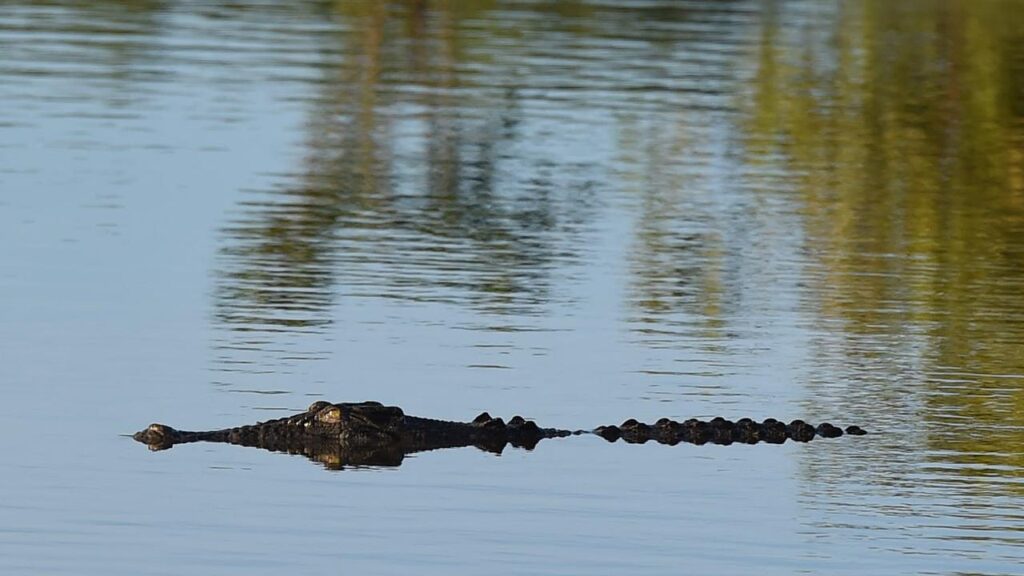
An AI detection system is hoped to make a splash by dramatically improving safety at swimming spots and boat ramps across Australia’s crocodile-infested northern waterways.
But its creators warn it can only identify crocodiles above the waterline and not those that could be lurking beneath.
The smart camera system continuously monitors the surface of a waterway and when a crocodile is detected by the AI technology, automatically alerts authorities to take action.
The technology could act as a crucial early warning system, James Cook University senior lecturer and project lead, Tao Huang, told AAP on Tuesday.
“Crocodiles are a part of the environment in far north Queensland but many residents and visitors may not be aware of the risks,” he said.
The detection system has been mounted on a trailer for easy transportation to different locations during the trial phase, but could ultimately be permanently installed at popular recreation areas.
The team is also considering a more localised alarm system to notify those in the area of a crocodile’s presence, as well as alerting authorities, Dr Huang said.

While the technology can be hugely beneficial as a prevention tool for authorities, it can’t definitively determine whether crocodiles are about, he warned.
“These animals can be underneath the water for up to an hour so just because the system did not detect a crocodile, does not mean a crocodile is not there,” he said.
“A system like this is not a perfect system, we are trying to assist humans to make decisions.”
Another of the challenges the team faced was teaching the system to differentiate between a crocodile and floating logs or debris.
“We teach the system to learn the patterns and the behaviour of the crocodiles and how it looks in different environments,” Dr Huang explained.

The device was developed in collaboration with the Department of the Environment, Tourism, Science and Innovation.
According to DETSI, there were at least 16 fatal and 36 non-fatal crocodile attacks in Queensland between 1985 and 2025.
The detection system could dramatically reduce the rate of attacks, DETSI Senior Conservation Officer Daniel Guymer said.
”This is a significant step forward as we continue looking at innovative ways to improve public safety in areas where crocodiles also live,” he said.
”If successful, this technology could revolutionise how we monitor crocodiles, providing real-time data to help us manage crocodiles as effectively and efficiently as possible.”
AAP