Trump drops Hormuz fee plan in favour of Gulf deals

Enas Alashray and Elwely Elwelly and Tala Ramadan and Katharine Jackson |

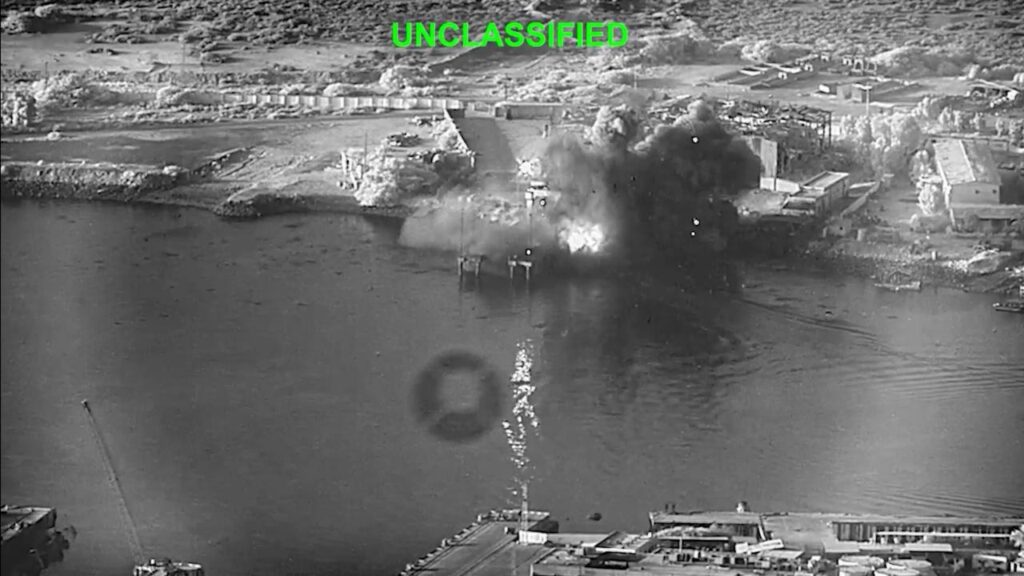
US Central Command have continued to strike Iran as peace talks continue to flounder.

US President Donald Trump has ditched a ‌proposal to charge a 20 per cent transit fee on shipping through the Strait of Hormuz, saying he will instead seek investment deals with Gulf states. 

US forces carried out attacks for a fourth night in a ‌row on Iran after Tehran said it had closed the strait, prompting Trump on Monday to reinstate a blockade of Iranian shipping and propose the fee. 

Iran attacked a US Army base in Jordan with ballistic missiles, while Bahrain, which hosts a US naval base, said ‌it had fended off an Iranian aerial attack and other Gulf states also came under fire.

Iran War Strait of Hormuz
Hostilities have intensified since Iran said it had closed the Strait of Hormuz. (AP PHOTO)

The United Arab Emirates said an Indian crew member had been killed and eight others wounded when two Emirati oil tankers were struck by Iranian cruise missiles. 

Renewed attacks since last week have increased doubts that a memorandum of understanding signed last month would lead to a permanent halt in the war, which has disrupted global energy supplies and stoked inflation fears globally. 

Regional analysts say the hostilities remain within controlled boundaries, for now, with both sides seeking leverage for an eventual peace deal, but warn there is a risk that fighting could spin out of control. 

The move to impose US fees had drawn sharp criticism. ‌

The UN shipping agency said it ‌opposed any fees for straits used ⁠in international navigation and there was no legal basis for introducing mandatory tolls on strait transits. 

US Central Command (CENTCOM) announced on X it had resumed a naval blockade of Iranian ports and coastal areas.

Trump said other countries would continue to have “fair and open” access to the Strait of Hormuz.

“Based on highly productive conversations with Middle East leadership, I have decided to replace the 20 per cent United States Reimbursement Fee with Trade and Investment Deals that the various Gulf States will be making into the United States,” he said on Truth Social.

Trump told the Hugh Hewitt Show Iran would be hit “very hard tonight, and we’re going to hit them hard tomorrow. And there’s not a damn thing they can do about it”.

The governor’s office of Iran’s Qeshm Island, ⁠on the Strait of Hormuz, said it was struck by a US projectile at around 7pm on Tuesday, Iranian state ‌media reported.

Meanwhile, a US projectile ​exploded near a water and electricity facility on Iran’s Kish Island, the country’s semi-official Tasnim news agency said. State media also reported an explosion in Andimeshk in southern Khuzestan province, but later said it was a controlled explosion and not ​an attack.

Jordan said ‌it had shot down four ballistic missiles and explosions were heard in Manama, Bahrain’s capital.

In the early evening, Kuwait said its armed forces were engaging with “hostile” aerial targets, and the state news agency said sirens had sounded ​in the country. 

Bahrain’s Interior Ministry also said sirens had been sounded. 

Oil prices edged up to a fresh one-month high on Tuesday after the US reimposed the naval blockade on Iran and as renewed attacks between Washington and Tehran heightened concerns over energy flows through the Strait of Hormuz. 

Trump said he did not like the concept of a fee for using the strait and said countries had called him to ​say ​they wanted to invest in the US instead of being charged a fee.

US Energy Crisis
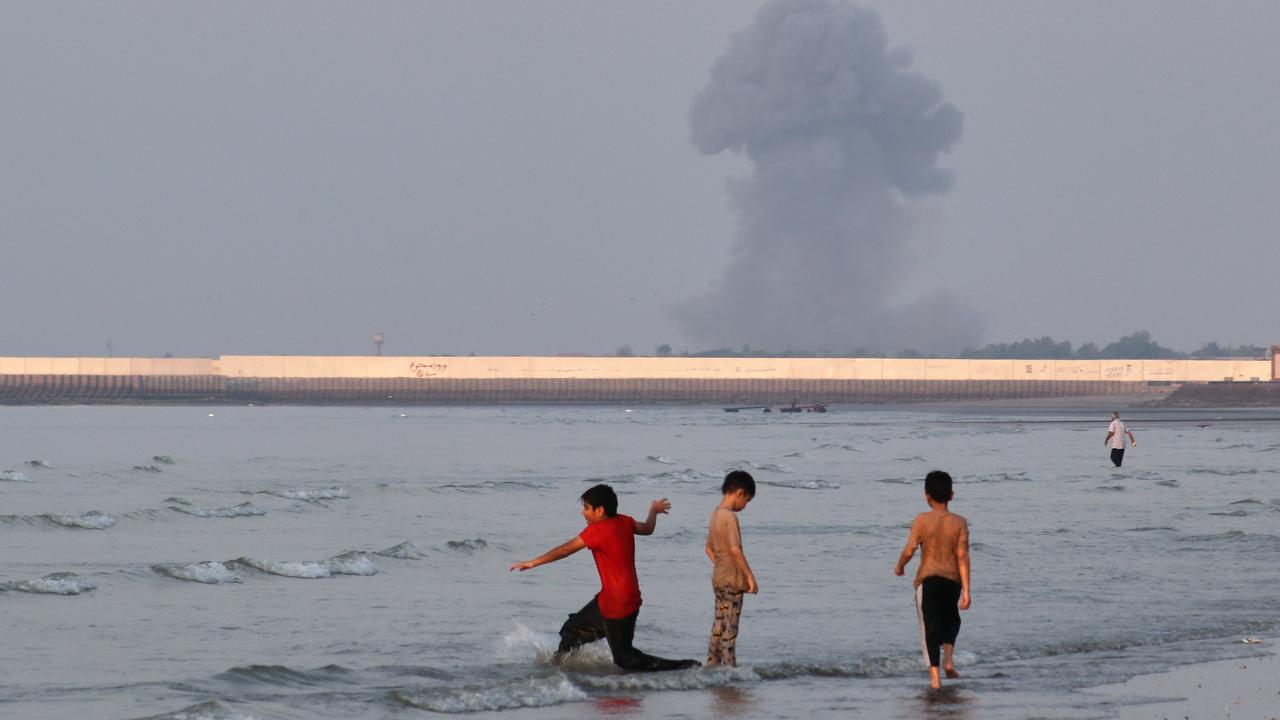
Petrol prices have soared to four week highs following the renewed strikes between the US and Iran. (AP PHOTO)

Before the war, about ​a fifth of global oil and liquefied natural gas traffic passed through the Strait of Hormuz daily. 

If the ‌US had imposed a 20 per cent fee, it could have generated around $US240 million ($A344 million) a day.

It was not immediately clear what Gulf states had agreed to, if anything. 

Trump did not mention any commitments, saying only in his post: “Investments will be MASSIVE but, at the same time, extraordinarily good for them, and their future”.

Yezid Sayigh, a senior fellow at the Carnegie Middle East Center, said he doubted the sides would resume a full-scale war, “especially as Trump will suffer”.

“There is also a distinct possibility that the Iranians will overplay their hand. That is true of Trump too, of course,” he said.

The conflict has proved unpopular in the US, where gasoline prices have risen and congressional elections are looming in November. 

Reuters