There’s a problem with making public transport free
Jacob Shteyman |
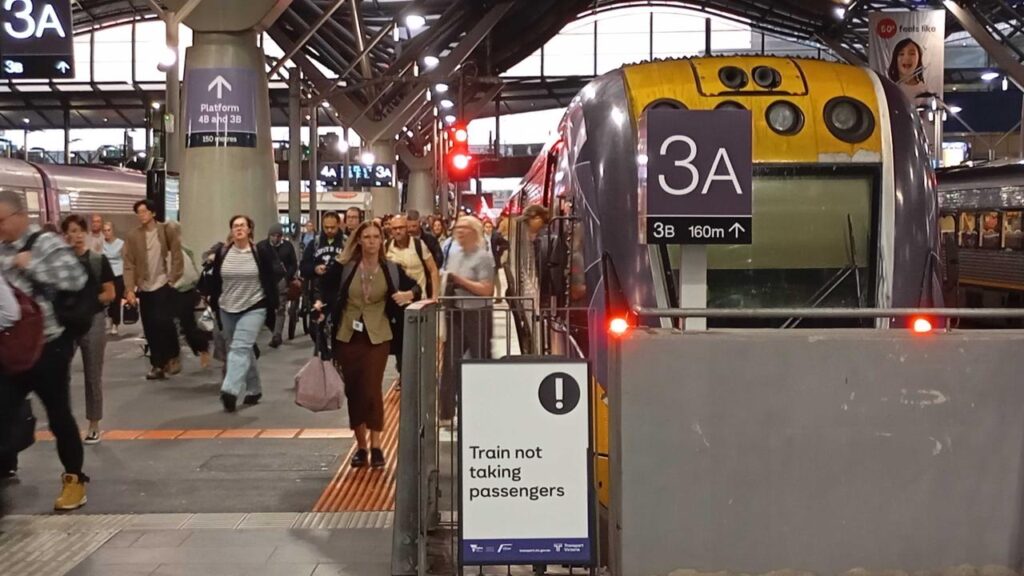
Simon Tran doesn’t mind paying a few dollars a day to catch public transport from home in Melbourne’s west to his job as a software engineer in the CBD.
Like millions of other Victorians, he’s benefiting from a state government decision to make public transport free throughout April.
Commuters could save up to $250 over the month, as a result.

As a cost-of-living measure, it makes sense, says Graham Currie, a transport professor at Monash University.
But it’s a regressive policy, as the benefits mainly accrue to inner city residents, who have better access to public transport and trend wealthier.
Meanwhile, the costs to the budget are borne by all taxpayers.
To help reduce demand for fuel, as the Middle East war constrains supply and sends prices soaring, Mr Tran thinks there are better options.
For one, the government could more effectively encourage drivers to use public transport by instead increasing the frequency of services and number of routes, especially in underserved areas like Melbourne’s west.
“I don’t think (free public transport) is changing much behaviour because people who have access … are already using it and the people who aren’t using it are those that don’t have access,” Mr Tran tells AAP.
Getting from Sunshine to the city and back is relatively stress-free for him. The train is frequent enough and services run through the night.
But the station back home involves Mr Tran negotiating an infrequent, circuitous bus route that only runs until 8.30pm.

Instead, he tends to make the 30-minute journey on foot.
Yet for many not as young or able-bodied, that isn’t an option and forces a large proportion of the population into cars.
Geoffrey Clifton, a transport expert at the University of Sydney, agrees making public transport free encourages greater usage for people who already have access.
But it may not significantly reduce car usage unless accompanied by improved services.
“It’s in rural and regional and the outer metropolitan areas where the diesel and petrol prices are highest and shortages are the worst, and free public transport is not going to help if there’s no public transport nearby,” he says.
Another issue is that by removing the cost, there’s no disincentive to take short public transit trips that could otherwise be a walk or bike ride, crowding out riders who need it for longer trips.
Mr Clifton says this happened when trams became free in Melbourne’s CBD.
To help get more people onto public transport long-term, governments can build more rail lines and add more bus routes.

But in the short term, options are much more limited.
Adding services during peak periods, when demand is highest, is difficult because train and bus fleets are already fully utilised.
Transit planners can add more trip in periods either side of the peak and hope to incentivise more people to use the system then but this requires buy-in from employers.
Adding services on weekends and running them later into the night can be more effective, as it allows people like Mr Tran, who have no alternative other than driving, to catch public transport.
There are challenges to this approach too.
Chronic driver shortages limit how many services can be added at short notice.
Mr Tran has been advocating for a more frequent and reliable bus network in Melbourne’s west for years, as a volunteer for grassroots campaign Better Buses.
Many routes in the area run only once every 40 minutes or hour and take winding, indirect routes to cover as much ground as possible, making trips longer and less appealing.

Better Buses has been advocating for a new route map that would straighten out the lines, increase frequency and add connections.
It has costed this would only add $100 million a year to the transport budget.
That’s compared to $70 million for a month of free public transport statewide.
Early figures provided by the state government show ridership has increased.
In Victoria’s first week of free public transport, passenger numbers were up across train, tram and bus services.
On Easter Sunday, regional V/Line services experienced a 46 per cent uptick from the weekend before, although this was largely due to public holiday travel and special events.
Metro trains ridership increased 30 per cent compared to the weekend prior.
According to a government spokesperson, comparisons to the same period a year prior, to account for seasonal shifts, are unreliable because of the large-scale changes to scheduling following the addition of the Metro Tunnel and other line upgrades.

But increased ridership would have occurred even without the fare removal because higher fuel costs send a price signal to drivers to switch to relatively cheaper public transport.
Figures from Queensland and NSW, which kept fares the same, also show a substantial uptick.
In South East Queensland, patronage was up 7.4 per cent across all modes between the last week of February and the last week of March, says the Queensland Department of Transport.
Michael Sewards, chief executive of the largest private bus operator in Australia, says prior to the free public transport announcement, Kinetic was seeing real increases in demand across all of its services.
Between February to March – before the free travel announcement – ridership was up 12 per cent in Victoria.
Patronage was also up 15 per cent over the same period in Tasmania, which has made public transport free for three months from April, Mr Sewards says.
Meanwhile, car use was down.
Excluding the opening of new roads on their network, toll road operator Transurban reported Sydney and Melbourne traffic growth slowed in March compared to the previous year as higher fuel costs weighed on drivers.

Mr Sewards noticed it too.
“What we’re seeing is some significant improvements in traffic flow and it’s probably the first thing we started to see,” he says.
“Immediately, we started to get some significant year-on-year improvements in our on-time running as a result of the traffic movements.
“What will come out of this very challenging and difficult moment for everyone is that (people see) the need to have a more developed bus network but also one that’s getting closer and closer to turn up and go, which is really the holy grail.”
To deal with extra demand on its regional network, the Victorian government has added extra carriages to trains and placed extra coaches on standby.
AAP