From serving the nation to serving a sentence
John Kidman |
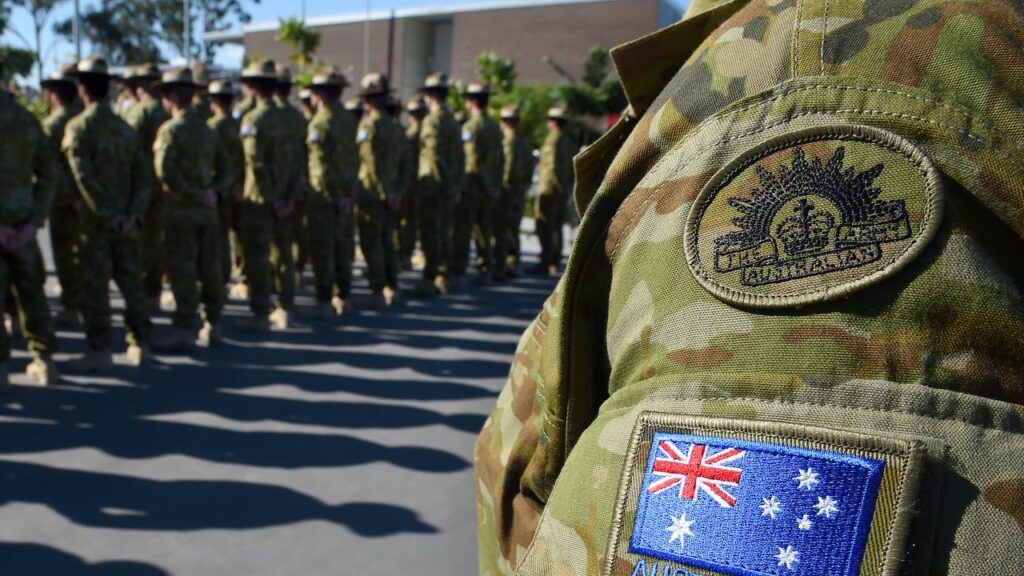
Lifelong patterns of hardship, trauma and missed support have been identified as leading factors explaining why vulnerable war veterans can end up behind bars.
The very people relied upon to protect Australia are being failed long after their service ends, according to complementary Flinders University studies.
Lead author Ben Wadham, says difficulties for many veterans begin in childhood, intensify during service and become overwhelming when support systems fail them after discharge.

“Veterans aren’t ending up in prison because of who they are but because of what they’ve lived through and the support they never received,” Professor Wadham, himself a veteran, says.
“But by addressing the gaps identified in our research, Australia can reduce reoffending, improve veteran wellbeing and honour its responsibility to those who have served.”
Central to the studies, experts interviewed more than 50 veterans across nine prisons in South Australia, NSW and Queensland.
Although none are identified, the findings echo the 2023 case of former Queensland soldier Christopher James Finn.
Awaiting sentence on drug matters, the traumatised Afghanistan veteran was forced to sleep on a prison floor, with his head near a toilet, for protection, and to join a jail gang.
Finn, 35, served 10 years in the army and was diagnosed with PTSD after witnessing “significant traumatic events” during four tours.
His life began “spiralling downhill” in 2020 when he turned to drugs as his mental health deteriorated.
The circumstances of Finn’s incarceration were “deeply unsettling” and “failed to serve the long-term goal of community protection”, according to Supreme Court Justice Peter Applegarth.
“If he spends the next 12 months in the prison that he is in, in the situation that he is in, without the help that he needs, it would be a disgrace,” he said.
The 2021 Royal Commission into Defence and Veteran Suicide also examined the issue of veteran incarceration, identifying it as a significant self-harm risk.
The three-year federal inquiry made a series of recommendations regarding the support of veteran inmates.
Commissioner Nick Kaldas indicated that he viewed incarcerated former servicemen and women as a largely “invisible population”.
The former senior police officer also called for an end to what he said was a fragmented approach to support for those in crisis who transition from service to the justice system without a safety net.
It’s estimated that roughly five per cent of defence force personnel enter custody at some stage, many due to unaddressed service-related trauma.
The Flinders research found many veterans also experienced significant adversity long before wearing a uniform.
“Participants spoke openly about growing up in homes marked by violence, abuse, instability and addiction,” Prof Wadham says.
“Many joined the Australian Defence Force seeking structure and belonging they lacked growing up.”
Although that experience was often positive, it was not always.

“Many also faced serious harms including bullying, institutional abuse, combat‑related trauma and heavy drinking cultures that encouraged self‑medication.”
Psychological injuries went untreated due to stigma or pressure not to seek help and veterans were left increasingly vulnerable once the structure of military life fell away.
The studies reveal leaving the Australian Defence Force has often been poorly supported, with veterans abruptly moved on with basic paperwork and no meaningful planning for housing, healthcare, employment or mental wellbeing.
Many didn’t understand their Department of Veterans’ Affairs entitlements.
“This loss of identity and community, combined with unaddressed trauma, contributed to spiralling mental‑health challenges, substance use, homelessness and eventual offending,” Prof Wadham says.
Inside prison, veterans described feeling misunderstood and stereotyped, with many saying their military training was used against them.
They often lost access to veteran’s affairs‑funded healthcare and found prison medical systems ill‑equipped to manage PTSD, chronic pain or complex trauma.
Some concealed their veteran status to avoid being targeted by other inmates.

Prof Wadham says the findings reveal a need for urgent national attention.
“These veterans are not inherently dangerous or broken, they are people who have experienced trauma across their lives and were not adequately supported at the moments that mattered,” he says.
“If we fail to intervene early and meaningfully, we increase the risk of crisis, offending and re‑offending.”
The studies urge governments to introduce consistent identification of veterans at prison intake and ensure continuity of DVA‑funded healthcare inside.
They also call for Australian Defence Force transition processes to be strengthened and improved handovers to support services.
Elsewhere, veteran liaison roles within correctional facilities should be formalised and pre‑release programs covering housing, employment, mental‑health care and entitlements, expanded.
Forgotten, Invisible, Dangerous: The Experiences of Incarcerated Veterans in Australia has been published by the Academy of Criminal Justice Sciences.
Adversity and Stability: Risk Factors Across the Life Course of Incarcerated Veterans in Australia appears in the Journal of Criminology.
Lifeline 13 11 14
beyondblue 1300 22 4636
Lifeline 13 11 14
Open Arms 1800 011 046
AAP