Hopes dim for swift end to Iran war after Trump speech
Steve Holland and Enas Alashray |
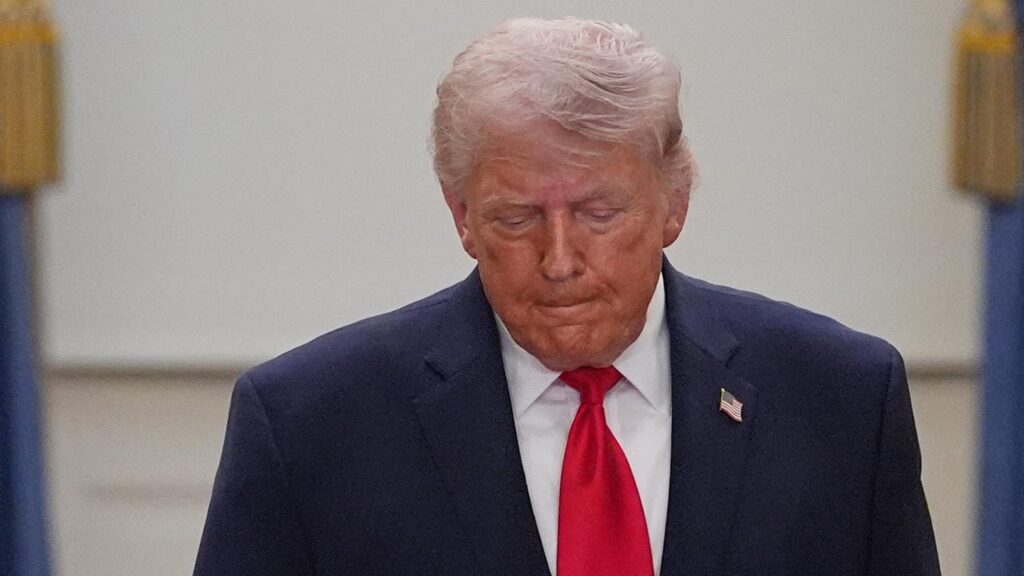
Hopes for a swift end to the Middle East war have faded after US President Donald Trump vowed more aggressive strikes on Iran, disappointing investors hoping for clearer signals of a way out of the month-long conflict.
Stocks slid, oil prices surged and the dollar gained after Trump said military operations would be intensified in the next two to three weeks, offering no concrete timeline for ending hostilities that have sparked global energy supply chaos and threatened to send the world economy into a tailspin.
“I can say tonight that we are on track to complete all of America’s military objectives shortly, very shortly,” Trump said in a Wednesday evening prime-time speech.
“We’re going to hit them extremely hard over the next two to three weeks. We’re going to bring them back to the Stone Ages where they belong.”
Trump also suggested the war could escalate if Iranian leaders did not give in to US terms during negotiations, with strikes on Iran’s energy and oil infrastructure possible.
Iran’s armed forces responded with a warning for the US and Israel of “more crushing, broader and more destructive” attacks in store.
Military spokesman Ebrahim Zolfaqari said the war would continue until the “permanent regret and surrender” of Tehran’s enemies.
Benchmark Brent crude prices jumped about six per cent to $US107.69 per barrel on Thursday, with little reassurance from Trump’s address about how the critical Strait of Hormuz energy conduit would reopen.
There was no let-up in hostilities, with the Israeli military saying it had identified missiles launched from Iran towards Israeli territory.

Saudi Arabia’s defence ministry said it had intercepted four drones on Thursday and Abu Dhabi said its defence systems had intercepted a missile near an economic zone, with minor damage caused.
The US embassy in Baghdad urged its citizens to leave Iraq, warning of attacks in the capital by Iran-allied militias in the next 24-48 hours.
Thousands of people have been killed across the Middle East since February 28, when the US and Israel struck Iran, triggering Iranian attacks on Israel, US bases and the Gulf states, while opening a new front in Lebanon.
Iran also all but closed the Strait of Hormuz, a vital waterway carrying about a fifth of global oil and liquefied natural gas, pushing up energy costs and weighing on Trump’s sagging approval ratings months before pivotal midterm congressional elections.
Trump in his speech mentioned what he called a short-term rise in domestic petrol prices but said the US did not need the strait and he challenged allies who relied on oil in the region to work towards reopening it.

He blamed the higher costs on Iran’s “deranged terror attacks against commercial oil tankers”.
Before Trump’s remarks, Iranian President Masoud Pezeshkian said in a letter addressed to the American people that his country harbours no enmity towards ordinary Americans.
Trump said discussions were ongoing with Iranian leaders he considered less radical than previous leaders.
On social media, he said Iran had requested a ceasefire but that would not be considered until its Strait of Hormuz blockade ended.
Iran denied making any such request.

A senior Iranian source told Reuters on Wednesday that Tehran was demanding a guaranteed ceasefire to halt its attacks and said no talks had taken place through intermediaries on a temporary truce.
Trump had suggested on Tuesday he could wind down the war soon without a deal and scaled up threats to withdraw from NATO, to which he told Reuters he planned to express his disgust for what he considers its lack of support.
European states have sought to appear unruffled, and France’s junior army minister Alice Rufo said operations by NATO in the Strait of Hormuz would be a breach of international law.
Trump urged countries needing oil to buy it from the US or to “go to the strait and just take it”.
“Iran has been essentially decimated. The hard part is done, so it should be easy.”
Reuters