Fire, floods and fur: keeping pets safe in a disaster
Poppy Johnston |
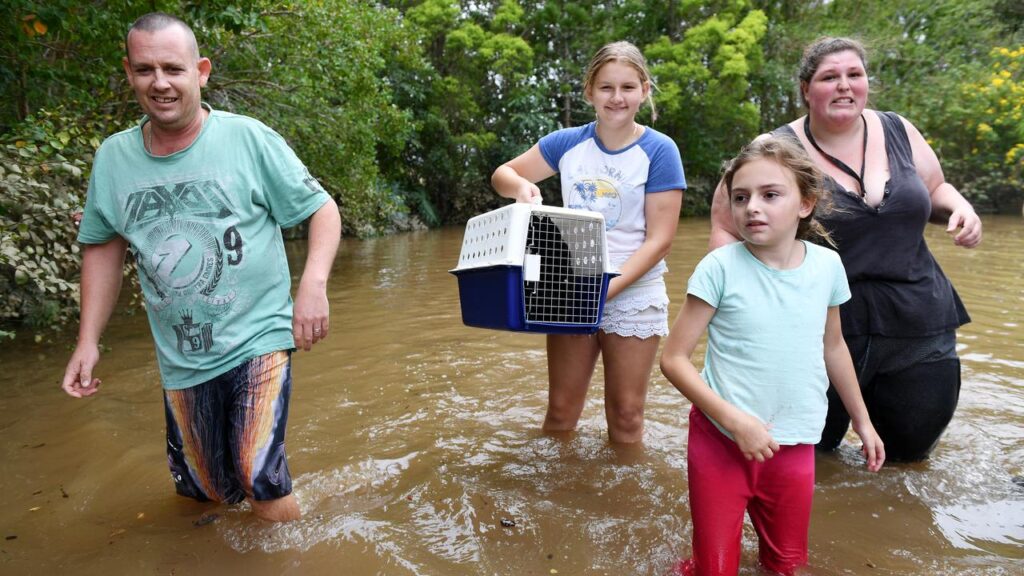
David King has come to the aid of pet owners unable to ferry their animals to high ground in rising flood waters way too often.
An emergency services rescue specialist, he says it’s important to source adequate transport for furry and feathered family members in a crisis, or at least be mindful of the extra time needed for multiple trips.
“In your little menagerie, you’ve got two cats, three dogs, a horse and a budgerigar, and you’ve got to get them moved to safety,” he told AAP.
“Have you got cages for each of your animals? Or travel boxes?
“Have you got a float to move your horses?”

For 40 years, Mr King has been involved with the NSW State Emergency Service in the Hawkesbury region, northwest of Sydney.
He responds to road incidents and day-to-day rescues but in the flood-prone Hawkesbury Nepean Valley, assisting pet owners during extreme weather disasters is a big part of his job.
In NSW, rescue crews take pets seriously.
It’s one of only two states that legislatively include domestic animals in rescue mandates.
“Anybody in the public can ring triple zero and they will get a rescue response for their domestic animal,” Mr King said.

The experienced rescuer understands the deep connection people have with their pets and isn’t surprised when they risk their lives to stay behind during a floor or fire to protect their companion animals.
But he wants to see more households preparing for a “bad day” ahead of time to ensure their animals have somewhere to go, and a way to be transported.
Assembling emergency kits with food, medicine, collars and vet records is also a good idea.
Without a plan, people can panic and make poor decisions, Mr King said, putting themselves in danger and by extension, emergency services crews.
“It’s a real problem,” he said.
“Ultimately, volunteers at the SES have to come to their aid and put their lives on the line.”

While authorities sometimes set up pet-friendly evacuation centres, Mr King warns these might be far away and recommends reaching out to friends and family with enough space to host visitors as emergency backups.
In his time, he has been involved in some complicated rescue jobs, including precariously squeezing several crates containing greyhounds into rubber boats to take them to higher ground.
Rescue vehicles, including helicopters, have also transported small animals after several incidents where people were unwilling to leave without their beloved companions.
Mr King now helps train new recruits in the art of animal rescue.

Teaching volunteers the basics of how to lead a horse or herd sheep is part of the training, as many are unfamiliar with handling big animals.
Staying level-headed is also important when dealing with smaller pets and “lovestock”, as he describes larger domestic animals.
“Whether it’s small animals and large animals, the key thing in training is ensuring our rescuers must be calm.”
AAP