Australia locks in another month’s worth of fuel supply
Tess Ikonomou |
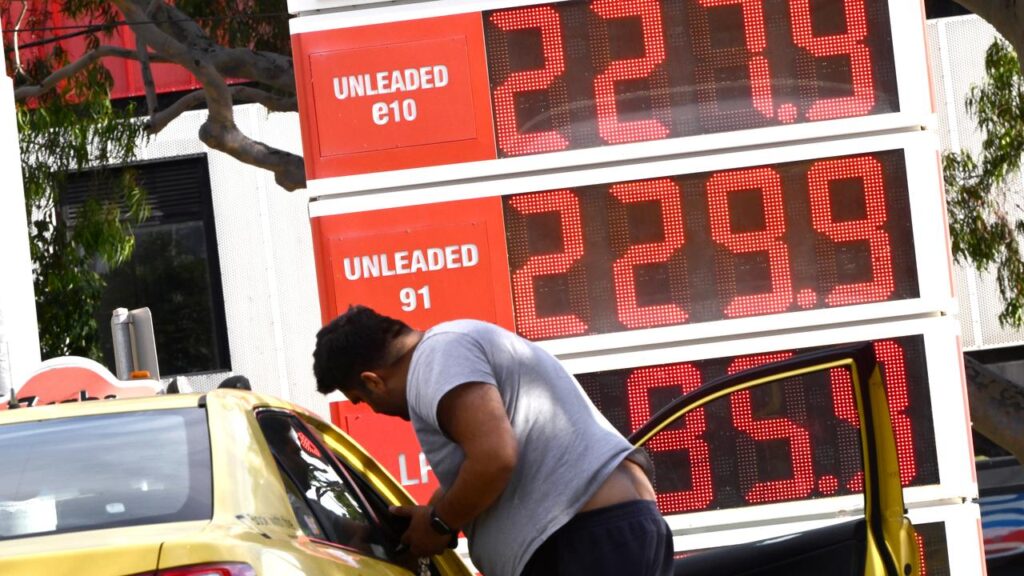
Australia has locked in another month’s worth of fuel, as consumers and motorists brace for higher prices at the bowser and checkout.
Energy Minister Chris Bowen said the nation originally had supply until mid-April, but that had now been secured into May.
“All the orders are locked in, contracted,” he told ABC’s Radio National on Monday.
“Once it’s contracted, the fuel belongs to the Australian company that’s bought it, so that is legally locked in. That’s encouraging.”

Mr Bowen said 3.7 billion litres of different types of fuel were on their way to Australia this month.
Relief from crippling fuel costs has begun to flow after the federal government temporarily halved taxes on petrol and diesel, while states also agreed to pass on an expected GST windfall due to higher takings on sales.
But the combined savings, worth more than 30c per litre, have not offset the full impact of expensive global oil due to the trickle of ships carrying supplies coming through the Strait of Hormuz, which has been effectively blockaded by Iran.

University of Sydney associate economics professor David Ubilava said it would take a while for supply chains to be restored to their pre-war states even after the US-Israeli conflict with Iran ended.
“The market disruption and the war has dragged on long enough that its effects will be felt for months to come,” he told AAP.
“Not only will the price of fuel go up, but so will transportation costs and, as a result of fuel surcharges, deliveries, groceries and restaurants will become more expensive as those costs are passed onto the consumer.”
US President Donald Trump has flagged strikes on Iran could end within weeks, recently saying core objectives were nearing completion.
In an expletive-laden social media post, Mr Trump threatened Iran to open the “F***in’ Strait” or the regime will be “living in Hell”.

The Albanese government has accepted the impacts of the war will continue, even if it comes to a swift end.
Assistant Foreign Affairs Minister Matt Thistlethwaite on Sunday said the flow-on effects on fuel prices and inflation would have a long tail.
“If (the war) ended tomorrow, there’d still be effects in the coming months, but we’re planning for that,” he said.
Prof Ubilava said the longer-term inflationary impact of the war could also mean higher interest rates as the Reserve Bank tried to reduce household spending.
While the volatile situation made forecasting difficult, he said, it was hard to see the crude oil price – currently close to $US110 ($A159) per barrel – returning to pre-war levels of about $US70 ($A101).
AAP