Magnifico Australian Olympians feast on Italy medals
Melissa Woods |
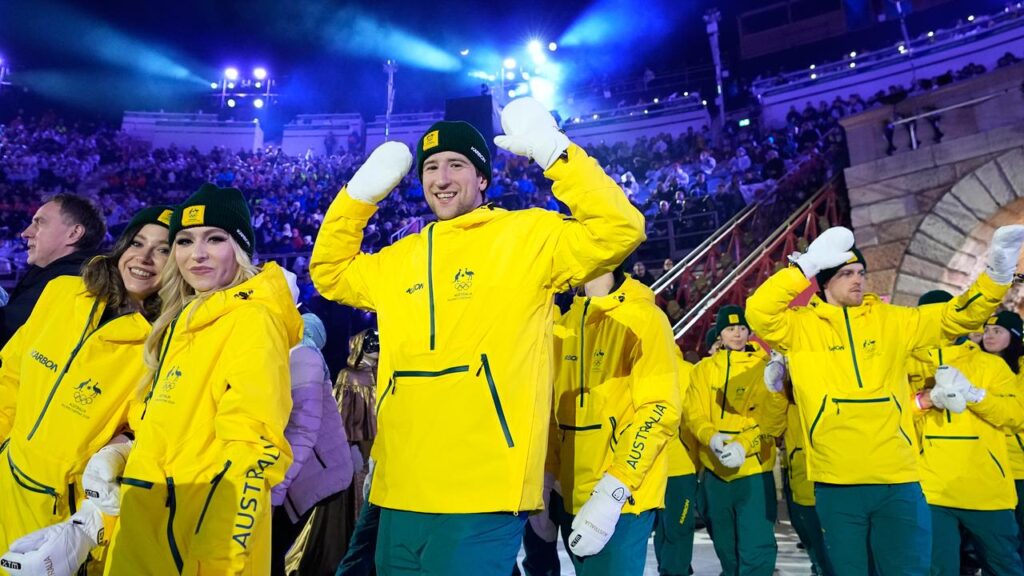
Alisa Camplin wants Australia’s record-breaking performance at the Milan-Cortina Olympics rewarded, with the team chef de mission believing winter athletes need more investment going into the next Games cycle.
The Australian team leave Italy after setting a new Olympic benchmark with six medals, including three gold, two silver and a bronze – the previous best was four, with one gold, won in Beijing in 2022.
With Australia’s long-term investment in “non-traditional” Olympic winter sports paying dividends, the team finished 14th on the medal tally, up four places from four years ago.
It took 12 years to win three gold medals between 2010 and 2022 but this team achieved the feat in three days in Livigno, with mogul skiers Cooper Woods and Jakara Anthony and snowboard cross star Josie Baff triumphant.

Woods kicked off the medal rush with an unlikely gold medal and his celebratory joy appeared contagious with Baff navigating a tricky draw the next day to become Olympic champion.
The dominant skier in the women’s field, Anthony was rewarded with gold in the first-ever women’s duals event, rebounding from the disappointment of being unable to defend her Olympic individual title.
Anthony become the first Australian winter athlete in history to win two gold medals.
There were contrasting feelings around the silver medals with five-time Olympian Scotty James achingly close to landing his elusive gold medal while aerials skier Danielle Scott finally translated her years of elite performance to the Olympic stage on her fourth attempt.
Matt Graham rounded out the medals with bronze in the men’s duals, eight years after winning a moguls silver.

Apart from Anthony, other medals went begging with an Adam Lambert fall meaning the Australian team were unable to capitalise on Baff’s surging form in the mixed team snowboard cross, while monobob world No.2 Bree Walker struggled to come to grips with the tricky Cortina sliding track.
But with cross-country and alpine skiers, two-woman bobsleigh, and ice dancers delivering beyond expectations, Camplin hailed the success of team.
“Our dream was to show the world that we are a real winter sports nation,” Camplin said in Livigno.
“And when the moments came, we didn’t shy away. But what’s been happening here in Milano-Cortina has in many ways gone beyond our wildest dreams.
“Beyond the results, what I’m most proud of is this team’s character – each and every member of this team gave it their all.”

Camplin attributed the strong performance to “game-changing” investment in training facilities such as the Geoff Henke Olympic Winter Training Centre in Queensland, where mogul and aerial skiers – two-thirds of the medallists – practice their jumps, landing in water.
The airbags at the National Snow Sports Training Centre in Jindabyne has also been key to helping young snowboarders such as Ally Hickman and Mela Stalker improve dramatically.
A two-time aerials medal winner, Camplin said the results of the current team had proven winter sports were deserving of more funding leading into the next Olympics in the French Alps.
“We’ve probably been, in winter sport, disproportionately funded, even though we’re very grateful for the ongoing funding we’ve had,” Camplin said.
“There’s just a real opportunity to equalise that a little and we can get to the next level and there will just be more Australians that can chase that dream.
“We know what we’re capable of now. And I hope that we’ll have more investors, more philanthropy, more government support so that we can take this opportunity and really capitalise on it.
“There are literally thousands of kids out there that want to go to the next level and pursue the dream and be like the idols they saw in Milano-Cortina.”
While Camplin would love to see a curling rink and ice-push start for sliders, her main priorities were investment in coaches and developing more pathways for aspiring athletes.
“You need the facilities, but you need the world-class coaches, and you need the culture so all of those elements working together, it’s been a bit-by-bit build,” she said.
“What we want to see is more pathway programs – we’ve just got enough, barely, at our World Cup level, but we don’t have the programs underneath that other countries have.
“That’s why we can now say we’re at a point where the system knows what it’s doing and we just need to get more coaches and athletes in there.”

While there will be a few retirements through age and injury, the average age of the 2026 team was 25, including five teenagers.
Camplin was already excited about French Alps 2030, the country also embracing the multi-venue, country-wide structure used by Italy.
“Perhaps the world should watch out because Aussie kids are growing up now knowing that if you chase a big dream, surround yourself with great people and work both hard and smart, that absolutely anything is possible.”
AAP