Nerves jangling ahead of do or die stadium vote
Ethan James |
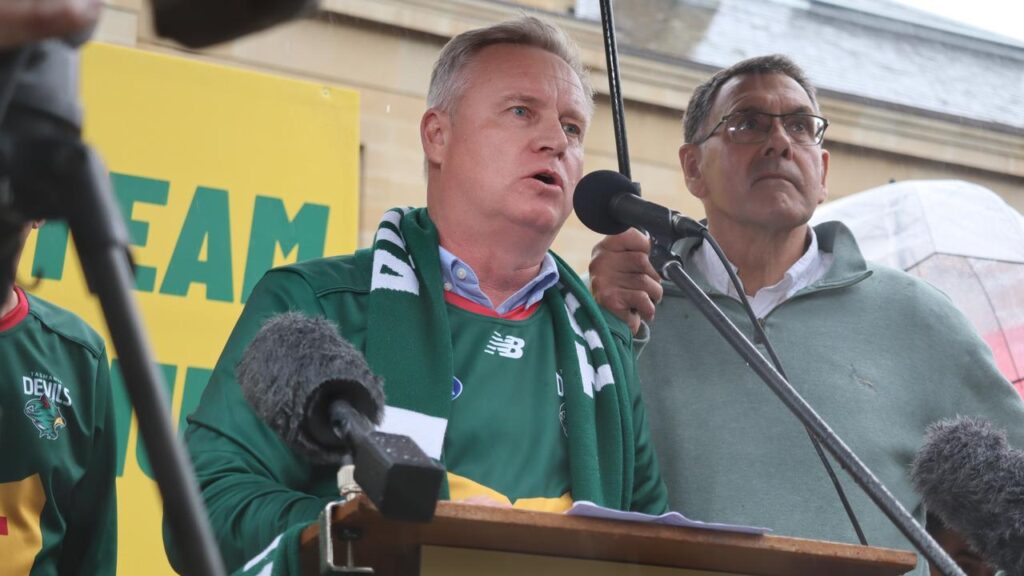
Plans for a Tasmanian AFL team sit on a knife-edge ahead of a do-or-die parliamentary vote on a divisive stadium proposal.
The island state’s upper house will on Wednesday begin debate on whether to approve a $1.13 billion, 23,000-seat roofed venue at Macquarie Point in Hobart.
The stadium is a condition of the Devils entering the AFL and AFLW in 2028 in a deal signed by the governing Liberals in 2023.
“It’s a big week for this project and I must say I am a bit apprehensive and nervous about the outcome,” Premier Jeremy Rockliff told reporters on Tuesday.

The stadium needs the votes of at least eight of the upper house’s 15 members to pass.
Some have declared their hand either way, leaving the result hinging on a handful of independents.
The votes of undecided former mayor Bec Thomas and builder Dean Harriss are viewed as crucial while Ruth Forrest, who has been critical of the project, isn’t fully locked in.
“It’s getting to the pointy end. I will make my final determination in the chamber when I listen to other members as well,” Ms Forrest told ABC Radio.
“It is hard to support (the stadium) with the cost and the (state’s) credit rating downgrade.”

If the vote is tied, convention dictates the upper house president votes in the negative. That is Labor MP Craig Farrell, whose opposition party backs the stadium.
The debate could stretch over days before a final vote is reached and Mr Rockliff has met with undecided independents, indicating some were seeking assurances about oversight.
A pro-stadium rally on Sunday drew 15,000 people according to police estimates, outpointing the crowd of 1500 at an anti-stadium protest a week prior.
Tasmania’s planning commission has recommended dropping the stadium development, saying its costs outweigh the benefits and it is too big for the site.
Supporters believe the venue is once-in-a-generation and will stimulate the economy.
Ms Thomas, whose backing of major sporting infrastructure is contingent on grassroots funding, has acknowledged people will end up disappointed either way.
“Whatever happens this week, my hope is that Tasmanians support each other to heal the hurt that’s been caused by this divisive stadium debate,” she wrote on social media.
The AFL has maintained a “no stadium, no team” mantra.
The league is contributing $15 million and the federal government $240 million, with Tasmania paying $375 million plus the remainder in borrowings.
Ms Forrest said the government’s handling of the project had been appalling and she was feeling the pressure from both sides.
“The ‘yes’ side are sending very evocative, almost threatening messages, and the ‘no’ side are doing almost the same,” she said.
AAP