Call to action to close gendered gaps in justice system
Maeve Bannister |
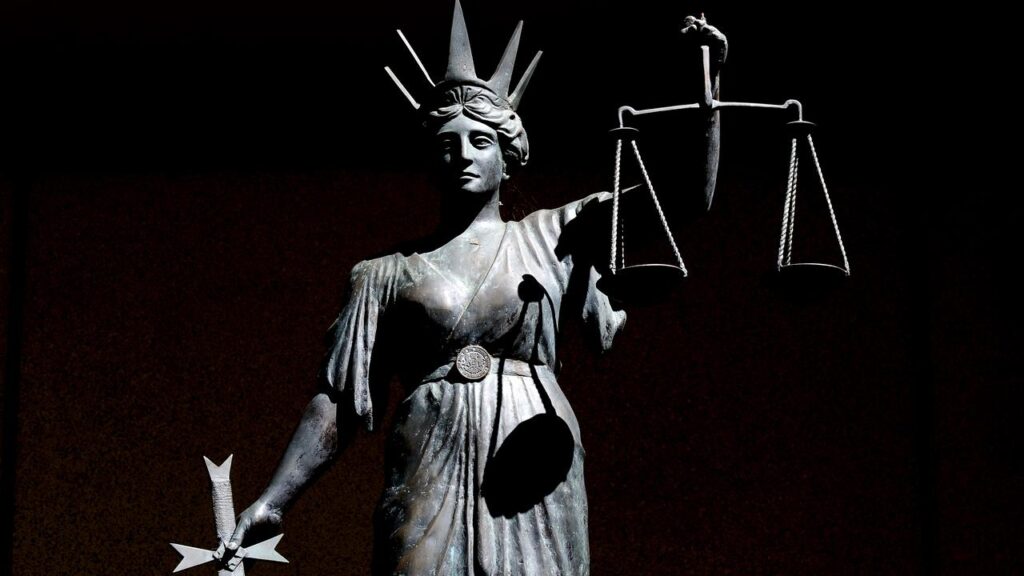
Acclaimed human rights barrister Jennifer Robinson has always found it deeply ironic that the symbol for justice is often depicted as a woman, known as Lady Justice.
Found in courtrooms, law libraries and legal institutions around the world, Lady Justice is commonly represented by a blindfolded woman who holds a sword in one hand and scales in the other.
“Women were historically excluded from our legal systems, from our parliaments, from our courts, from the legal profession,” Ms Robinson told a United Nations Women Australia International Women’s Day event.
“The reality is that for centuries, laws have been written by men, for men.
“Patriarchal interests have been protected above all else, with little consideration for women’s rights or for our lived experience.”

Fair and inclusive access to justice is the focus of this year’s International Women’s Day, marked on March 8.
The theme “balance the scales” points to conflict, repression and political tensions weakening the rule of law and leading to women and girls having just 64 per cent of the legal rights of men globally.
Balance the scales invites people to be part of a national movement for justice by calling out behaviour and language, advocating for law changes and holding power to account.
Governor-General Sam Mostyn urged all Australians to consider nominating an outstanding woman for one of the honours in the national awards system to help address the gender imbalance among those recognised for their contributions.
“Women’s recognition in our honours award system is lower than men and that disappointingly reflects lower nominations of women by their peers and communities,” she said.
“As chancellor of the Order of Australia, I would love to see all of you balance the scales of our honour system, so we need to nominate outstanding Australian women for recognition.
“This is a simple but vitally important way to highlight and celebrate exceptional Australian women in our communities.”

Meanwhile, research by Plan International released on International Women’s Day found girls’ lives globally have improved during the past two decades, but many gains risk being wound back.
The study documented 142 girls in multiple countries across 18 years from birth and found adolescence was a tipping point for girls’ equality when gender norms tightened, freedoms shrank and inequalities grew.
With improved access to education, girls are dreaming bigger and new laws protecting them from child marriage mean they have broader choices in shaping their futures.
But more than 90 per cent of the girls in the study had experienced violence by the age of 11.
New types of harm including online harassment and the rise of unregulated AI are extending risks of violence against women and girls in the digital age.
The study revealed the narrative that gender equality had been achieved was dangerous and needed to be pushed back against, Plan International Australia chief executive Susanne Legena said.
“Supporting girls through adolescence is a critical step we can take in our push for equality,” she said.
“By providing them with education and opportunities, evidence shows that it can drastically improve the trajectory of their lives and of their entire communities.”
AAP