Bondi attack inquiry to map plan to curb religious hate
Tom Wark |
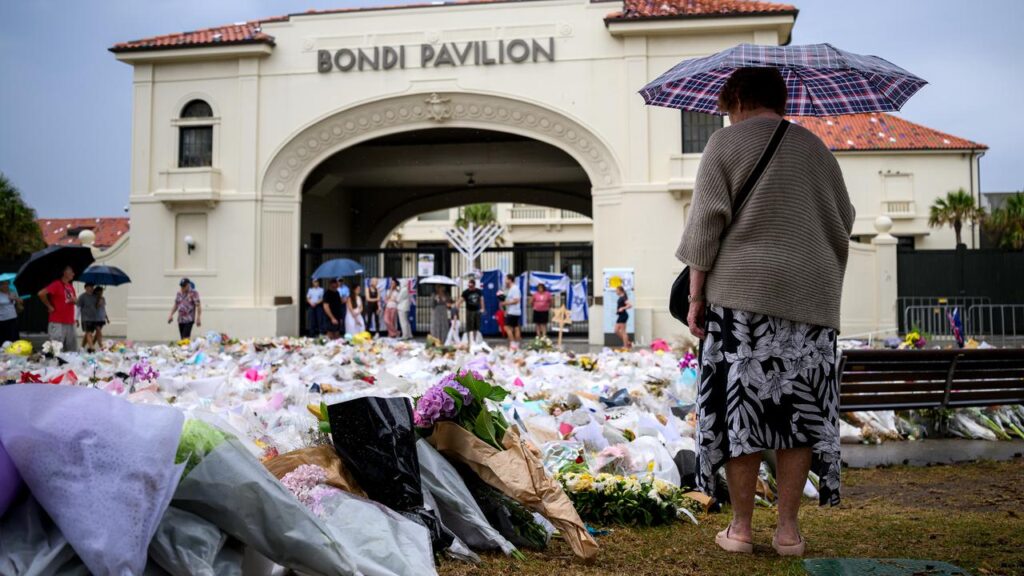
Efforts to tackle anti-Semitism will be used as a blueprint to stamp out prejudice against other minorities after a royal commission into the Bondi Beach terror attack.
Commissioner and former High Court judge Virginia Bell revealed her approach at the first public hearing for the inquiry in Sydney on Tuesday.
The prevalence of anti-Semitism nationwide, its drivers and how law enforcement and intelligence agencies are equipped to combat it are key focuses of the probe.
While the commission has been tasked with examining the exact circumstances of the attack, no witnesses who could be called in a possible criminal trial for surviving gunman Naveed Akram will appear to protect the legal proceedings from prejudice.
“It’s going to be very hard for some people … not to be able to share their experiences,” Jewish Board of Deputies chief executive Michele Goldman said.
“But I think there is such widespread impact as a result of this attack that we will be able to gather sufficient lived experience from across the community.”
Prime Minister Anthony Albanese has also tasked the commission with making recommendations that strengthen wider social cohesion and counter the spread of ideological and religious extremism.
“I’m mindful that while anti-Semitism may be the oldest religious and ethnic prejudice, other religions and ethnicities are also subject to prejudice in Australia,” Ms Bell said.
“I trust everyone will appreciate why the focus of this commission will be on tackling anti-Semitism as a starting point in strengthening our bonds of social cohesion.”

The inquiry will use a definition of anti-Semitism published by the International Holocaust Remembrance Alliance that Ms Bell described on Tuesday as “uncontroversial”.
The definition was also suggested in July by the government’s special envoy to combat anti-Semitism, Jillian Segal, who was present at Tuesday’s hearing.
Ms Bell acknowledged the 11 examples listed by the alliance alongside its definition had led to concern it stifled legitimate political criticism of Israel.
“While I’m open to receiving submissions on the issue, my current view is that these concerns pay insufficient regard to the terms of the definition itself,” she said.
“And they’re apt to overlook the requirement to take account of the overall context in which the content occurs before determining whether the conduct is anti-Semitic.”

An interim report is due on April 30, while full findings are expected by December 14, the first anniversary of the attack.
“This imposes a tough time frame, and it’s done to impose limitations on how the commission approaches its terms of reference,” Ms Bell said.
Fifteen innocent people were killed when Akram and his father Sajid opened fire during beachside Hannukah celebrations at Bondi.
Jewish advocacy groups have widely welcomed the commission, including the Executive Council of Australian Jewry which described it as the only way Australia’s time-honoured standards of decency and fairness could be upheld.

The production of sensitive documents from intelligence agencies could also cause delays after an internal review was folded into the remit of the public royal commission.
The inquiry, which has the power to compel testimony, was called in January as the Albanese government came under intense political pressure about its response to the Bondi attack.
Federal parliament has since passed laws aimed at restricting the ability of hardline radical groups to incite violence against people based on their faith, while also making it easier to deport extremists and deny them entry to Australia.
The commission is inviting public submissions until at least May 31.
AAP