Greenhouse network to yield 175,000 meals for SEQ students
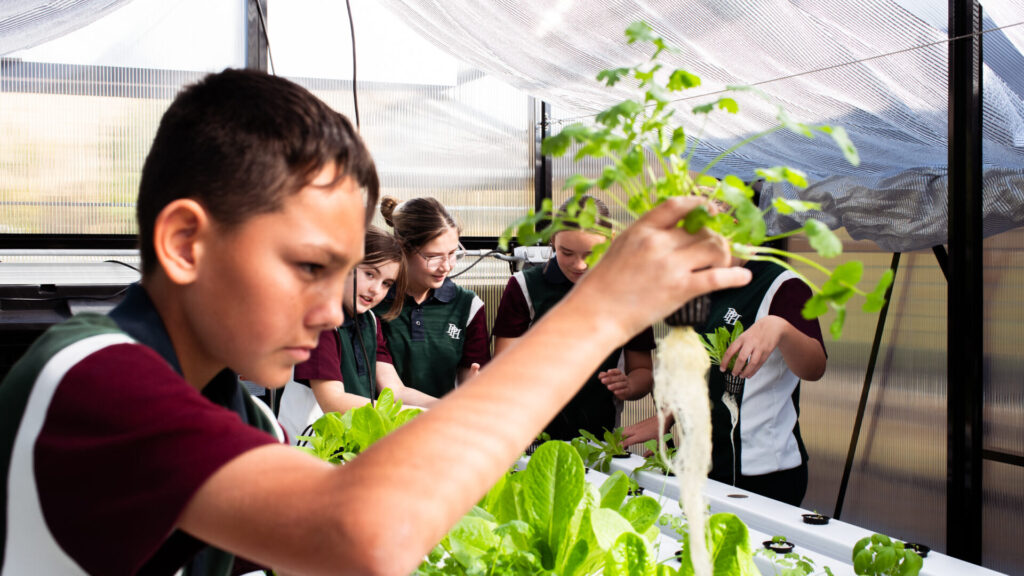
Four Southeast Queensland schools have become the first to receive climate-controlled hydroponic greenhouses under a $600,000 partnership aimed at curbing food insecurity and boosting practical STEM education.
The project, established by non-profit organisation Food Ladder and NGM Group’s Greater Charitable Foundation, will see nine greenhouses built across the region. Facilities are already operational at Beaudesert, Pacific Pines, and Park Ridge State High Schools, alongside Coomera State Special School, with five more schools set to join over the next 18 months.
Once fully operational, national impact modelling shows the network will produce up to 13,140 kilograms of fresh produce annually, supplementing roughly 175,000 meals based on recommended Australian dietary guidelines. The recirculating systems use up to 90 per cent less water than traditional farming and can cultivate over 40 varieties of fruit, vegetables and herbs year-round.
Food Ladder chief executive officer Kelly McJannett said schools were ideal settings to strengthen long-term food security.
“Every Food Ladder greenhouse becomes permanent community infrastructure,” Ms McJannett said. “Students don’t just learn how to grow fresh food. They build confidence, develop practical STEM skills, learn healthy eating habits and take that knowledge home to their families.”
Pacific Pines State High School Principal Damien Burke said the technology had transformed student engagement on campus.
“Since the Food Ladder greenhouse arrived, we’ve seen our students engage with science in a completely different way,” Mr Burke said. “It’s hands-on, it’s real, and it’s giving them a genuine window into careers in STEM, agriculture and food science that many hadn’t considered before.”
Nationally, participating schools have reported significant attendance and engagement improvements. Applications are now open for five additional Southeast Queensland schools to register via foodladder.org.