Tiny frogs making themselves at home in concrete jungle
Robyn Wuth |
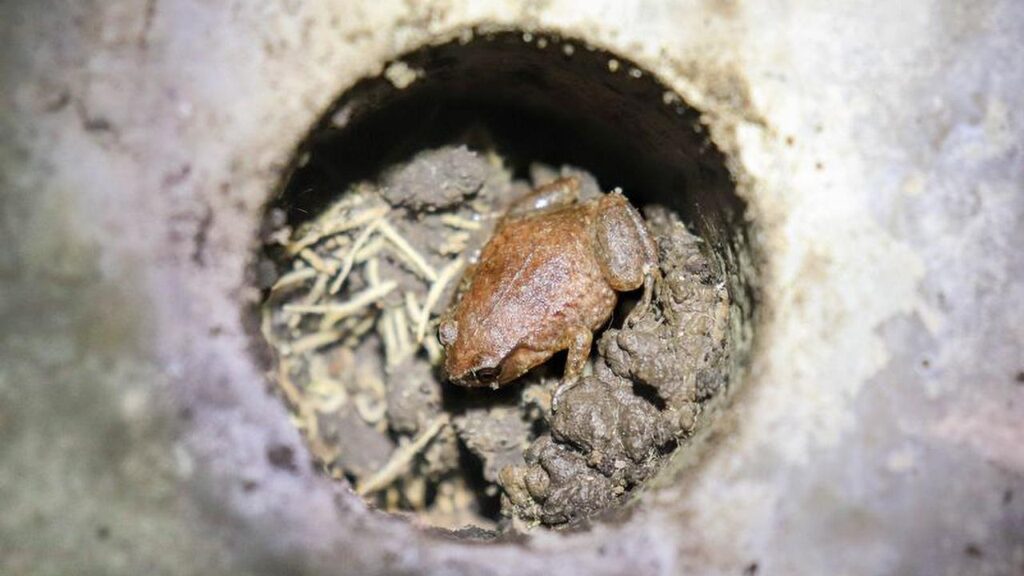
In the humid, moss-draped suburbs of Australia’s tropical rainforests, the hottest new amphibian real estate isn’t a hollow log or a damp pile of leaves – it’s a man-made concrete masterpiece.
A study has found concrete shelters have become the perfect tropical retreat for the tiny robust whistling frog – a creature only two centimetres long and the colour of a dead leaf.
Researchers from James Cook University painstakingly tested frog housing and nursery options for more than two years in north Queensland rainforests.
They discovered the amphibians were quick to abandon their rustic rainforest floor retreats for a trendy, upmarket concrete jungle, according to research published in the journal Ecology and Evolution.

“We knew they normally live under rocks and logs … so we found fallen trees on-site and chopped them into the right size,” PhD candidate Jordy Groffen told AAP.
“The concrete ones were made here at the university. They’re boulder-sized and have six chambers with multiple passages … like six-pack apartments.”
Each “boulder” featured six private chambers and interconnected hallway – the ultimate tropical retreat for a tiny amphibian with a social streak.
“The frogs liked the shelters more than we expected. It’s a new non-invasive way to monitor and help frog populations,” he said.
Hundreds of wild frogs used the new homes from eggs to juveniles to adults.

“Although they used them straight away, it still took two years before they bred in them … they had to settle in a bit. But when they did breed in them, they loved it,” Mr Groffen said.
“We found both males and females, and we also found eggs in them – we had one male with three nests in a single season.”
The concrete shelters were also tested by the flooding, and protected frog colonies that would otherwise have been washed away.
It makes studying frogs easier for researchers who previously had to listen for mating calls – which are made only by adult male frogs – and by scouring the rainforest floor.

“They can still move around, but they have only like a home range of less than a square metre … this makes it a lot easier to find them,” Mr Groffen said.
The team hopes the concrete frog housing could also be used to protect other vulnerable species.
“The endangered Bellenden Ker nursery frog lives in similar habitats, but only on top of one mountain,” he said.
“This gives us new tools to help protect them.”
AAP