Thylacines maybe lived on mainland longer than thought
Lloyd Jones |
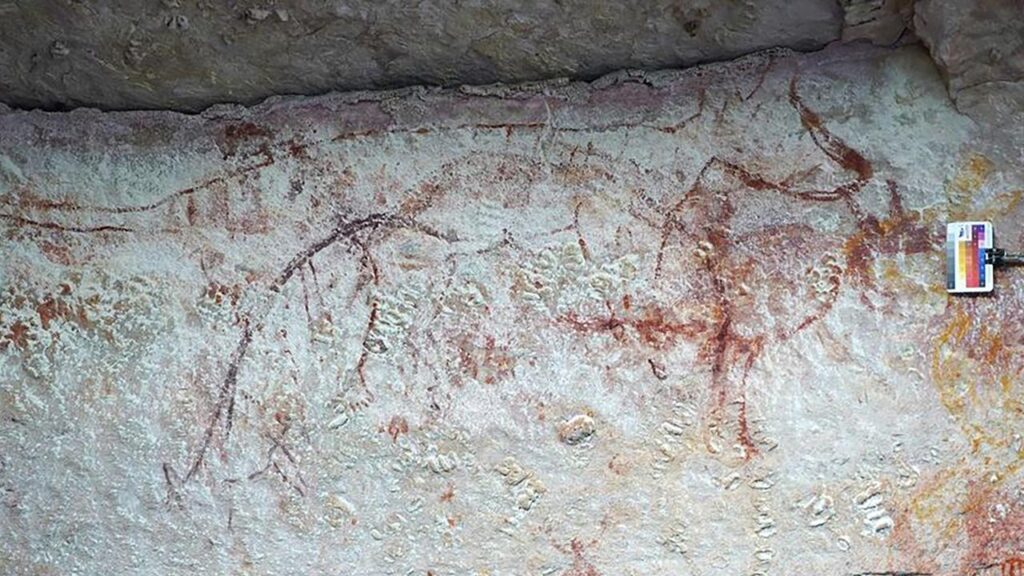
Newly discovered rock art raises the possibility Tasmanian tigers and devils may have survived longer in northern Australia than previously thought.
The last known striped and dog-like thylacine, known as the Tasmanian tiger, died in Hobart Zoo in 1936.
Scientific studies based on fossils indicate it may have died out on the Australian mainland about 3000 years ago.
But recent rock art finds suggest it may have hung on longer, along with the Tasmanian devil, now restricted to Tasmania.

Professor Paul Tacon, Chair in Rock Art Research at Griffith University, told AAP that 14 more images of thylacines and two of devils had been found in Arnhem Land in the Northern Territory, some only in 2025.
The earliest was about 15,000 years old and the most recent around 1000 or even only a few hundred years old.
“The artists who made the more recent paintings may have seen actual living thylacines and some of these creatures may have survived longer in Arnhem Land,” Prof Tacon said.
“Alternatively, artists may have been inspired by earlier paintings.”
More than 160 depictions of thylacines had been found across Australia, indicating it was an important animal to the Aboriginal people of the time, he said.
The animals may have been hunted for food or their fur and bones, or to drive them away to stop them competing for prey.
Thylacines also had symbolic significance, accompanying the most powerful ancestral being, the rainbow serpent.
Prof Tacon said it had come down from Aboriginal elders that thylacines had remarkable swimming abilities.
“The thylacine remains culturally important today and some contemporary artists make paintings of Tasmanian tigers on bark, paper and canvas.”

Study co-author, Andrea Jalandoni, said some of the Arnhem Land rock art had been retouched, showing the significance of the animals across generations.
“These depictions show that the thylacine held a meaningful place in everyday life and local knowledge long before it went extinct.”
Joey Nganjmirra, a Djalama man from Western Arnhem Land and co-author of the study, said the creatures were very much a part of his ancestors’ lives.
“They used to tell stories about going hunting with thylacines,” Mr Nganjmirra said.
AAP