Taxpayers pay the price for union guerrilla campaign
Robyn Wuth |
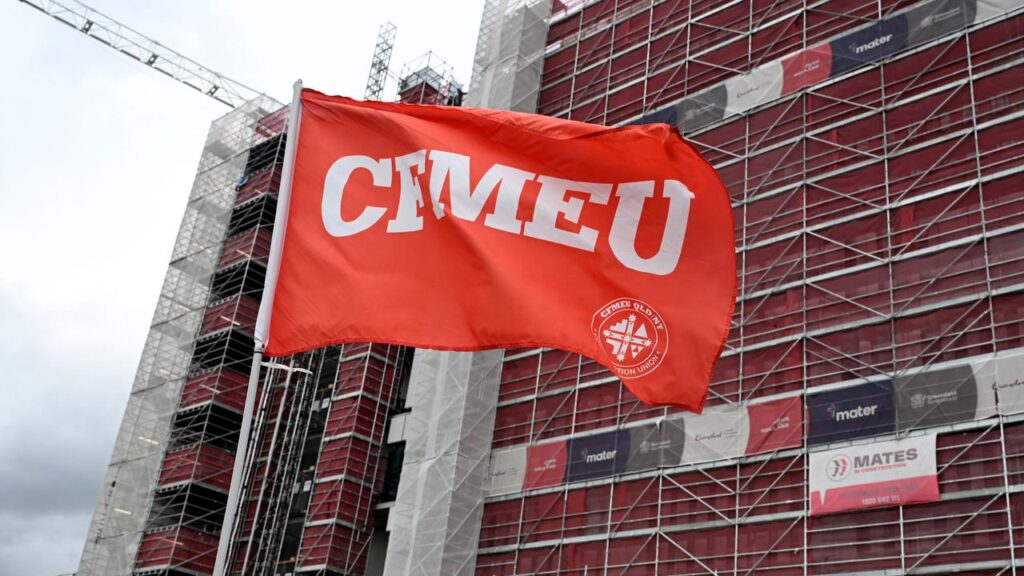
A militant union’s guerrilla campaign against a state’s largest infrastructure project in a decade has cost taxpayers more than half a billion dollars and delayed construction for years.
Queensland’s Commission of Inquiry into the CFMEU resumed on Tuesday, as key witness Cross River Rail Delivery Authority chief executive Graeme Newton took the stand.
In bombshell evidence, the cost of the CFMEU’s relentless disruption campaign to the CRR construction has been estimated at a staggering $580 million.
The disruption also resulted in the delivery timeline being delayed by at least three years, with the project expected to be completed by 2029.

Mr Newton outlined the increasingly toxic relationship with the CFMEU, which escalated to the point where authority staff were in fear for their safety.
The CFMEU industrial actions targeted critical, time-sensitive construction phases to maximise damage to the project timeline and financial impact, Mr Newton alleged in his statement.
On at least 12 occasions, the union sabotaged concrete pours, requiring costly construction rework, partial demolition, and re-pouring to meet safety standards.
It also deliberately interfered with crane lifts 14 times, leading to standby or cancellation fees for specialist crews and equipment, as well as additional costs for temporary storage and double handling of materials.
Prolonged union industrial action racked up 148 days of notified protected industrial action between April and December 2024, the inquiry was told.
Picket lines at worksites blocked nearly 1000 subcontracted workers, leading to violent confrontations and verbal abuse with security footage already in evidence.

Unprotected action was also launched across the southeast, with union bosses illegally entering construction zones to blockade sites.
“I am aware that the CFMEU publicly criticised responsible government ministers, senior public officers and individual site workers in ways that could be perceived as threatening, inflammatory or defamatory,” Mr Newton said in his statement.
“Mr (Michael) Ravbar was heard to publicly criticise me, making allegations of fraudulent behaviour, assertions of incompetence, ineptitude, and a lack of transparency.
“During his speech, he called me a dickhead, a sneaky asshole and a bullshit artist.”
He said the union also ran safety misinformation campaigns on topics including asbestos exposure, flooding claims, silica dust and heat stress through media organisations and on social media sites, which the authority refuted, Mr Newton said.

“These campaigns also coincided with broader industrial action, which could be said to have resulted in significant disruption to the project,” Mr Newton said.
“The CFMEU engaged in sustained media and social media campaigns targeting the project and making health or safety related claims premised on allegations that were overstated or unfounded.”
The union was placed in nationwide administration in 2024 amid claims bikies and organised crime figures had infiltrated the organisation, leading to a dramatic improvement.
Industrial action stopped, productivity was restored, and major work was completed on time or ahead of schedule.
The state government called the inquiry in July 2025 after barrister Geoffrey Watson’s report levelled allegations of thuggery against Queensland’s CFMEU branch.
The inquiry continues to probe the impact of misconduct on Queensland’s economy and on the construction of housing and transport infrastructure, including the Bruce Highway, Gold Coast Light Rail, Cross River Rail, and Centenary Bridge.
AAP