Pacific head rebukes Australia’s focus on pre-COP costs
Ben McKay |
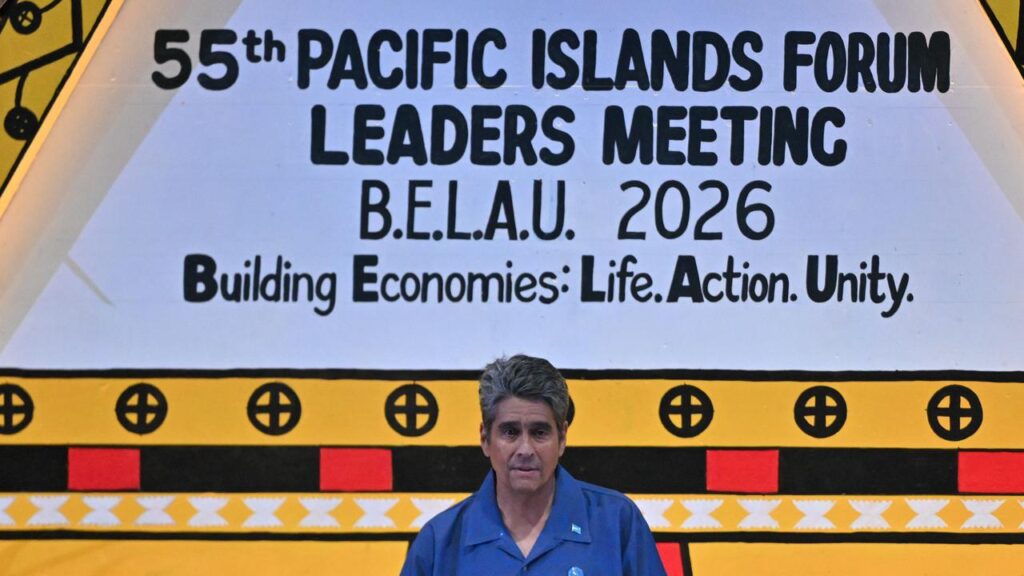
The head of an influential Pacific nations group has taken a swipe at Australia’s fixation on attendance and cost of this month’s pre-COP event, while urging greater climate investment for the region.
Palau President Surangel Whipps, who became Pacific Islands Forum chair after hosting the region’s annual summit last month, has spent the week in Canberra on a bilateral visit.
The trip lands between the two central events of annual climate talks: the Fiji and Tuvalu-hosted pre-COP last week and next month’s COP31 in Turkey.
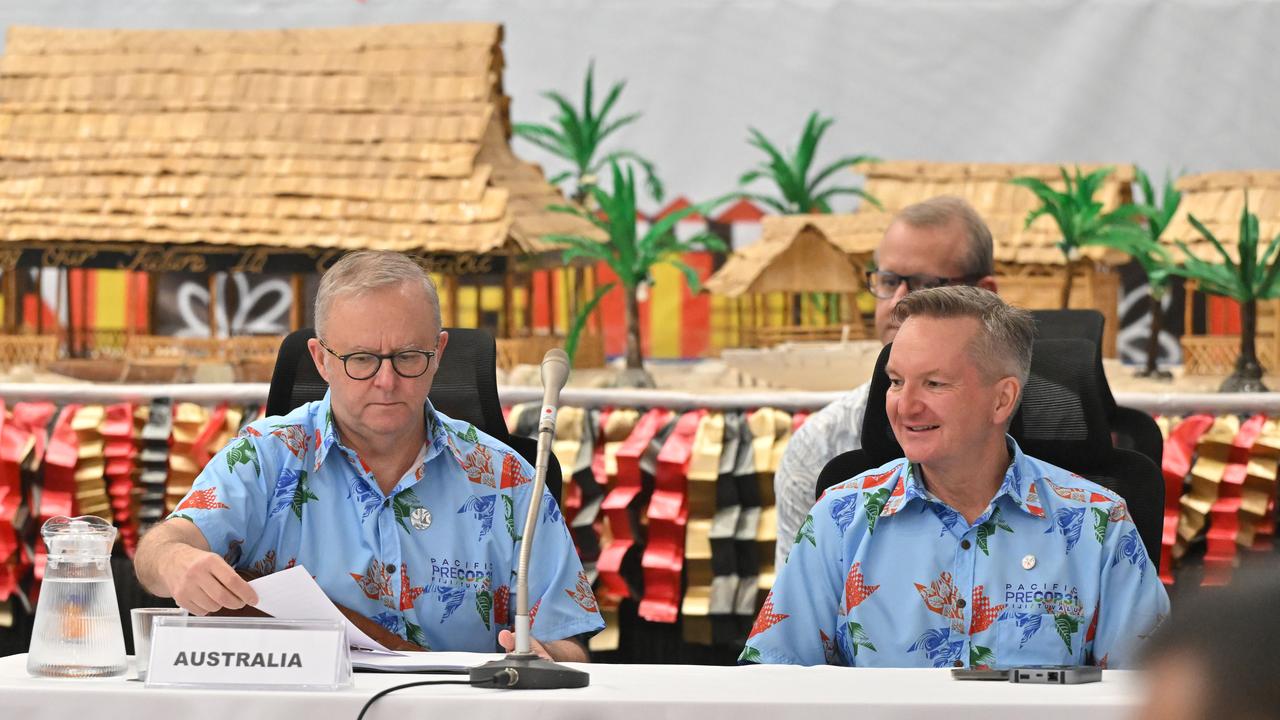
In the lead-up to pre-COP, Australia placed an emphasis on inviting leaders and ministers to the talks.
Not normally attended by such senior politicians, the goal was for the world to witness the impact of climate change on the globe’s most impacted region.
While most of the Pacific’s leaders partook in the summit, few outside the region did so.
In pointed remarks at the Australian National University, Mr Whipps said criticism of the endeavour was short-sighted.
“Some have dismissed the gathering by counting the leaders who were absent … rather than recognising the significance of those who came,” he said.
“I read recently that all the big names were missing so let’s talk about size for a moment.
“Pacific states are custodians of nearly 20 per cent of our Earth’s surface … an area larger than Russia, China, the United States, Canada, Brazil, and Australia, and India combined.
“There is nothing small about that.
“Humanity actually depends upon the blue Pacific for its food, climate stability and connectivity.”
He said Pacific island nations, often dismissed as small, ought to be redefined as ‘big ocean states’.
“It is true that some of the world’s largest industrialised nations and its largest emitters and polluters were not present at this pre-COP but the big ocean states were,” he said.
Tuvalu’s climate minister Maina Talia, also in Australia this week, said his country – the lowest-lying in the world – was delighted to play host.
“More than 30 ministers were there representing their countries … we’re very happy with the outcome of the pre-COP,” he told the ABC.
However, Dr Talia said he was “alarmed” by Australia’s continued expansion of fossil fuels, given the need rein in emissions to limit global warming.
“We want to see that they will put a stop to opening new coal mines and gasses because that will definitely impact the lives of those living in small low-lying atolls,” he said.
“We want to keep 1.5 (degrees) alive for us to stay in our own countries.”
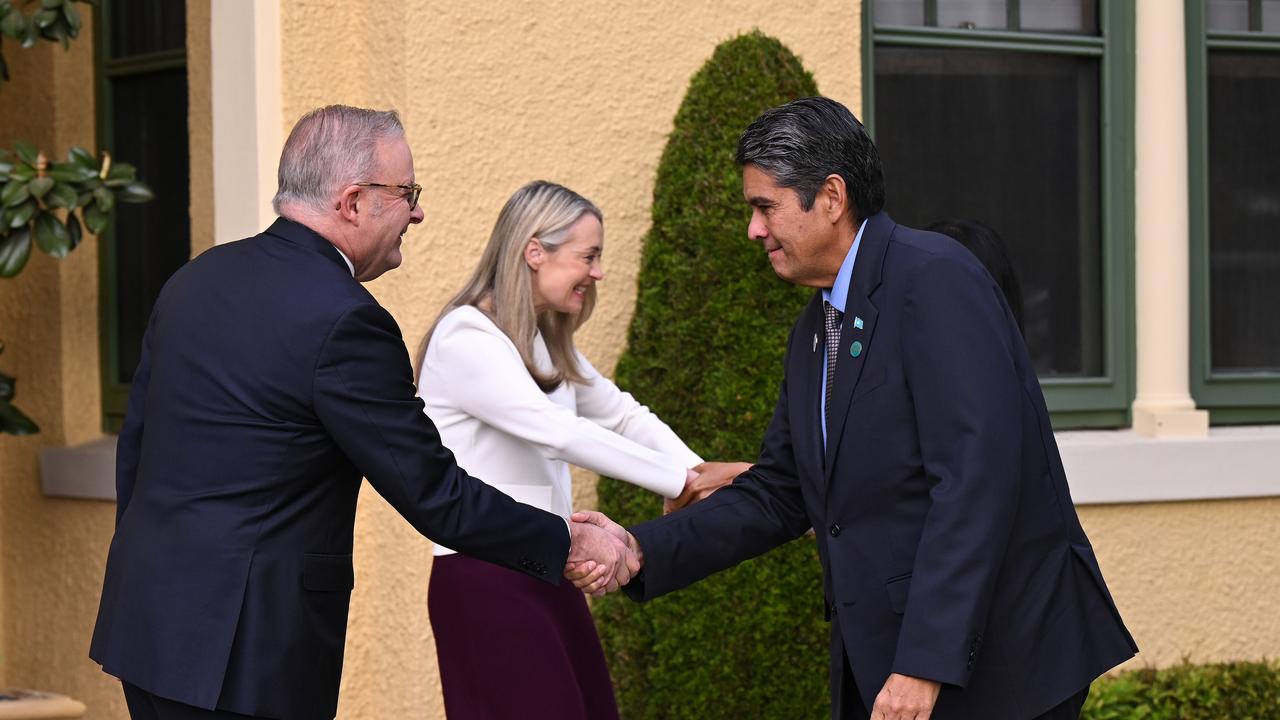
Mr Whipps, who met Anthony Albanese on Wednesday morning, said it was “a fair question” as to whether the pre-COP was worth the cost, estimated in the tens of millions.
“Here is how I would ask you to answer it: not by who was in the room, but by the result we collectively achieve at COP next month,” he said.
The Pacific has set four regional priorities for COP31: keeping 1.5 degrees within reach, accelerating the renewables transition, funding, and recognising ocean stewardship.
Australia and Turkey, hosting the larger summit from November 9, are working towards support for the “Antalya Ocean Declaration”, underpinning that fourth goal.
Mr Whipps is also eager to win funding towards the Pacific Resilience Facility to fund the region’s renewables transition, climate adaptation and disaster mitigation.
Pledges from pre-COP to the region’s climate finance body only reached half of the initial $US500 million goal.
Speaking in Fiji, regional leaders including Mr Albanese said this funding was central to the Pacific’s hopes from COP31.
“This is the moment to invest,” Cook Islands Prime Minister Mark Brown said.
“Your investment buys us time.”
AAP