Questions cloud coalition plan for migrant care staff
Will Nicholas, Lucinda Garbutt-Young and Jacob Shteyman |

Sweeping cuts to temporary migrants won’t impact Australia’s ability to access aged care and health workers, the opposition leader insists, despite little detail on how the sector will be affected.
The coalition announced on Tuesday it would reduce net overseas migration from its annual level of nearly 300,000 people to about 100,000 in the first year if it won the next election.
The bulk of the reduction would be achieved by slashing the stock of temporary migrants by about 650,000 over four years.
Australia had become a guest worker economy under Labor and the changes would recalibrate the system to focus more on skilled workers rather than temporary workers, coalition leader Angus Taylor said.
But Australia’s care economy, such as aged care providers, are heavily reliant on temporary visa holders.
A 2024 survey by the Department of Health found more than one-in-five aged care workers were temporary visa holders, with 20 per cent of them on temporary graduate visas, which the coalition has vowed to abolish.
The coalition included in its forecasts an allocation of 10,000 post-study transitional visas per year, for students completing PhDs, studying at regional universities or studying health or education.
Mr Taylor later confirmed that aged care workers would also be included in the transitional visa cohort.
“We’ve created transition arrangements and exemptions for health and aged care workers as part of the plan,” he told reporters on Wednesday.
More skilled visa places would also be allocated to aged care workers, he said.
But the plan does not detail a breakdown of how the transitional visas will be split up.
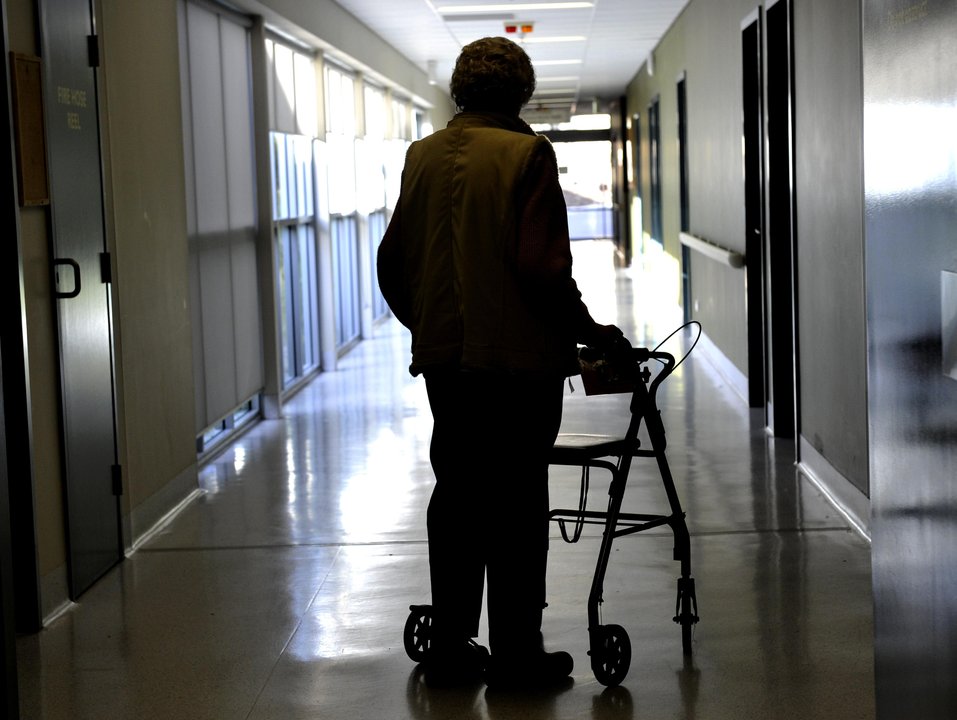
Tom Symondson, chief executive of aged care peak body Ageing Australia, said opposition health spokeswoman Anne Ruston had provided assurance the aged care workforce would not be impacted by the changes.
“The worst thing we could do now is reduce the number of staff we have in aged care,” he told AAP.
Mr Symondson said of direct care staff in the sector, about 70,000 were on temporary visas of one form or another.
But the sector also relies on a large workforce not providing direct care, such as cleaners and kitchen staff, who are not included in skilled visa categories and whose status remains unclear.
“This is why it’s really important that changes to migration settings consider all of the impacts on sectors like aged care, and we would not be the only sector that’s concerned,” Mr Symondson said.
Small Business Minister Anne Aly, whose mother worked in aged care, said the coalition was unable to explain how their policy would impact the sector.
“Whenever I talk to small businesses, they say the same thing,” she told ABC TV.
“We have to continue to look at a domestic workforce … but in the interim, we need a temporary workforce to fill those skill shortages.”
The coalition would also require visa holders to leave the country before applying for a new visa, in an attempt to curtail so-called “visa hopping”.

The opposition claims bridging visas would be virtually eliminated, which Nationals Senate leader Bridget McKenzie confirmed would require boosting the home affairs’ department’s processing capacity.
“We are going to be putting more resources into home affairs to actually get the visa processing sorted, we’re also putting more resources into home affairs to actually locate (overstayers) and help them leave,” she told Seven’s Sunrise program.
“You won’t be able to graduate and then go be an Uber driver as an engineer – you’ll have to go home.”
But former Immigration Department deputy secretary Abul Rizvi said the coalition would find it near impossible in practice to eliminate bridging visas, which are above 400,000.
AAP