Population growth not stopping ‘recession-like’ economy
Jacob Shteyman |
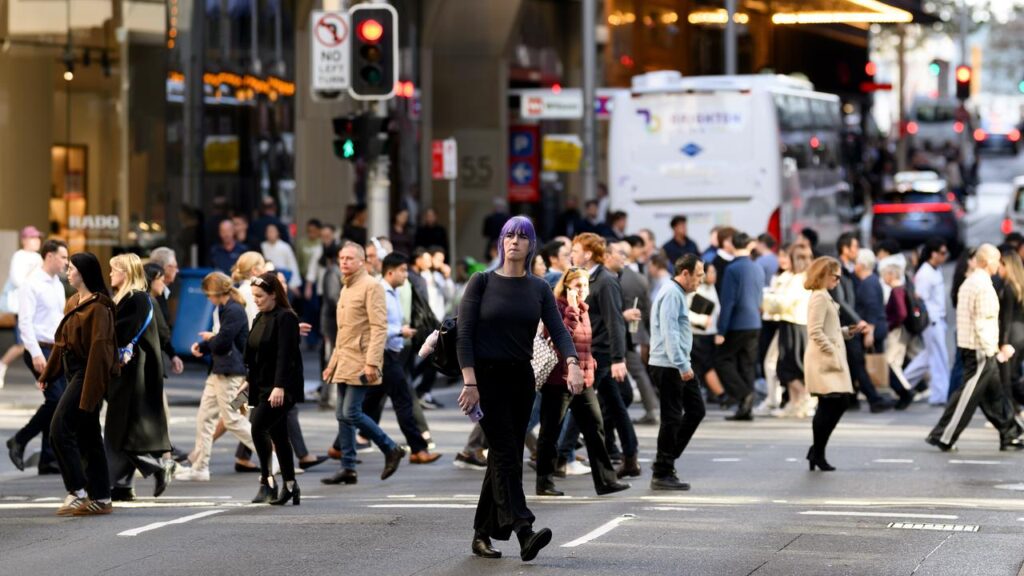
Australians face “recession-like” conditions as the nation’s increasing reliance on population growth over productivity catches up with policy-makers.
The economy is likely to avoid a technical recession, defined as two consecutive quarters of contraction, but it won’t feel like it to Australian households, Deloitte Access Economics partner Stephen Smith says.
As he released Deloitte’s latest Business Outlook report on Wednesday, Mr Smith said Australia’s economic good fortune was running out.
Deloitte downgraded its economic growth forecast for 2027/28 to 1.7 per cent from 1.9 per cent in the previous forecast in June.
Australia would likely avoid a near-term recession because drivers of growth, such as strong government spending, data centre construction, and spending by older and wealthier Australians, were proving relatively impervious to higher interest rates, Mr Smith said.

Higher rates will therefore be worn hardest by low-income households, mortgage holders, home builders and businesses outside the AI bubble.
“Households will continue to experience recession-like conditions,” he said.
“That divergence will weigh on discretionary consumer spending, widen differences across sectors and intensify political pressure.”
Even though the economy was running too hot for the Reserve Bank and driving up inflation, on a per capita basis growth was relatively weak, because productivity growth has been non-existent in recent years.
“Increasingly, Australian economic growth has been achieved by adding more people to the economy rather than making each worker more productive,” Mr Smith said.
“In short, Australia has mistaken a larger economy for one which is more prosperous.”
Discontent about high migration levels while households have seen living standards fall in recent years has driven the rise in the polls of One Nation and prompted Labor and the coalition to announce their own plans to slash the migrant intake.
Opposition Leader Angus Taylor and Nationals Leader Matt Canavan said migration had not been working for the Australian economy as they announced plans to slash net overseas migration to 100,000 in the first year they came to office.

“Labor has become entirely reliant on migration to drive economic growth, relying on population rather than productivity to prop up GDP, that’s why we’ve seen GDP per capita go backwards,” Senator Canavan said on Tuesday.
“It’s an unsustainable model, and it must stop.”
Mr Smith said migration was still one of Australia’s great economic strengths.
“Skilled migrants expand capability, ease labour shortages, improve the population’s age structure, and deepen the tax base,” he said.
“A smaller, older and less open Australia would face serious economic costs.”
But it was no replacement for boosting the productive capacity of the economy with adequate housing supply, infrastructure delivery, capital investment, stronger competition, skills training and greater business dynamism.
AAP