‘Who gave you the right?’: villagers take on gas giant
Derek Rose |
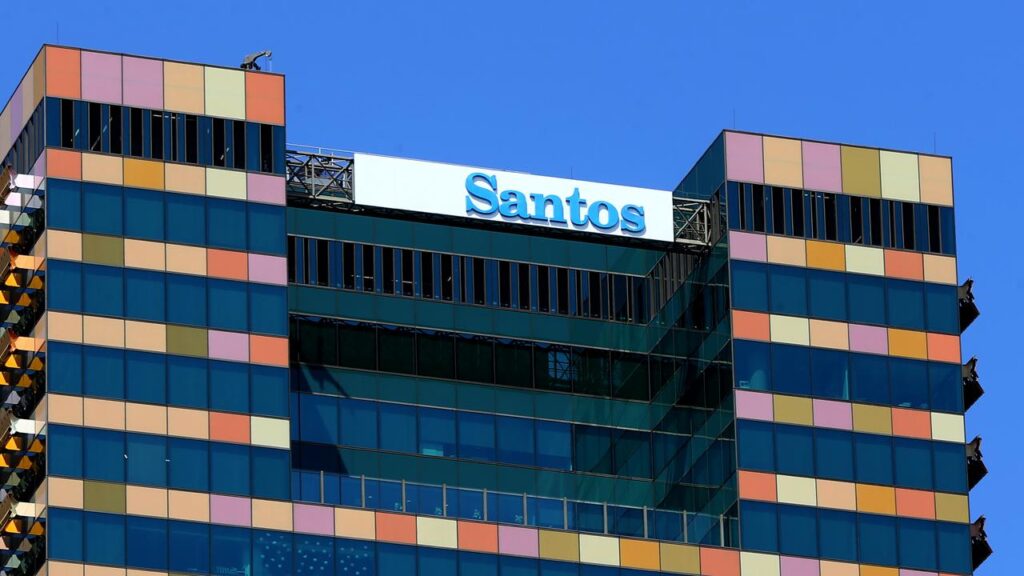
Villagers from remote communities in Papua New Guinea have challenged Australia’s second-largest gas producer over a $16 billion project, saying it violates their rights.
Santos holds a 22.8 per cent interest in the Papua liquid natural gas joint venture, for which French energy giant TotalEnergies is expected to make a final investment decision on whether to proceed later in 2026 after years of delays.
The complex project involves developing the Elk and Antelope gas fields in the Gulf of Papua and constructing a 320km pipeline to a new LNG plant north of the capital, Port Moresby, that can process up to 5.6 million tonnes of gas each year.

Supporters say Papua LNG will create jobs, infrastructure and boost the country’s economy.
But two villagers who spoke on Thursday at Santos’s annual general meeting of shareholders at the Adelaide Convention Centre fear its impact.
Meg Heako, a customary landowner from PNG’s rugged and remote Kikori District, told the board her village was directly in the pipeline’s path.
“Your partners are working on our land without consulting or even talking to everyone and clearing our land without consent, drilling without consent,” she said.
“You are just walking in, cutting trees, drilling. Who gave you the right or the consent to come to my land?
“We have a right to be able to understand what is happening on our lands and to be informed and properly consulted.”
She invited Santos board directors to come to her village of Mareke and walk the pipeline route themselves so they could see the land, homes and community that would be affected.

Departing Santos chairman Keith Spence did not directly respond to that invitation but said the PNG government and TotalEnergies would hold a development forum with landowners to discuss those issues and risks.
“I really can’t say any more than that the development forum needs to occur and is planned to occur,” he said.
Another villager, Joseph Ka’au, chief of the Kaimare tribe from the remote Baimuro area, said his community and others were not being included in discussions about the project’s development.
“We’ve been excluded by some stupid laws that we set up in our country, that if you are five kilometres away from the area that company operates in, we were excluded.”
Mr Ka’au said he had seen a permit that allowed TotalEnergies to discharge waste into the environment, but it did not specify what kind of waste.
“This permit is already issued and it’s for 35 years, which means you and your partners will be dumping this waste into my people’s environment for the next 35 years,” he said.
“This is not on. This, for me, looks like human rights abuse.”
Mr Spence thanked Mr Ka’au for his “powerful question” and said Santos would look into it as part of the company’s assurance processes as the project moved forward.

Chief executive Kevin Gallagher said Santos would receive an update from TotalEnergies following the development forum but would also seek assurances the project met its standards.
“I’d be very confident they would, but I say that only based on my track record and Santos’ track record and Total’s reputation,” he said.
Mr Ka’au and Ms Heako’s journey to the Santos meeting was supported by the environmental group Market Forces, which raised more than $11,000.
TotalEnergies has said it is employing a network of village liaison officers to gather community feedback as part of a five-phase model in alignment with international standards.
Villagers are provided with third-party legal advisers who attend meetings and consult with communities without Papua LNG project representatives.
Santos shares had fallen by almost two per cent to $2.59 on Thursday afternoon.
AAP