Defence property sell-off in bid to shore up budget
Zac de Silva and Tess Ikonomou |
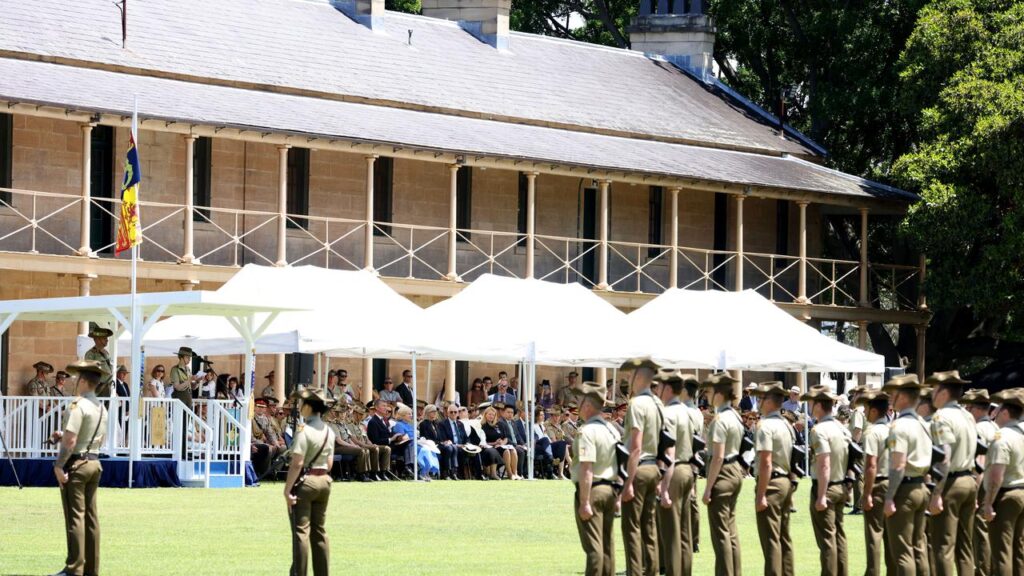
Historic military barracks will be among the properties to be put up for sale in a bid to raise almost $2 billion to reinvest back into the Defence budget.
Defence Minister Richard Marles announced on Wednesday a total of 67 sites will be fully or partly sold, including the Victoria Barracks in Melbourne, Sydney and Brisbane.
Three of those sites have already been sold.
The sell-off is expected to rake in $1.8 billion for the federal government and save taxpayers another $100 million a year in maintenance costs, with the cash to be redirected to the military.

Prime Minister Anthony Albanese described the plan as a “sensible way forward”.
“It is a win for the nation’s defence, is a win for opportunities when it comes to housing,” he told parliament.
“But it’s also a win for ensuring that … we don’t have estates just sitting there costing money to be maintained, that are serving no purpose in either being used by our defence force personnel or in defending our nation.”

The list of properties to be sold off includes Sydney’s Victoria Barracks – a complex established in 1840.
Between 450 and 650 people are based at the barracks and will be relocated to other defence sites.
Defence properties across the nation come to about 3.8 million hectares.

An unoccupied naval base on Sydney’s Spectacle Island will also go under the hammer and HMAS Penguin, a navy diving base visible from the scenic Balmoral Beach, will be partially sold.
Melbourne’s Victoria Barracks, another heritage-listed site that played a crucial role in both world wars with buildings dating back to 1850, will also go on sale along with three military-owned golf courses in Victoria and the ACT.
The defence estate review had recommended the sale of 68 properties, one of which the government has declined to sell.
The government has decided to sell only part of three sites, including a dive-training site at Pittwater on Sydney’s northern beaches.
It was recommended for sale but will be retained because it hosts a “critical capability” that cannot easily be relocated.
Mr Marles did not deny the plan had been met with pushback among top military brass.
“It’s understandable that those who’ve served in the army, who are very passionate about the army … will have emotional attachments to places they serve,” he said.

The independent review found defence personnel should be relocated away from a number of historic properties to newer military buildings.
It found some sites were currently vacant or unfit for use because of rusted and derelict buildings, black mould and chemical contamination.
All sites earmarked for sale will be handed over in coming years to the Finance Department, which will be responsible for finding a buyer.
Government officials believe some properties will likely take years to sell.
Buyers are expected to be a mix of state and territory governments, as well as private owners.
Australian Strategic Policy Institute National Security Program deputy director Raelene Lockhorst said the announcement was positive and the audit delivered some practical recommendations.
“It’s aligning the estate footprint with the national defence strategy and the most important thing is that it’s delivering substantial annual savings in maintenance costs for facilities that are under utilised or not used at all,” she said.

Opposition assistant defence spokesman Phillip Thompson, an army veteran, said the reserves might need some of these estates for training and their headquarters.
“We may need these bases for our military that must expand and grow in numbers,” he said.
Greens defence spokesperson David Shoebridge said the sites could deliver “literally thousands of homes” while protecting heritage and providing public parklands.
“Labor selling this land without any regard to the desperate need for public housing and the strong community support for the built heritage and green open space is a three-way betrayal,” he said.
AAP