Green light for Invasion Day march despite protest ban
Adelaide Lang and Kat Wong |
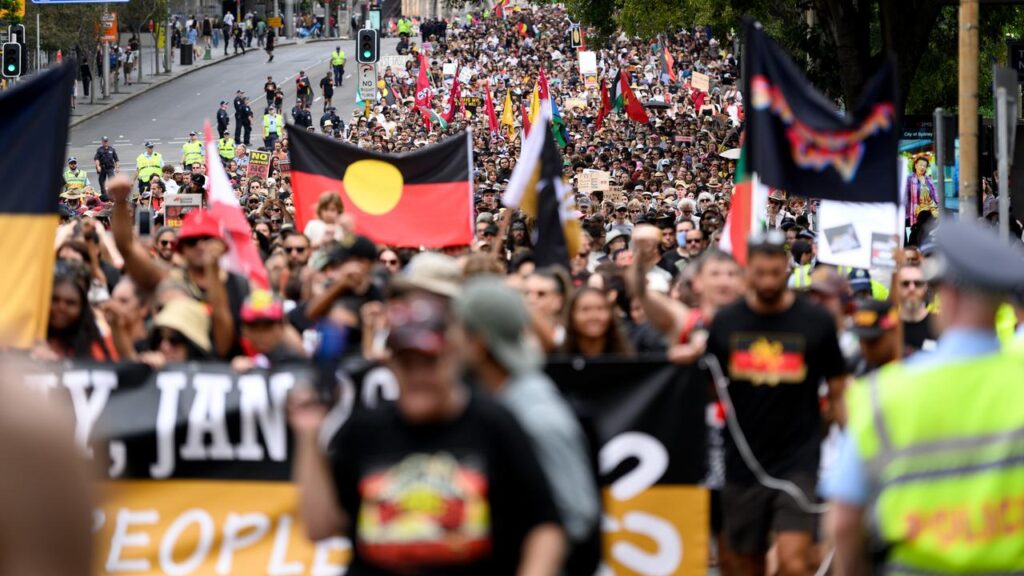
Critics have questioned why controversial protest restrictions have been extended for another fortnight after an exemption was created to allow Invasion Day rallies to proceed.
NSW Police Commissioner Mal Lanyon announced the decision on Tuesday, less than six weeks after the Bondi terror attack prompted fears about public cohesion and safety.
“This is about making sure we enable people to protest, enable free speech, but make sure the community remains safe,” he said.
The affected area has been pared back from most of Sydney’s metropolitan area to encompass Darling Harbour, the northern city centre excluding Hyde Park and the eastern suburbs.
The amended declaration means the city’s annual Invasion Day rallies can proceed as planned on January 26.
Protesters will march through the city’s south from Hyde Park as they raise their voices on issues such as the gap between Indigenous and non-Indigenous health outcomes, deaths in custody and systemic racism.
“We’re not here to cause any harm to the police or anyone in society,” Blak Caucus member Elizabeth Jarrett told AAP before the decision.
“The police should respectfully stand aside and let us march.”

Mr Lanyon agreed, saying he expected families would be among the tens of thousands of people marching on January 26.
Greens MP Sue Higginson noted street marches had been an accepted and anticipated element of Invasion Day rallies for nearly a century.
“It’s clear the commissioner has recognised this and rightly bent to the will of the people,” she said.
An anti-immigration March for Australia has also been authorised to proceed on January 26.
“This decision today is not protest agnostic. Any person can now lodge a form one (application for protest authorisation),” Mr Lanyon said.

But Ms Higginson said it was important to question why the protest restrictions were still in force for swathes of Sydney’s city centre.
“It seems fairly obvious they have been extended to try to continue to capture the pro-Palestine protest movement and in particular any protest against the Israeli president’s apparent visit in early February,” she said.
NSW Council for Civil Liberties president Tim Roberts said the declaration made it plain Mr Lanyon was acting in a political capacity rather than in the interest of public safety.
Although the declaration does not explicitly ban protests, it prevents organisers from gaining authorisation that shields them from arrest for obstructing traffic or pedestrians.
Protesters can also be issued a move-on direction, even if they participate in a static demonstration.

The power to make these declarations was given to the commissioner in laws rushed through parliament after two gunmen opened fire on a Hannukah event at Bondi Beach on December 14, killing 15 people.
The number of officers in the metropolitan area will climb to 1500 on January 26, and a third will be devoted to monitoring protest activity.
The commissioner warned anyone who might be planning to hijack authorised protests that it was not the time to sow division.
NSW Acting Police Minister Paul Scully endorsed the decision and asked the community to comply with the law.
A coalition of activist groups – including Blak Caucus – have launched a legal challenge to the anti-protest measures, claiming they are unconstitutional.
AAP