AI risks deepening divide between investors and workers
Jacob Shteyman |
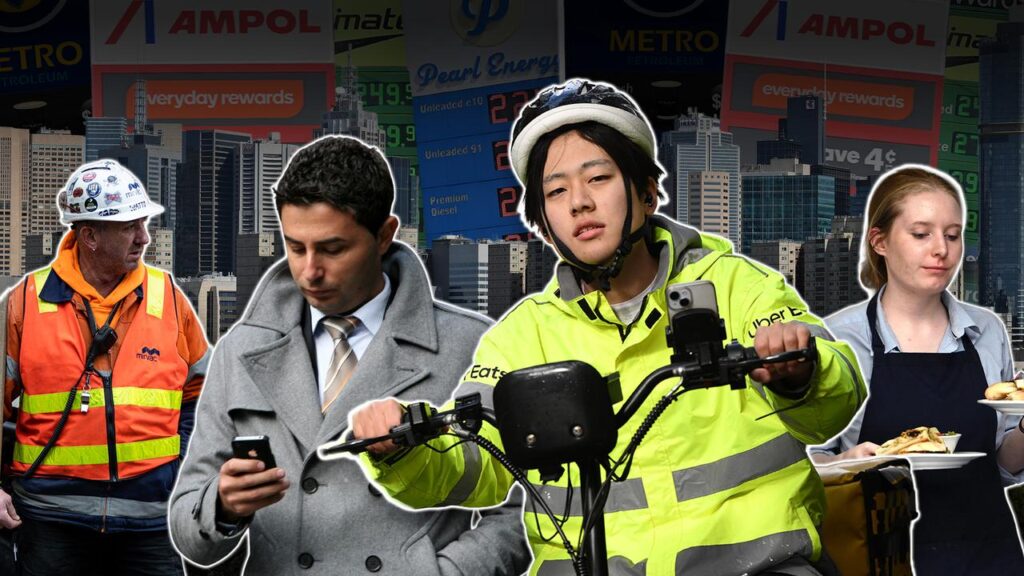
The divide between people who earn income from investments and those who work for a living could be exacerbated by the artificial intelligence revolution, economists at Australia’s largest business lender warn.
While the adoption of AI is expected to boost productivity, without policy intervention the benefits will likely be unevenly felt across the economy, NAB chief economist Sally Auld and senior economist Taylor Nugent found in a research note released on Friday.
Essentially, AI could result in the economic pie getting larger but workers not receiving a larger slice.

“While economists often concentrate on the efficiency gains of AI, there are potentially significant distributional consequences,” wrote Dr Auld and Mr Nugent.
“Indeed, one concern that many hold with the rise of AI is the risk that without careful policy decisions, AI may amplify income and wealth inequalities.
“If AI mainly substitutes for labour without a proportional increase in new tasks for labour, it could further shift income from labour to capital owners.”
In recent decades, low interest rates and financial deregulation have turbocharged asset prices.
But the share of income received by workers has declined.
Between the 1990s and the COVID pandemic, the gulf widened between those who earned income from capital and those who worked for a living, according to research by economist Gianni La Cava.

While the labour share of income climbed during the COVID pandemic, technology-exposed sectors such as retail and finance have experienced a significant decline.
“A bit like the AI story that people worry about now, in finance they replaced a lot of bank tellers with ATMs over the ’90s and 2000s,” Dr La Cava told AAP.
“That reduced their wage bill at the banks, and that reduced the labour share.”
Because capital tends to be concentrated among wealthier individuals, a higher income share of capital tends to result in greater economic inequality.
It can also be shifted around more easily to minimise tax requirements, said Treasury secretary Jenny Wilkinson on Thursday.
Labor has sought to frame its controversial budget tax changes around addressing this trend.
Replacing the 50 per cent capital gains tax discount with indexation would help rebalance the tax treatment of income earned from work – the way most Australians earn a living – with income earned from assets, Prime Minister Anthony Albanese told ABC News on Thursday.

The AI investment boom is reaping huge benefits for people with a stake in companies such as Anthropic, OpenAI and Palantir.
Anthropic, the firm behind chatbot Claude, was valued at more than $1.3 trillion on Friday, becoming the most valuable AI company in the world.
All that investment needs to generate a return.
One way for employers to justify their spending on AI is to use it to reduce labour costs.
It’s a worst case scenario, but Anthropic chief executive Dario Amodei has predicted AI could cause unemployment to spike up to 20 per cent.
While AI has the potential to increase jobs and incomes as higher productivity and growth spurs demand for workers, NAB found employment was about nine per cent lower in occupations with higher exposure to AI since 2022.
“For now, evidence of slower employment growth in occupations with elevated AI exposure suggests that it may take time for the offsetting benefits from additional labour demand to flow through,” Dr Auld and Mr Nugent said.

More immediately, the demand for AI computing power has upended Australia’s capital markets.
Data centre investment drove a massive 6.5 per cent increase in private capital expenditure in the March quarter, even though other industries were relatively soft.
Westpac senior economist Pat Bustamante estimated Australia’s data centre investment pipeline will exceed $155 billion, or 5.6 per cent of GDP, including expenditure on clean energy needed to power it.
“Crucially, this is just phase one,” he said.
“The larger pay-off, via stronger productivity, comes later, during the production phase as data centres enable widespread AI adoption.”
AAP