Leaders spar as NZ election remains too close to call
Ben McKay |
Whether in polling, or debate performance, New Zealanders are feeling uninspired by their prime ministerial choices.
As the November 7 election draws closer, the make-up of the next government is no less clear after another week of campaigning and a fresh leaders debate.
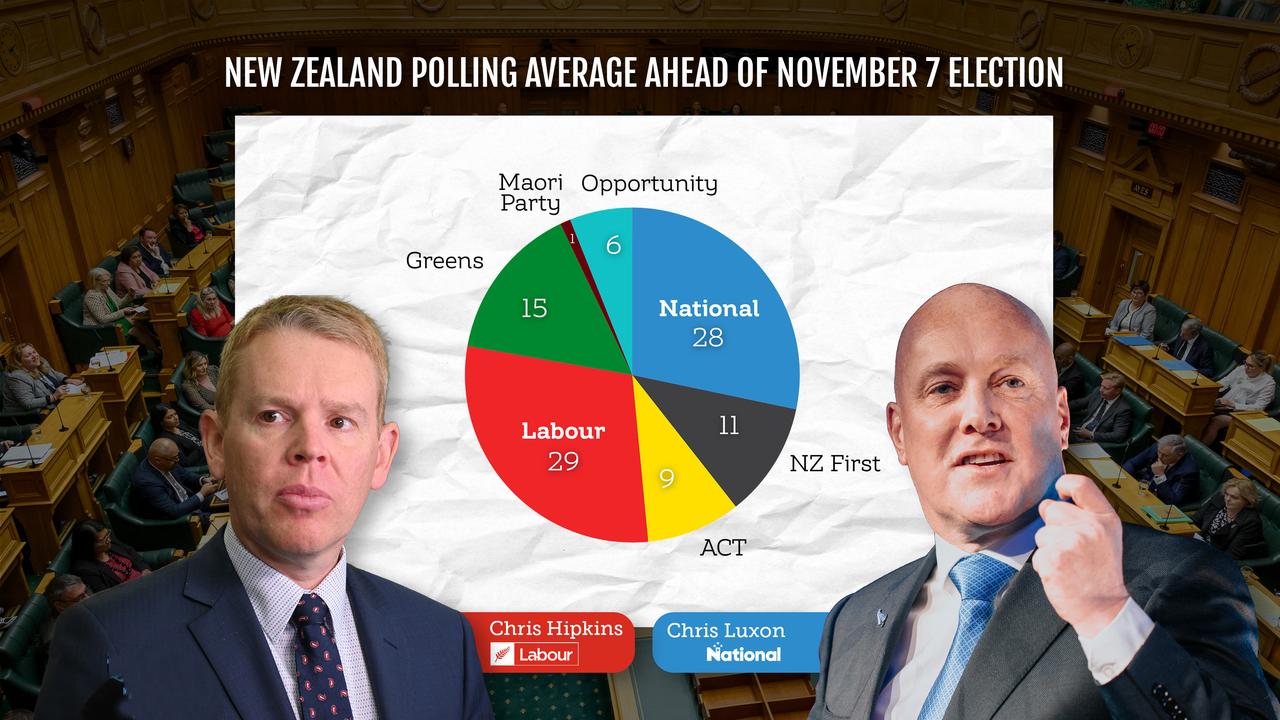
The major parties – centre-right National and centre-left Labour – are both polling at 28 per cent according to the latest TVNZ-Verian poll.
That is their lowest combined level since they emerged as New Zealand’s major parties in the 1930s.
And the options for prime minister, National incumbent Chris Luxon, and Labour’s Chris Hipkins, both underwhelmed in the NZ Herald-hosted second leaders debate on Wednesday night.
“They filled me with no hope,” analyst and social activist David Letele said on a post-debate panel which declared the debate a tight draw.
“There is no X-Factor here with these two leaders,” right-aligned public relations expert Trish Sherson said.
National still claimed the win, pointing to a reader poll on the NZ Herald’s website.
The political malaise is underpinned by New Zealand’s sluggish economy, and the fact the 2026 contest is a re-run of 2023.
Then, Mr Luxon won and formed a three-party coalition to turf the two-term Labour-led government Mr Hipkins inherited from Jacinda Ardern.
In Wednesday’s debate, Mr Luxon admitted communications blunders as prime minister and then made another whopper, saying he had increased the minimum wage by inflation each year.
“No you haven’t,” Mr Hipkins quickly fact-checked, before a back-and-forth on wages.
“We don’t believe you just legislate it. We actually believe you grow an economy,” Mr Luxon said.
“You don’t grow an economy by paying people poorly,” Mr Hipkins retorted.
Mr Luxon compounded the error later in the debate by naming Dolly Parton’s nine to five, which is about working menial labour, as his favourite song but failing to complete its lyrics.
Influential broadcaster Heather Du Plessis-Allan said Mr Luxon “completely flubbed” it on minimum wages.
“Chris Luxon lost this debate, Chris Hipkins did not win this debate, Luxon lost this debate on that answer right there,” she said.
In one of the more eye-catching moments, Mr Hipkins said New Zealand should join the European Union “if the opportunity arises”, which Mr Luxon disagreed with.
Unlike Australia, where election debates are past their heyday, Kiwis are still tuning into campaign contests.

Last week’s opening debate drew almost one million viewers to TVNZ, and there are another two between the leaders to come.
There have also been a pair of minor party debates, featuring leaders of the five other parties likely to return MPs in the next parliament.
Of those contests, newcomer Qiulae Wong of the Opportunity party has twice been judged a clear winner.
Her teal-esque centrist force has roared from irrelevancy to the likely kingmaker role, given the other six parties are calcified into left and right blocs and are more-or-less deadlocked in the polls.
AAP