Norway, Australia warn of looming RSF attacks in Sudan
|
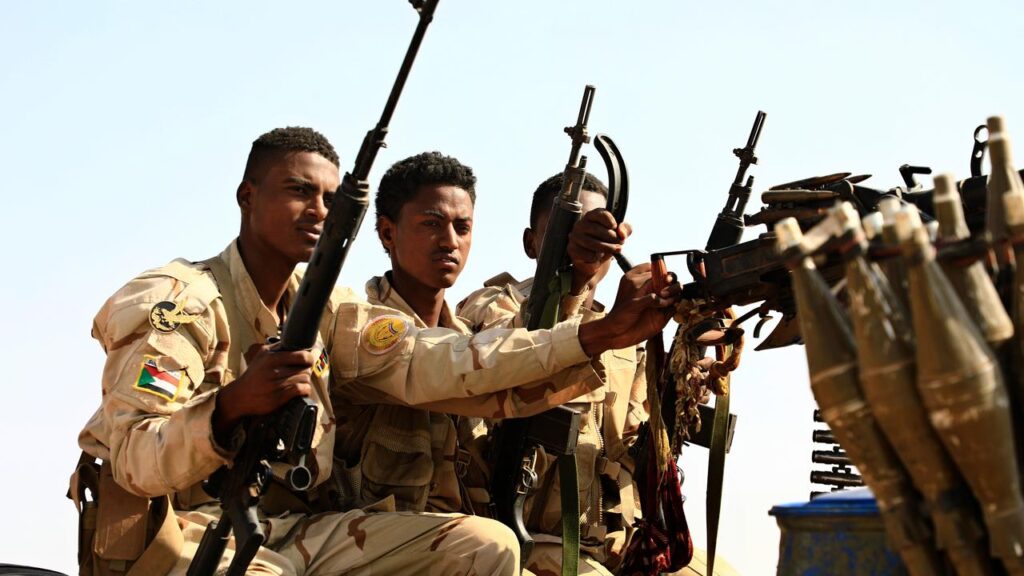
The United Kingdom, Norway and a group of countries including Australia have raised the alarm at the United Nations Human Rights Council that the paramilitary Rapid Support Forces in Sudan could imminently escalate their assault on the central Sudanese city of al-Obeid, possibly resulting in large-scale atrocities.
“We are deeply concerned at the risk of imminent escalation on the ground, leaving approximately 500,000 civilians at risk of falling victim to large-scale atrocities, including more than 100,000 internally displaced persons,” Tormod Endresen, the ambassador for Norway, told the council in Geneva.
Norway shared a joint statement calling on the RSF to immediately cease its assault on al-Obeid.
The statement was presented on behalf of the Coalition for Atrocity Prevention and Justice for Sudan, comprising the UK, Canada, France, Germany, Ireland, the Netherlands, Sierra Leone and Norway, which said they were also joined by 21 other countries.
Al-Obeid is one of Sudan’s largest cities and capital of North Kordofan state, scene of the heaviest fighting in recent months of a war that has displaced nearly 14 million people, triggered rounds of ethnic bloodshed and spread famine and disease.
The coalition of countries also urged all states to apply maximum pressure on the RSF and its foes, the Sudanese Armed Forces, to prevent atrocities and protect civilians.
It also reiterated the need for unhindered humanitarian access.
After more than three years of war in Sudan, the Sudanese army has control of central and eastern regions while the RSF has solidified its control of Darfur in the west.
The two sides are fighting over the vast Kordofan region that lies between, crucial to agriculture.
“We are gravely alarmed by the urgent risks of atrocities and deliberate killings in Sudan,” the statement added, pointing to 10 consecutive days of drone strikes which have killed at least 50 civilians across al-Obeid and North Kordofan, and damaged civilian infrastructure.
In October, the RSF took over al-Fashir, a large city in Sudan’s Darfur region.
The famine-stricken city, once home to about a million people, had been under siege for 18 months before the final RSF offensive, which began on October 25.
The UN High Commissioner for Human Rights Volker Türk on Thursday also issued a stark warning that an imminent offensive risked potential violations of international law, and warned that people living in al-Obeid had already been suffering siege-like conditions for more than 18 months.
“We have seen this playbook before. We cannot allow the repeat of the preventable atrocities we documented in al-Fasher and Zamzam IDP camp in North Darfur last year,” he said in a statement.
“Let this be a stark warning to the world about an impending human rights disaster and worsening humanitarian situation. The states with influence have the duty to exercise it now to stop this madness in its tracks,” he added.
The United States and rights groups have accused the RSF of committing genocide against non-Arabs in West Darfur during the conflict, in an extension of long-running violence stemming from disputes over land.
The RSF has denied responsibility for ethnically-charged killings and has said those responsible for abuses will be held to account.
Reuters