Iran in ‘state of collapse’, want strait opened: Trump
|
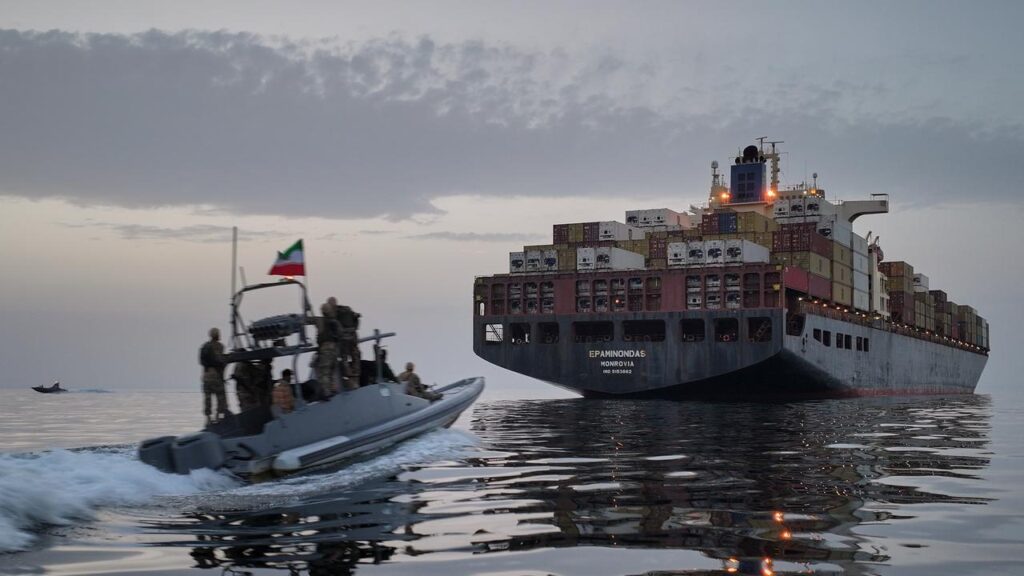
US President Donald Trump says Iran has said it is in a state of collapse and wants the United States to open the Strait of Hormuz while it sorts out its leadership.
“Iran has just informed us that they are in a ‘State of Collapse.’ They want us to ‘Open the Hormuz Strait,’ as soon as possible, as they try to figure out their leadership situation (Which I believe they will be able to do!)” Trump said in a social media post.
It was unclear from the president’s social media post how Iran might have communicated that message and there was no immediate response from Tehran to Trump’s latest comments.
Trump is unhappy with the latest Iranian proposal on resolving the two-month war, a US official told Reuters, dampening hopes for a resolution of the conflict that has disrupted energy supplies, fuelled inflation and killed thousands of people.
The president also said King Charles did not want Iran to have a nuclear weapon, introducing the fraught subject of the Middle East conflict into comments at a White House state dinner for the visiting British royal.
The King’s visit comes at a tense time in US-UK ties after Trump has repeatedly criticised British Prime Minister Keir Starmer for what Trump calls lack of help in prosecuting the Iran war.
“We’re doing a little Middle East work right now and we’re doing very well,” Trump said at the dinner.
“We have militarily defeated that particular opponent, and we’re never going to let that opponent ever – Charles agrees with me even more than I do – we’re never going to let that opponent have a nuclear weapon.”
In his own comments following Trump, Charles did not speak about Iran or the war.
Earlier, an Iranian army spokesperson told state media the Islamic Republic did not consider the war over.

Iran has largely blocked all shipping apart from its own from the Gulf through the Strait of Hormuz, a chokepoint for global energy supplies, since the war began on February 28. This month, the US began blockading Iranian ships.
The Wall Street Journal reported, citing US officials, that the president had instructed aides to prepare for an extended blockade of Iran’s ports.
Hopes of reviving peace efforts in a conflict that has killed thousands, thrown energy markets into turmoil and disrupted global trade routes have receded since Trump last weekend scrapped a visit by his special envoy Steve Witkoff and son-in-law Jared Kushner to mediator Pakistan.
Iranian Foreign Minister Abbas Araqchi shuttled in and out of Islamabad twice during the weekend. Since several senior Iranian political and military figures were killed in US-Israeli strikes, Iran no longer has a single, undisputed clerical arbiter at the pinnacle of power, which may be hardening Tehran’s negotiating stance.

The killing of Ayatollah Ali Khamenei on the first day of the war, and the elevation of his wounded son, Mojtaba, to replace him as supreme leader, has handed more power to hardline commanders of the Islamic Revolutionary Guard Corps, Iranian officials and analysts say.
Senior Iranian officials, speaking on condition of anonymity, told Reuters the proposal carried by Araqchi to Islamabad over the weekend envisioned talks in stages.
A first step would require ending the war and providing guarantees the US cannot restart it. Then negotiators would resolve the US Navy’s blockade of Iran’s trade by sea and the fate of the Strait of Hormuz, which Iran aims to reopen under its control.
Only then would talks look at other issues, including the longstanding dispute over Iran’s nuclear program, with Iran seeking US acknowledgment of its right to enrich uranium.
That would bear echoes of Iran’s 2015 nuclear deal with the United States and other powers, which had sharply curtailed Tehran’s nuclear program.
with EFE and DPA
Reuters