US deadline passes for blockade of Hormuz, Iran defiant
|
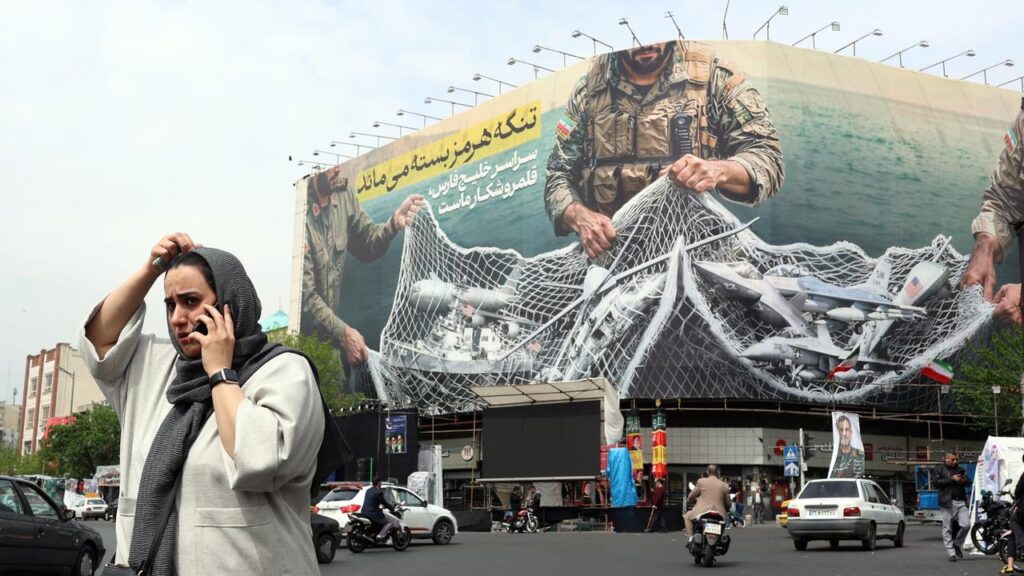
A deadline has passed for the start of a US military blockade of ships leaving Iran’s ports as authorities in Tehran threatened to retaliate against ports of its Gulf neighbours after weekend talks on ending the war broke down.
Oil prices surged, with no sign of a swift reopening of the Strait of Hormuz to ease the biggest ever disruption in supplies.
Since the war started on February 28, Iran has largely shut the strait to vessels except its own, saying passage would be permitted only under Iranian control and subject to a fee.
US President Donald Trump said United States forces would block Iranian vessels and any ships that paid such tolls and that any Iranian “fast-attack” ships that went near the blockade would be eliminated.
US Central Command said the measure took effect from 10am ET on Monday (midnight AEST on Tuesday).
NATO allies including the United Kingdom and France said they would not be drawn into the conflict by taking part in the blockade, stressing instead the need to reopen the waterway through which about one-fifth of the world’s oil normally passes.
A ceasefire that halted six weeks of US and Israeli air strikes looked in jeopardy, with only a week left to run until April 22.
The US said Iran rejected its demands at weekend talks in Islamabad.
The US military’s regional Central Command said the blockade would be “enforced impartially against vessels of all nations” entering or leaving Iranian ports in the Gulf and the Gulf of Oman.
“The blockade will not impede neutral transit passage through the Strait of Hormuz to or from non-Iranian destinations,” Central Command said.
Two Iranian-linked tankers laden with oil products left the strait on Monday before the deadline, according to LSEG data.
An Iranian military spokesperson called any US restrictions on international shipping “piracy,” warning that if Iranian ports were threatened, no port in the Gulf or Gulf of Oman would be secure.
Any military vessels approaching the strait would violate the ceasefire, Iran’s Revolutionary Guards said.
Trump said on Monday that Iran wanted to make a deal and that he would not come to any agreement that allows it to have a nuclear weapon.
Trump said that talks had hit a roadblock related to nuclear issues and that a “blockade” of ships transiting the Strait of Hormuz had begun.
He said that Iran had “called this morning” and that “they’d like to work a deal”.
Israel has continued to bombard Hezbollah in Lebanon and on Monday Israeli troops launched an attack to seize a key south Lebanon town from the group.

Israel and the US have said the campaign against Hezbollah was not part of the ceasefire while Iran has insisted it is.
Iran has ignored a demand to open the strait while bringing new demands to the talks including recognition of its control of the waterway, lifting of sanctions and the withdrawal of forces from regional US military bases.
Pakistani Prime Minister Shehbaz Sharif said efforts were still on to resolve the conflict after the direct talks between the US and Iran at the weekend.
A US official said on Monday that there was continued engagement between the two and cited forward motion on trying to get to an
agreement.
Trump has declared victory despite appearing not to have achieved objectives he set out at the start of the war: to eliminate Iran’s ability to strike its neighbours, end its nuclear program and make it easier for Iranians to topple their government.
Iran retains missiles and drones that can hit Gulf neighbours and a stockpile of uranium enriched to near bomb-making levels.
Iran’s leadership, which faced a popular uprising at the start of the year, has withstood the US onslaught with no sign of organised opposition.
Emboldened Iranian officials say they will make a deal only if the US makes further concessions.
Iran had “encountered maximalism, shifting goalposts and blockade” from the US at the talks, Foreign Minister Abbas Araqchi said.
“Zero lessons learned,” he added.
“Good will begets good will. Enmity begets enmity.”
Reuters