Pakistan and Afghan pause fighting for Eid
|
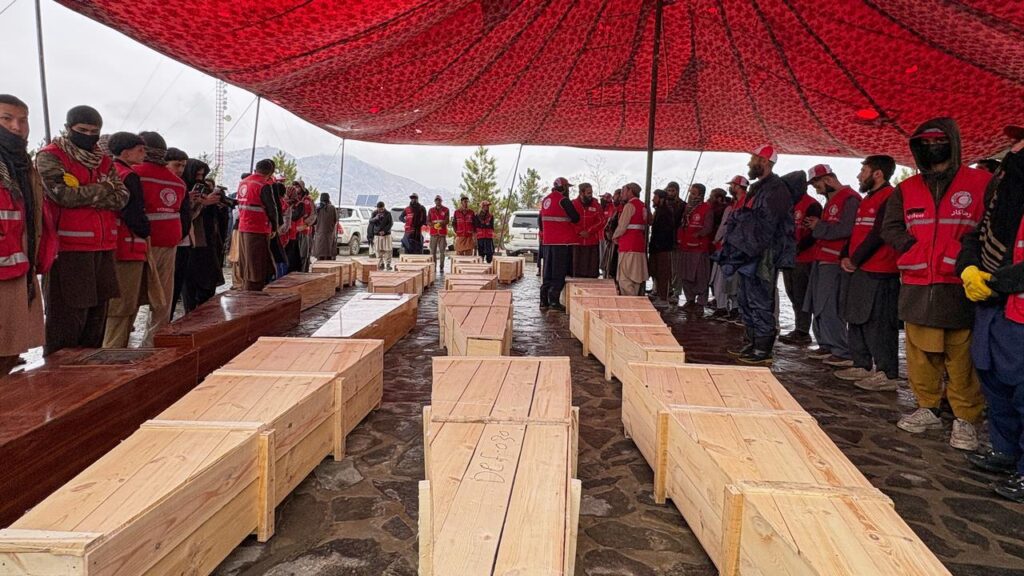
Pakistan and Afghanistan said they were pausing their military operations against each other for the Islamic festival of Eid-al-Fitr, a surprise move two days after a drug rehab centre in Kabul was hit in the deadliest strike in months.
The Afghan Taliban government has said that more than 400 people were killed and 265 wounded in the air strike that took place on Monday night, just as people and staff at the centre were praying.
The casualty numbers shared by authorities have not been independently verified. The United Nations Assistance Mission in Afghanistan (UNAMA) said on Wednesday that 143 people were killed and 119 wounded in the attack.
Pakistan rejected the Taliban’s statements about the strike, saying it had “precisely targeted military installations and terrorist support infrastructure”.
Pakistani Information Minister Attaullah Tarar said Islamabad was pausing the military operations due to Eid, which marks the end of the Muslim holy fasting month of Ramadan and is set to be celebrated at the end of this week.
The pause, he said in a post on X, was on Pakistan’s own initiative and at the request of Islamic countries Saudi Arabia, Qatar and Turkey. The pause would take effect at midnight on Wednesday and last until midnight on March 23.
“Pakistan offers this gesture in good faith and in keeping with the Islamic norms,” he said, adding that operations would resume with renewed intensity if there was any cross-border attack, drone attack or any “terrorist incident” inside Pakistan.
The Afghan Taliban followed with a similar announcement soon after Tarar.

Kabul was calling a temporary halt to defensive operations on the occasion of Eid and also at the request of Saudi Arabia, Turkey and Qatar, Taliban government spokesman Zabiullah Mujahid said in a post on X.
Afghanistan would respond to any aggression in the event of any threat, he added.
Tarar also said that 707 people have been killed so far in Pakistan’s action against Afghanistan. Both sides have regularly claimed to have inflicted heavy damage on the other and independent verification has not been possible.
UNAMA said that before the rehab centre incident, 76 people were killed and 213 injured in Afghanistan, the majority of them women and children.
The air strike on the Kabul drug rehab centre marked a new low point in the relationship between the Islamic neighbours and former allies at a time of heightened instability for the region due to the US-Israeli attacks on Iran.

Afghanistan and Pakistan have fiercely disputed the target of the air strike.
Afghan authorities said the attack had clearly targeted a well-known rehabilitation centre, a former NATO military base named Camp Phoenix that had been converted into a civilian facility about a decade ago.
Pakistan has said it hit Camp Phoenix, a “military terrorist ammunition and equipment storage site”. It added that secondary detonations visible after the strikes indicated the presence of large ammunition depots there.
On Wednesday, the Pakistani military said in a statement that the facility targeted was also being used as a site to store drones, equipment to launch drones, and “reportedly also housed SCUD missiles of the Soviet era”.
“We also know that the site was used for training of suicide bombers,” it said, adding that intelligence confirmed that the site was used as a drug rehab centre a few years ago.

The conflict between the allies-turned-foes began last year after Pakistan accused Afghanistan of sheltering and backing militants carrying out attacks across Pakistan, a charge denied by the Afghan Taliban government.
Afghanistan’s vast poppy fields have been the source of much of the world’s heroin, and that, in combination with decades of conflict and widespread poverty, has fueled drug addiction that the country’s current rulers have vowed to combat.
Pakistan declared it was in “open war” with Afghanistan last month. The conflict has alarmed the international community, particularly as the area is one where other militant organisations, including al-Qaeda and the Islamic State group, still have a presence and have been trying to resurface.
AP