Trump threatens to cripple crucial Iranian oil hub
Bo Erickson, Parisa Hafezi, Maya Gebeily and Alexander Cornwell |
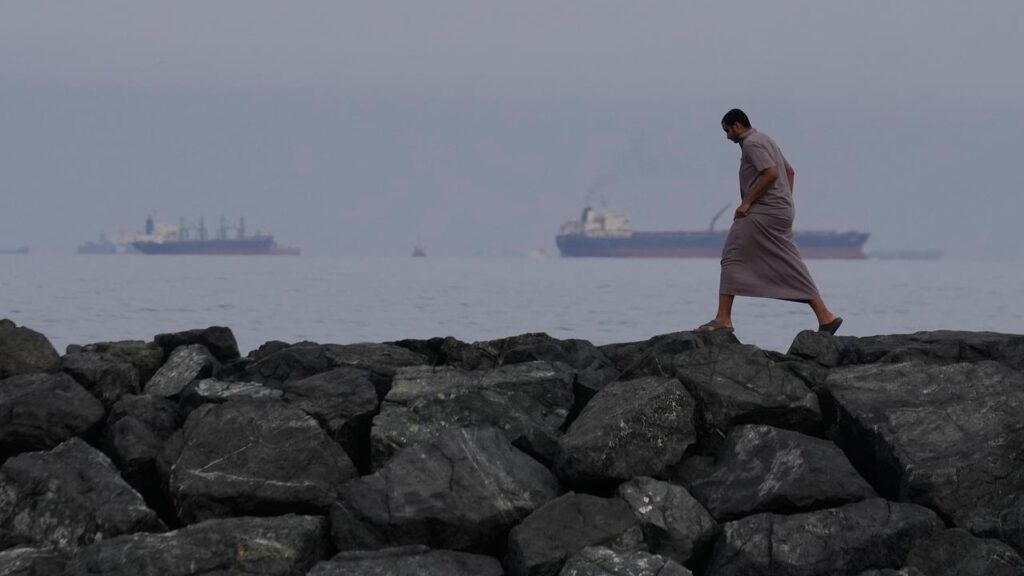
US President Donald Trump is threatening to order strikes on the petroleum infrastructure of Iran’s Kharg Island oil hub unless Tehran stops attacking vessels in the vital Strait of Hormuz, a warning that could further roil markets already coping with a historic disruption in supply.
Trump has paired his ultimatum with a social media post saying the United States “totally obliterated” military targets on the island, the export terminal for 90 per cent of Iran’s oil shipments, which lies about 480km northwest of the strait.
US strikes did not target Kharg’s oil infrastructure, but “should Iran, or anyone else, do anything to interfere with the Free and Safe Passage of Ships through the Strait of Hormuz, I will immediately reconsider this decision”, Trump wrote.
Iran had no ability to defend against US attacks, the president said.
“Iran’s Military, and all others involved with this Terrorist Regime, would be wise to lay down their arms, and save what’s left of their country, which isn’t much!” he posted on Truth Social.
Iran’s armed forces responded on Saturday by saying any strike on their country’s oil and energy infrastructure would lead to strikes on facilities owned by oil companies co-operating with the United States in the region, Iranian media reported.
Iran’s semi-official Fars news agency reported, citing sources, that more than 15 explosions were heard on Kharg Island during the US attacks.
The sources said the attacks targeted air defences, a naval base and airport facilities, but caused no damage to oil infrastructure.
Markets were watching for any sign that US strikes had damaged the island’s intricate network of pipelines, terminals and storage tanks.
Even minor disruptions could further tighten global supply, adding pressure to an already volatile market.

In other strikes across the region, Iran’s Revolutionary Guard said early on Saturday that it had carried out additional attacks on Israel with Lebanon’s Hezbollah militia, Iran’s Tasnim news agency reported.
On Friday, the Israeli military said its air force had struck more than 200 targets in western and central Iran, including ballistic missile launchers, air-defence systems and weapons production sites.
US forces have suffered casualties, with the US military on Friday confirming that all six crew members aboard a refuelling aircraft that crashed in western Iraq were dead.
Five US Air Force tankers at a base in Saudi Arabia had been damaged by an Iranian missile strike and were being repaired, reported The Wall Street Journal, citing US officials.
Oil prices have swung sharply on Trump’s changing comments about the likely duration of the war, which began on February 28 with massive US and Israeli bombardments of Iran and quickly spread into a regional conflict with broad consequences for worldwide energy and stock markets.
Lebanon became an escalating flashpoint in the war with Israel’s military and Hezbollah forces exchanging strikes in and around Beirut.
As well as Iran’s missile and aerial drone attacks on Israel and Gulf state allies of the US, Iran’s Islamic Revolutionary Guard Corps has sought to disrupt shipping through the Strait of Hormuz, a conduit for 20 per cent of the world’s fossil energy supplies.

Trump told reporters on Friday the US Navy would soon start escorting tankers through the waterway.
Although he has previously said the war would last only weeks, Trump on Friday declined to publicly project an end date for the conflict.
“I can’t tell you that,” he said to reporters.
“I mean, I have my own idea, but what good does it do? It’ll be as long as it’s necessary.”
Iran’s new supreme leader, Mojtaba Khamenei, in his first public comments on Thursday, vowed to keep the Strait of Hormuz shut and urged neighbouring countries to close US bases on their territory or risk being attacked themselves.
France has been consulting with European, Asian and Gulf Arab states with a view to putting together a plan for warships to escort tankers through the strait.
After nearly two weeks of war, 2000 people have been killed, most in Iran, but many in Lebanon and a growing number in the Gulf, which has for the first time in decades of Middle East conflicts found itself on the front line.
ran
Reuters