Iran fires at bases and ships despite intense strikes
Parisa Hafezi and Alexander Cornwell |
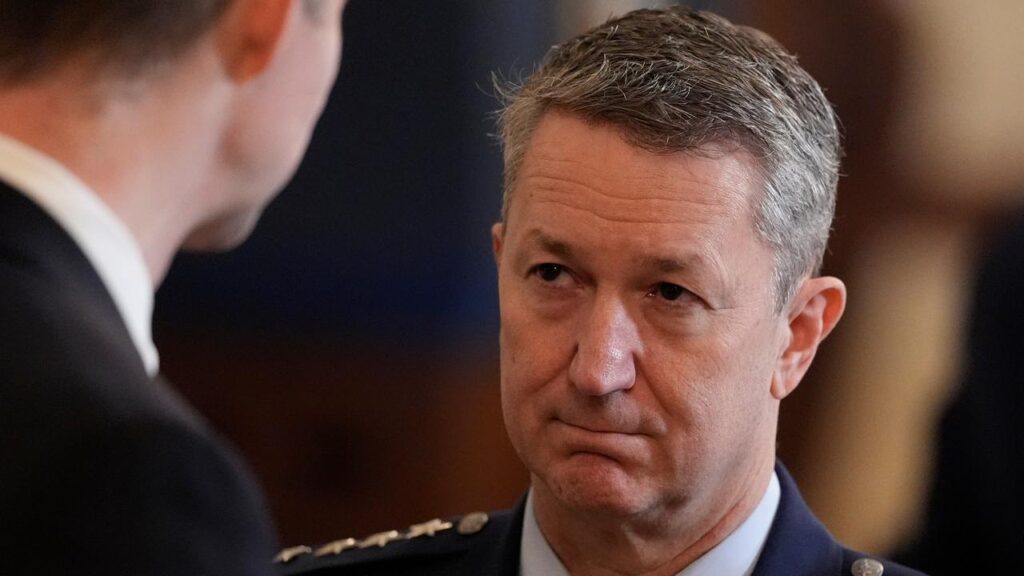
Iran has fired at Israel and targets across the Middle East, while at least three ships have been hit in the Gulf, demonstrating Tehran can still fight back and disrupt energy supplies despite the most intense US-Israeli strikes yet.
Oil prices that shot up this week have eased and stock markets have rebounded, with investors betting for now that US President Donald Trump will find a quick way to end the war he began alongside Israel nearly two weeks ago.
But there has been no let-up on the ground, or any sign that ships can resume sailing through the Strait of Hormuz, where a fifth of the world’s oil has been blockaded behind a narrow channel along the Iranian coast in the worst disruption to energy supplies since the oil shocks of the 1970s.
The Pentagon described its attacks on Iran on Tuesday as the most intensive of the war so far.

After offices of an Iranian bank were hit overnight, Iran said it would now attack US and Israeli banking targets across the Middle East.
A source told Reuters that Israel believed Iran’s new supreme leader, Mojtaba Khamenei, had been injured early in the war, when air strikes killed his father, mother, wife and a son.
He has not appeared in public or issued any direct message since being named the successor for his long-ruling father, Ayatollah Ali Khamenei.
The Iranian military said on Tuesday it had launched missiles at a US base in northern Iraq, the US naval headquarters for the Middle East in Bahrain, and at Be’er Ya’akov city in central Israel.
Explosions rang out in Bahrain, while in Dubai four people were injured by two drones that crashed near the airport, the world’s busiest for international travellers, now scaled back because of the war.

Three more merchant ships were struck in the Gulf by unknown projectiles, according to agencies that monitor maritime security, raising the number of ships reportedly hit since the war began to 14.
Oil prices, which shot up briefly to nearly $US120 a barrel on Monday, have since settled below $US90, suggesting investors are betting that Trump will be able to halt the war and reopen the strait before an oil supply shock causes an economic meltdown.
US and Israeli officials say their strikes have severely damaged Iran’s missile and drone capabilities, as well as decapitating its leadership.
Their stated aim is to end Iran’s ability to project force beyond its borders and destroy its nuclear program, though they have also invited Iranians to rise up and topple the country’s clerical rulers.
But the longer the war goes on, the greater the risk to the global economy from an energy shock, and if the war ends with Iran’s system of clerical rule still in place Tehran is likely to declare victory.
While many Iranians want change and some openly celebrated the death of the supreme leader whose security forces killed thousands of anti-government protesters just weeks ago, there has been no sign of protest since the war began.
Iran’s police chief, Ahmadreza Radan, said on Wednesday anyone taking to the streets would be treated “as an enemy not a protester”.
Iran has said it will not let ships through the strait until US-Israeli attacks cease, and it will not negotiate.
Trump has threatened to hit Iran “twenty times harder” if it blockades the strait, but US officials have not revealed any military plan to unblock it by force.
The US Central Command said 16 Iranian mine-laying vessels had been “eliminated” near the strait on Tuesday.

In Israel, the military launched a barrage on Beirut aimed at rooting out Iran-backed group Hezbollah, which has fired into Israel from Lebanon in solidarity with Tehran.
More than 1300 Iranian civilians have been killed since the US and Israeli air strikes began on February 28, according to Iran’s UN ambassador, Amir Saeid Iravani.
Scores have also been killed in Israeli attacks on Lebanon.
Iranian strikes on Israel have killed at least 11 people and two Israeli soldiers have died in Lebanon.
Washington says seven US soldiers have been killed and about 140 have been wounded.
Reuters