Japan PM Takaichi to call February 8 snap election
Tim Kelly, Satoshi Sugiyama and John Geddie |
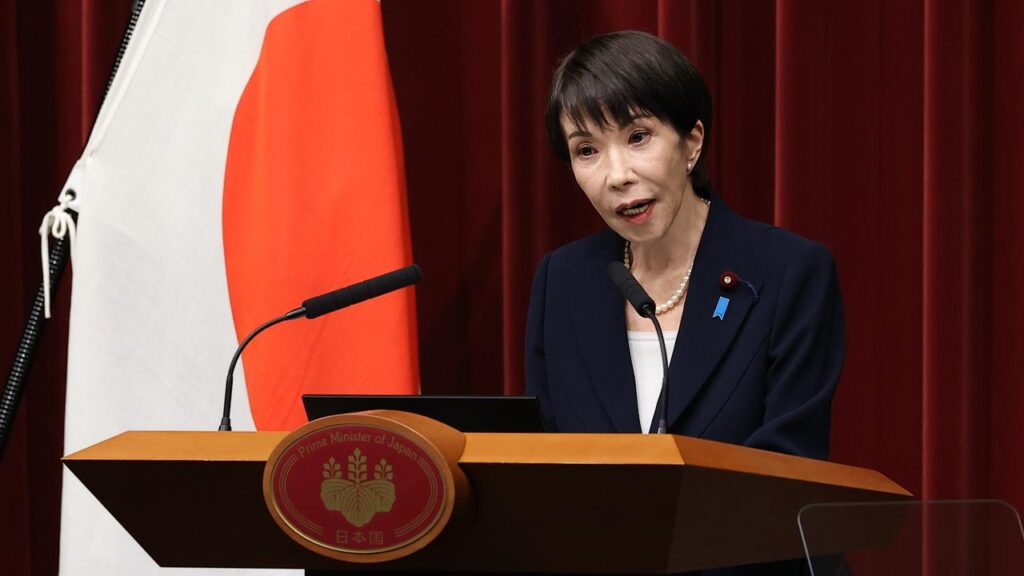
Japan’s Prime Minister Sanae Takaichi will call a national election on February 8 to seek voter backing for increased spending, tax cuts and a new security strategy that is expected to accelerate a defence build-up.
Takaichi plans to dissolve parliament on Friday ahead of the snap vote for all 465 seats in the lower house of parliament, in her first electoral test since becoming Japan’s first female premier in October.
“I am staking my own political future as prime minister on this election,” Takaichi told a press conference on Monday.
“I want the public to judge directly whether they will entrust me with the management of the nation.”
She promised a two-year halt to a consumption tax of eight per cent on food, adding that her spending plans would create jobs, boost household spending and increase other tax revenues.
The prospect of such a tax cut, which the government estimates would reduce its revenue by five trillion yen ($A48 billion) a year, sent the yield on Japan’s 10-year government bonds to a 27-year high earlier on Monday.
Calling an early election allows Takaichi to capitalise on strong public support to tighten her grip on the ruling Liberal Democratic Party and shore up her coalition’s fragile majority.
The election will test voter appetite for higher spending at a time when the rising cost of living is the public’s top concern.
Prices were the main worry of 45 per cent of the respondents in a poll released by public broadcaster NHK last week, followed by diplomacy and national security at 16 per cent.
Takaichi’s administration plans a new national security strategy in 2026 after deciding to hasten a military build-up that will lift defence spending to two per cent of GDP, a sharp break from decades in which Japan capped such outlays at around one per cent.
Takaichi has not set a new spending target beyond that level, but rising tension with China over Taiwan and disputed islands in the East China Sea, coupled with US pressure for allies to spend more, are likely to push defence outlays higher.
“China has conducted military exercises around Taiwan, and economic coercion is increasingly being used through control of key supply-chain materials,” she said. “The international security environment is becoming more severe.”
Last week, China banned exports of items destined for Japan’s military that have civilian and military uses, including some critical minerals.
The LDP and Ishin go into the February 8 election, which coincides with a planned national election in Thailand, with a combined 233 seats.
Takaichi said her target was for the coalition to retain its majority in the lower chamber.
Her main challenger will be the Centrist Reform Alliance, a new political party combining the largest opposition group, the Constitutional Democratic Party of Japan and Komeito, which ended its 26-year coalition with the LDP after Takaichi, a right-wing lawmaker, took over at the LDP.
Together the parties hold 172 seats.
That new political group could propose to permanently abolish the eight per cent sales tax on food, a party official said earlier in the day.
“Now may be the best chance she has at taking advantage of this extraordinary popularity,” said Jeffrey Hall, a lecturer in Japanese studies at Kanda University of International Studies.
But with opposition parties joining forces to oppose her, victory might not be straightforward, he added.
Reuters