Chinese jets directed radar at Japanese planes
|
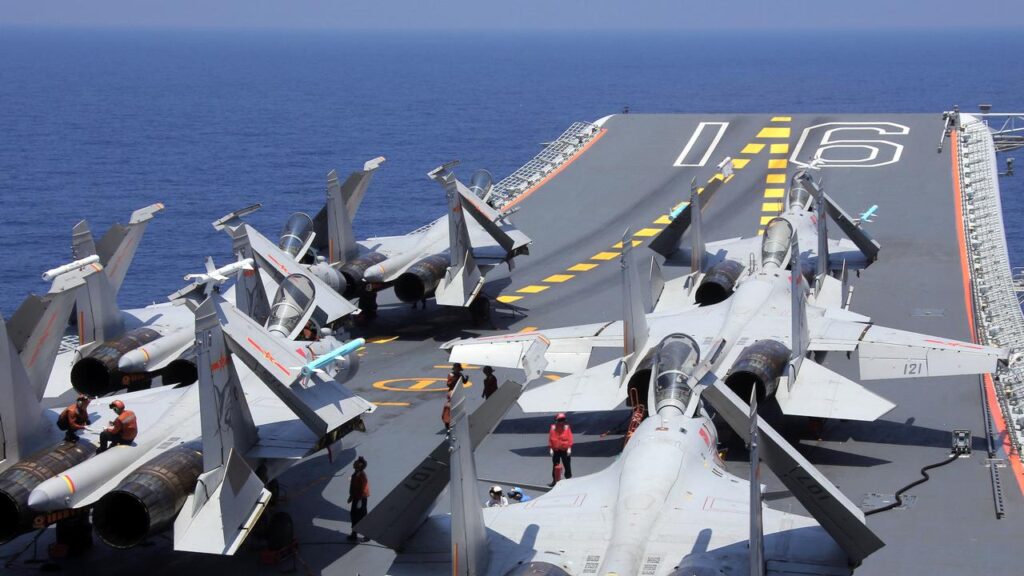
Chinese fighter jets directed their fire-control radar at Japanese aircraft over international waters near Japan’s Okinawan islands, in two incidents that Japan’s defence minister condemned as “dangerous”.
The Chinese J-15 fighter jets directed their radar at Japanese F-15 aircraft in separate incidents on Saturday.
Japan and Australia, whose defence ministers held their scheduled talks in Tokyo on Sunday, expressed worry over the development.
“We are deeply concerned by the actions of China in the last 24 hours,” Australian Defence Minister Richard Marles told a joint news conference.

Australia does “not want to see any change to the status quo across the Taiwan Straits,” Marles said, adding that China is his country’s largest trade partner and he wants to have productive relations with Beijing.
“We continue to advocate to China about these issues again, in a very calm, sensible and moderate way,” he said.
Japan and Australia, during Sunday talks, agreed to bolster military ties to lead the region’s multilateral defence cooperation. The two ministers agreed to form a comprehensive “framework for strategic defence coordination” and discuss further details.
Japanese Defence Minister Shinjiro Koizmui said the the radar illuminations went beyond what was necessary for the safe flight of aircraft.
“We have lodged a strong protest with the Chinese side and demanded strict preventive measures,” Koizumi said.

A fire-control radar lock is one of the most threatening acts a military aircraft can take because it signals a potential attack, forcing the targeted aircraft to take evasive action.
The encounters near islands close to territory claimed by both Japan and China are the most serious run-ins between the two militaries in years and are likely to further escalate tension between the neighbours.
Relations have already soured after Prime Minister Sanae Takaichi warned that Japan could respond to any Chinese military action against Taiwan if it also threatened Japan’s security.
Democratically governed Taiwan is claimed by Beijing and lies just 110km from Japan’s westernmost Yonaguni Island.
Japan hosts the biggest overseas concentration of US military power, including warships, aircraft and troops, with a big chunk of that contingent, including thousands of US Marines based in Okinawa.
The Chinese J-15 jets involved in the two incidents were launched from China’s Liaoning aircraft carrier, which was manoeuvring south of the Okinawan islands along with three missile destroyers, Japan said.

In past close military encounters between the two countries, Japan said a Chinese warship locked its radar on one of its destroyers in the East China Sea in 2013. In 2016, Beijing accused Japanese jets of directing their fire-control radar on Chinese fighters.
In June, Chinese jets reportedly flew dangerously close to a Japanese patrol aircraft near Okinawa.
On Thursday, China was deploying a large number of naval and coast guard ships across East Asian waters, which at one point numbered more than 100, Reuters reported citing sources and intelligence reports.
Taiwan’s government described that build-up as posing a threat to the Indo-Pacific region. Japan said it was monitoring Chinese activity closely.
Reuters