Wind farm projects could blow out without major reforms
Jennifer Dudley-Nicholson |
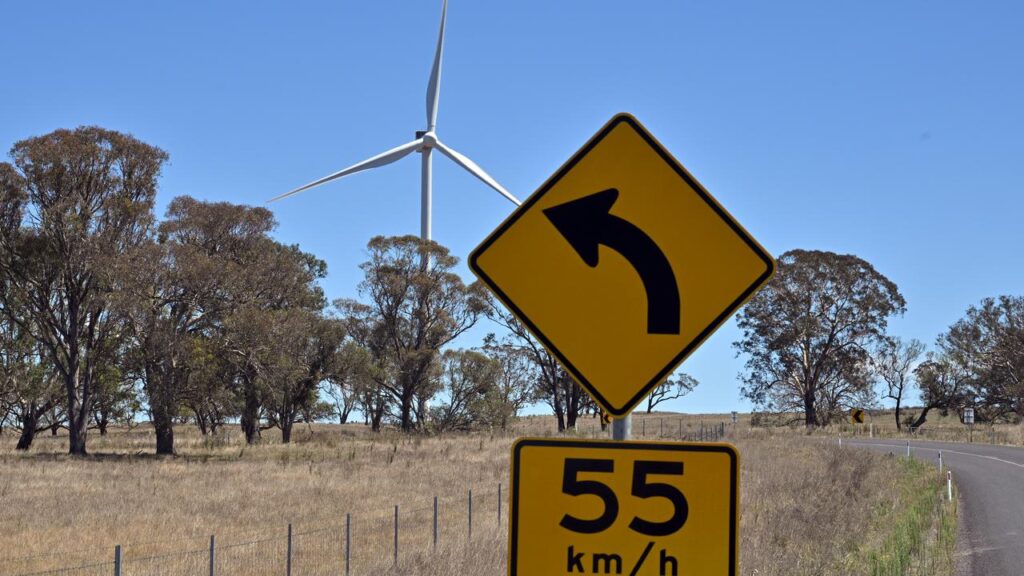
Australia could miss its renewable energy targets if it does not address barriers to building wind farms, including inadequate port infrastructure and limits on major road corridors.
A failure to act could delay some wind projects by almost three years, a study has found, and contribute to higher electricity prices.
Infrastructure Australia issued the warnings in an analysis of the nation’s onshore wind pipeline on Tuesday, which called for urgent regulatory changes and freight upgrades.
The findings come weeks after Australia set a renewable energy record, with solar, wind and batteries meeting 80.4 per cent of demand in the National Electricity Market during a half-hour period.

The authority’s report, Enabling Infrastructure for the Energy Transition, analysed 56 onshore wind projects due to start construction by 2030 with a combined generation capacity of about 30 gigawatts.
It found the projects would require more than 4500 turbines and more than 62,000 oversize, over-mass vehicle movements, putting strain on Australian ports and road corridors.
In 2027 alone, more than 18,500 oversize loads were expected on Australian roads.
The scale of Australia’s wind projects had the potential to overwhelm existing roads, bridges and ports without greater planning, Infrastructure Australia chief executive Adam Copp said.
“A wind turbine blade is anywhere from 82 to 102 metres long… it can be double the length of a Boeing 737 or as long as the Statue of Liberty,” he told AAP.
“They need to be staged at a port and then they need to be taken along what are sometimes tight regional and rural roads to the locations.”
A truck carrying part of a wind turbine recently became wedged beneath a bridge outside Ipswich, he said, and a 70-metre-long turbine blade in transit caused traffic disruptions in Ararat, Victoria.
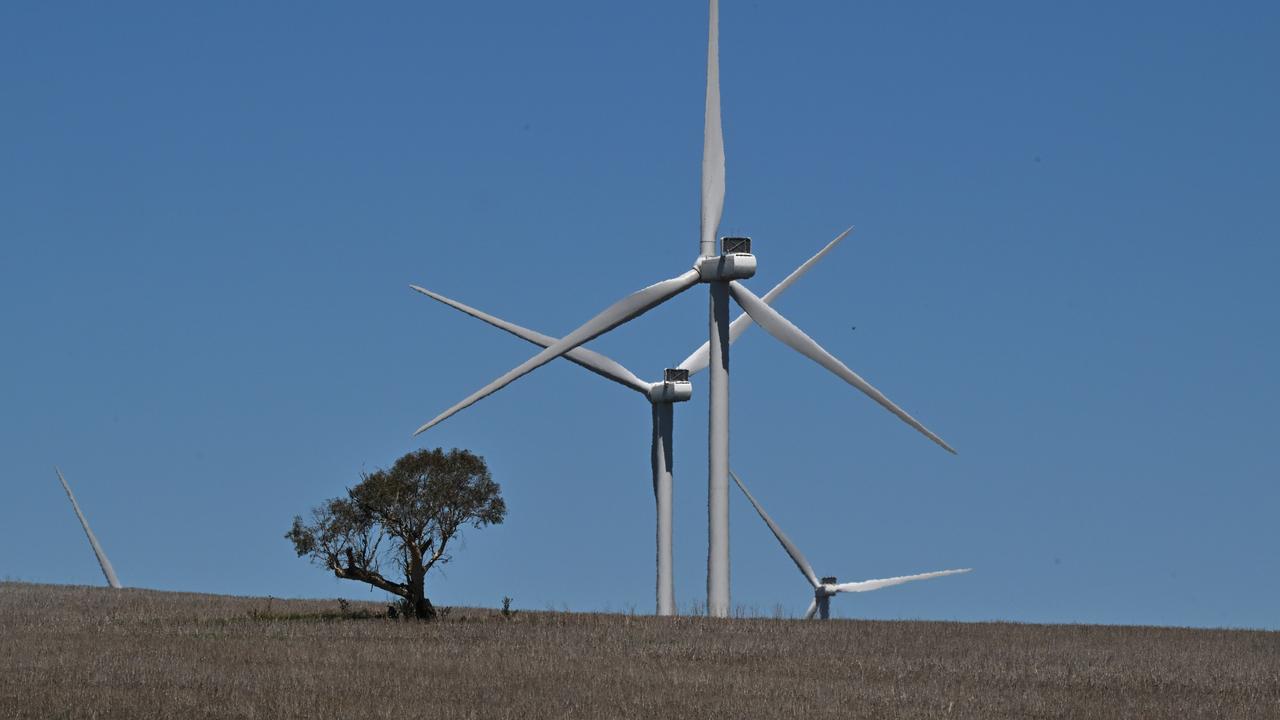
The study identified more than 900 constraints for oversized loads on Australia’s road network, with almost half on national freight routes.
If unaddressed, the barriers could delay between five and 30 per cent of the wind farm capacity analysed, with affected projects facing delays of 2.7 years on average.
Regulations across states would need to change to accommodate the growing wind turbine demand, Mr Copp said, and even small upgrades could make a difference.
“It’s things like loading zones, moving street furniture, creating more lanes,” he said.
“We need to move as quickly as possible. It’s important as coal is leaving the system by the mid-2030s that we do move at pace to ensure that we transition to renewable energy.”
Additional investments should focus on four freight corridors connecting ports in Gladstone, Brisbane, Newcastle, Adelaide and Geelong to regional wind farm developments, the report found.
In 2025, wind generation made up 14 per cent of Australia’s total electricity generation, according to government figures, representing a rise of 20.9 per cent compared to 2024.
AAP