Labor gas plan a short term ‘sugar hit’, industry warns
Jacob Shteyman |
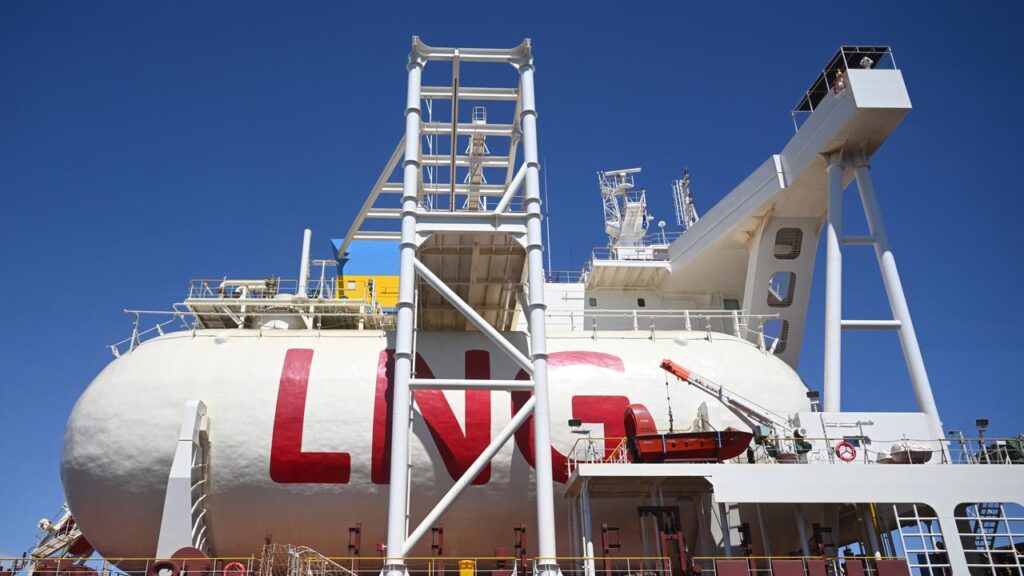
Lower gas prices for consumers have trumped higher revenue for Australians in Labor’s plans for a national gas reservation.
Resources Minister Madeleine King knocked on the head the prospect of a gas exports tax as she introduced the scheme to parliament on Wednesday.
The reservation, which will force gas producers to supply the equivalent of up to 20 per cent of their exports to the domestic market, has been a long time in the making, Ms King told the National Press Club in Canberra.
The scheme, which mirrors one already in place in Western Australia, was announced in December 2025, following a viral campaign led by independent Senator David Pocock and progressive groups for a tax on gas exports.
A 25 per cent tax on export revenue, as championed by the Greens, would raise more revenue than the much-maligned petroleum resource rent tax, as well as divert more gas into the domestic market where it would be taxed at a lower rate, proponents argued.
But the gas industry was stridently against it, as well as countries that rely on Australian gas exports, such as Japan.
Canberra was warned that anything that threatened the flow of gas to Asian trading partners could threaten the flow of fuel back to Australia during a global oil crisis.
Ms King said the reservation was a better policy than a tax because it would result in a modest oversupply of gas in the market, causing gas prices to fall, while enabling an export industry to continue.
“We’ve got no plans for the gas tax, as previously proposed in various popular circles,” she said.
“Our focus is all about getting more Australian gas to more people and driving down those prices.”
While the gas lobby was more supportive of a reservation than an export tax, the industry still said it would discourage future investment.
A requirement for exporters to sell gas below cost or on non-commercial terms to the domestic market would deliver a “short-term sugar hit” but risked driving up prices in the long-term, Australian Energy Producers chief executive Samantha McCulloch said.
Ms King would not say how much prices were likely to fall once the policy kicks in in 2028.
As well as households, it is hoped that the policy will benefit heavy industrial gas users, such as smelters and chemical processors, and arrest the decline in Australia’s manufacturing capability.
But the Australian Industry Group said the legislation risked allowing exporters like Santos to dodge their domestic supply obligations.
William Poole, lead gas analyst at the Institute for Energy Economics and Financial Analysis, said changes to the draft legislation released showed one loophole had been closed at least.
Santos’s Gladstone LNG project, which has negatively impacted Australian gas prices as the project bought up domestic supply to fulfil export contracts, will not be exempt from the reservation if it renews its current contract, Mr Runciman said.
“The revised reservation bill now provides clarity that the contract will be respected only until 2031, a move likely to be welcomed by gas users and other exporters,” he said.
Other changes to the legislation included reining in the minister’s powers to decide how much gas an exporter can be forced to reserve for the Australian market.
But critics are still miffed over the government watering down the requirement for exporters to set aside 20 per cent of their production for the domestic market to a more ambiguous obligation of “up to 20 per cent”.
While a federal gas tax is seemingly off the cards, the states and territories could still share in about $17 billion extra revenue each year from the oil and gas sector.
By copying royalty systems already in place overseas and in Queensland, Australia could increase its share of production value from 14 per cent to 40 per cent, said think tank Prosper Australia in a report.
AAP