Tonnes of debris removed from ‘trashed’ remote beach
Keira Jenkins |
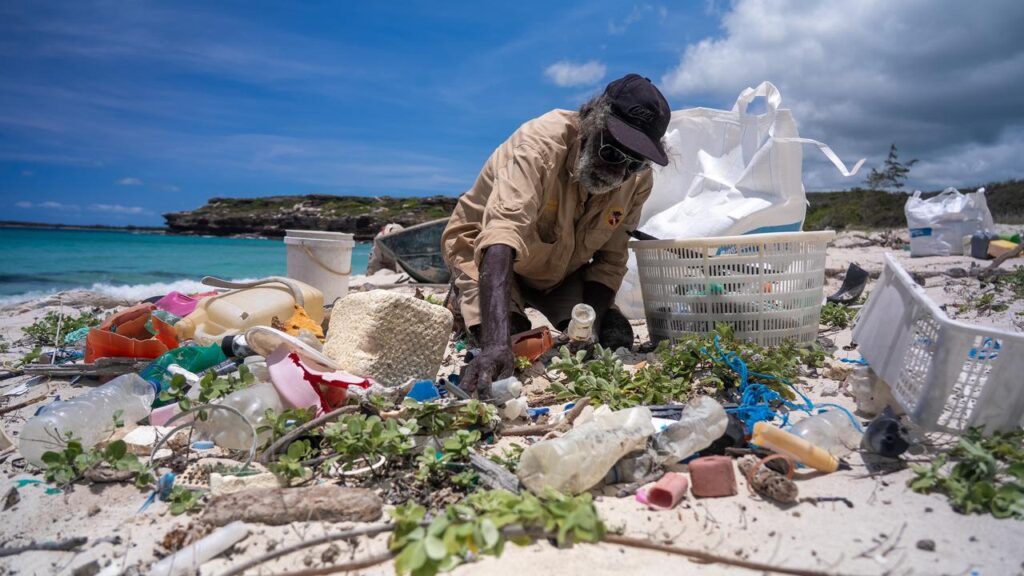
Arriving at one of Australia’s most remote shorelines was confronting for the team tasked with clearing it of plastic pollution and abandoned fishing gear.
Stretching just 190 metres, Australia Bay on Martjanba, off the coast of northeast Arnhem Land, was littered with more than six tonnes of debris.
Over six days the group of Traditional Owners, Indigenous rangers and volunteers from marine conservation organisation Sea Shepherd cleaned up the 159,000 items that had built up over decades, predominantly finding single-use plastics and fishing nets.

Sea Shepherd marine debris campaigner Grahame Lloyd said the state of the beach was shocking.
“It’s really sacred Country that’s just covered in plastic,” he told AAP.
“Instead of being this beautiful, pristine beach, it was just this trashed bay that was like the world’s dumping ground.
“It was heartbreaking to see all that plastic, and for the rangers, some of them who were seeing that Country for the first time … seeing how bad it was.”

To travel to the remote island the team had to take a barge trip from the community of Galiwin’ku.
It’s remoteness meant rangers had not been able to clean up the debris for years, and the lack of facilities compounded the mammoth task for the team, who worked from dawn to sunset each day.
“There’s no toilets, there’s no fresh water,” Mr Lloyd said.
“You can’t bathe because there’s a creature called crocodiles there so there’s no going near the water.”

Martjanba sits within the Marthakal Indigenous Protected Area in northeast Arnhem Land, among the outer Wessel Islands.
It is home to 22 threatened species including the golden bandicoot, and several species of turtles, which are impacted by this pollution.
Turtles in particular were prone to becoming stuck in the nets which wash up on shore, or eating plastics, mistaking them for food, Mr Lloyd said.
“One of the rangers checked one of the nests while we were there (on Martjanba) and there was a little hatchling who’d got half way up but couldn’t go any further out because of the plastic,” he said.

“The ranger freed that turtle so it could get to the water, but if that ranger hadn’t taken the care to check that nest the turtle would have been another statistic in the amount of animals killed by plastics.”
Sea Shepherd started the remote marine debris campaign in 2018.
Mr Lloyd said it was vital it was led by rangers and Traditional Owners
“We wouldn’t do this if it wasn’t led by First Nations people, that’s the whole point,” he said.
“It’s their land, their cultural and sacred lands we’re working on.”
AAP