Pressures mounting as economy remains in slow lane
Andrew Brown |
Growth is expected to decline and deficits will worsen but there could be a silver lining for the Australian economy.
A report by the International Monetary Fund on Friday into Australia’s outlook said while the economy started the year in a strong position that momentum has eased off the back of inflation and interest rate hikes.
While the report expects inflation to return to the Reserve Bank’s target band of between two and three per cent in the second half of 2027, other economic indicators were not looking as promising.
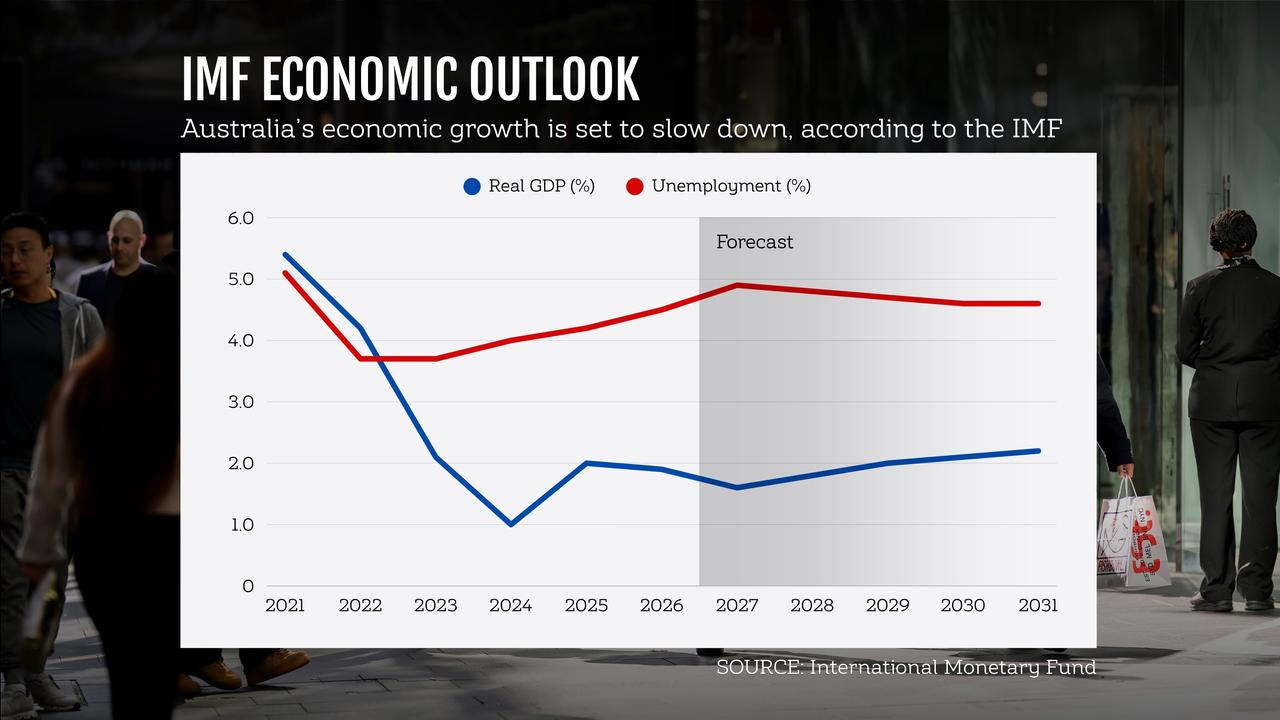
“Growth is projected to moderate to 1.9 per cent in 2026 and 1.6 per cent in 2027 as tighter financial conditions and gradual fiscal consolidation weigh on domestic demand,” the report said.
“The current account deficit is expected to widen in 2026 before improving over the medium term.”
The federal government has been dealing with rising inflation levels, which increased from 4.3 to 4.9 per cent for the year to October, while unemployment levels have also risen to 4.9 per cent.
Treasurer Jim Chalmers has foreshadowed a mid-year budget update, to be released in December, that would have significant savings to deal with inflation issues, but denied there would be austerity measures.
The IMF report said the mid-year update would be critical.
“(Directors) emphasised the importance of expenditure discipline and co-ordination across levels of government and encouraged steadfast implementation of needed reform, including the NDIS reform, while preserving essential services,” it said.
“Building on recent tax changes, directors encouraged further comprehensive, growth-friendly tax reform to improve efficiency and address long-term fiscal pressures.”
There was a glimmer of good news on the economic front for the treasurer, with the latest monthly budget figures showing the bottom line was better than expected.
October figures from the Finance Department showed the budget deficit was $24.6 billion, $8.2 billion better off than the $34.6 billion forecast for the month.
The improvement in the result came from tax collections being stronger than expected and a decrease in spending.
Upcoming national accounts figures, to be released on Wednesday, will also paint a picture of the economic woes facing Australia.
The IMF report said while Australia’s economy was resilient to shocks, pinch points still loomed on the horizon.
“A renewed escalation of the war in the Middle East could trigger another energy price surge and second-round effects on wages and prices,” the report said.
“Trade and geopolitical tensions and a correction in AI-related asset valuations could weaken demand and tighten financial conditions.
“Domestically, a sharper housing downturn could weigh on growth, while more resilient demand could make it harder to return inflation to target.”
The report predicted unemployment will remain at 4.9 per cent into 2027, and will gradually reduce to 4.8 and 4.7 per cent in 2028 and 2029 respectively.
Wages growth will be at 3.4 per cent for the year and will decline to three per cent by the end of the decade.
Dr Chalmers said there would be further legislation for tax reform introduced to parliament in 2027.
AAP