Energy policy gaps leave households with higher bills
Jennifer Dudley-Nicholson |
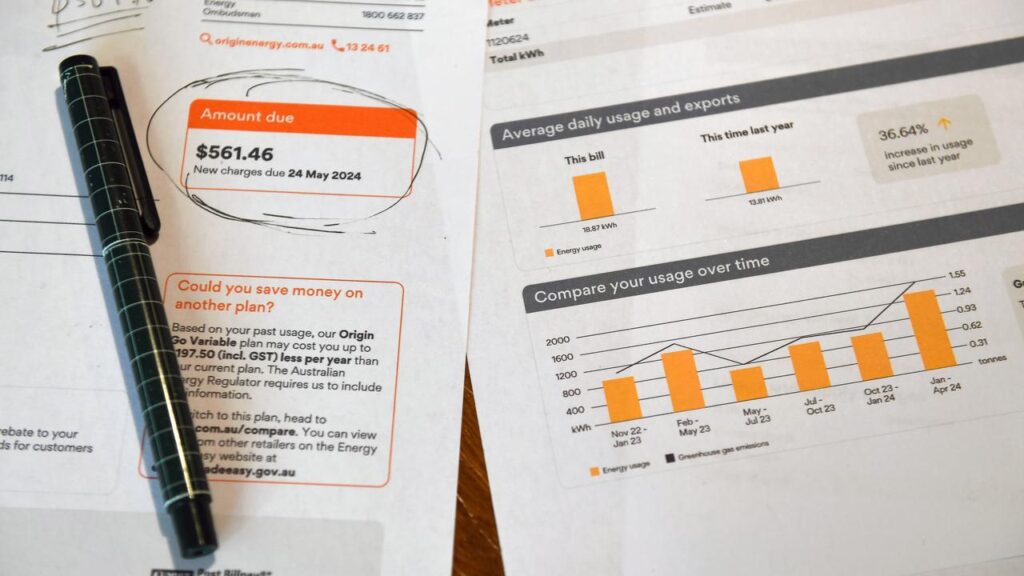
Australian households could be missing out on significant savings based on where they live, with a national scorecard revealing stark differences in state and territory energy policies.
Consumers living in the nation’s capital fared best overall, followed by Victoria and NSW, the report found, while those in Queensland and the Northern Territory missed out on incentives and initiatives that could cut costs.
The Energy Efficiency Council released the findings on Thursday in a national scorecard that compared and rated household energy policies across Australia.
The ratings come as households face greater financial pressure after the Reserve Bank raised interest rates to their highest level in almost 15 years and as petrol and diesel prices climbed towards their April peaks.
The 54-page report, funded by Energy Consumers Australia, analysed state and territory government policies designed to electrify homes, increase energy efficiency, and shift power use outside peak periods.
The ACT ranked highest overall with the report highlighting its rebates, low-interest loans and advice on home upgrades, as well as home energy-efficiency standards.
But Victoria claimed the highest score for electrification based on its policies requiring the replacement of gas appliances in new and rental properties.
No state received a perfect score, Energy Efficiency Council chief executive Luke Menzel said, and both frontrunners could improve their strategies to shift energy demand.
“No jurisdiction is perfect – there is room for improvement across the board,” he said.
“But these findings show there is an urgent need for some states to step up their efforts in supporting households to respond to the cost-of-living crisis.”
NSW ranked third, marked down for the absence of a plan to phase out gas use, while South Australia scored highly for its virtual power plant support but lacked a home energy ratings scheme.
Queensland and the Northern Territory ranked at the bottom of the list with both scoring one star out of 10 for energy efficiency and electrification policies.
Neither had policies to phase out gas or disclose home energy ratings and Queensland offered no rebates or incentive schemes for household electrification.
Improving a home’s energy efficiency and swapping to electric appliances could cut household bills significantly, Energy Consumers Australia consumer advocacy manager Justin Whelan said, and should be considered by all governments.
“Consumers should pay a fair price for their energy no matter where they live,” he said.
“Electrification and energy efficiency policies mean lower energy bills for Australians, it is that simple.”
AAP