High-protein trend helps bulk up big Aussie food brand
Kaaren Morrissey |
Australians’ love of high-protein products has helped return an iconic dairy and food company to profit, despite a tough year for primary industries.
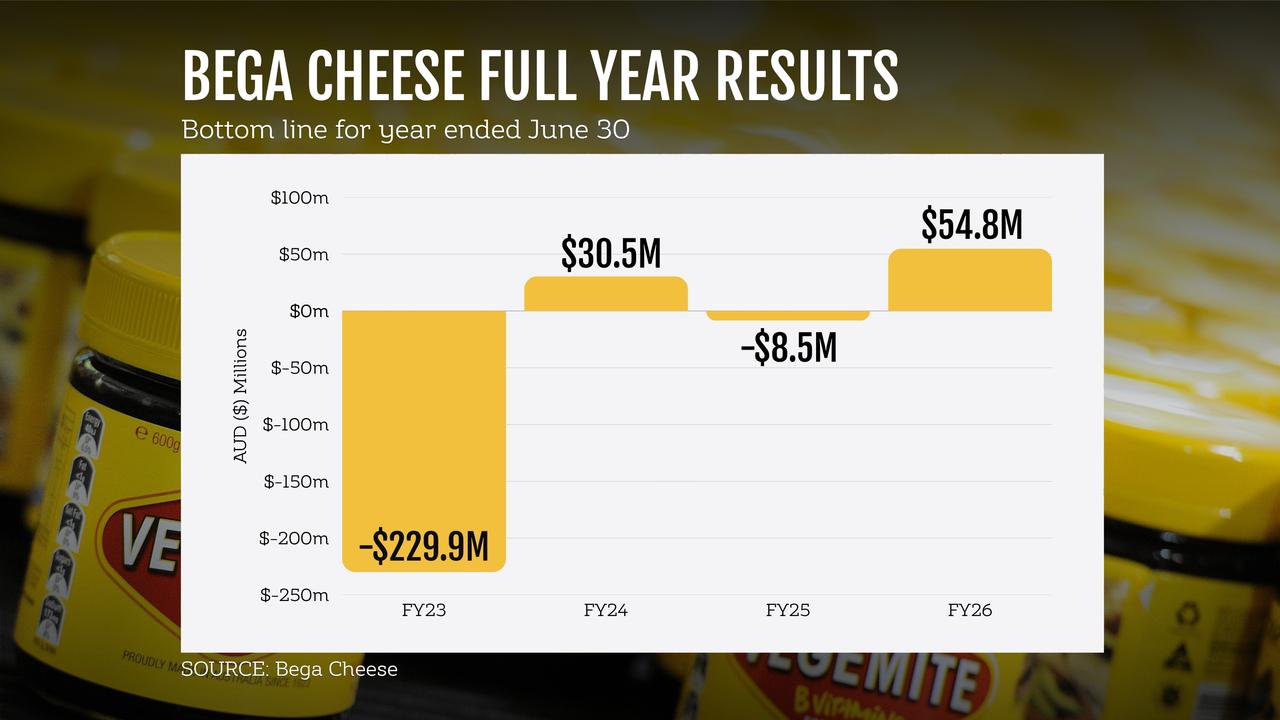
Bega Cheese, which makes cheese, yoghurt and peanut butter alongside popular spreads like Vegemite, made a net profit of $54.8 million in 2025/26.
That was a strong turnaround from an $8.5 million loss in the prior year, after revenue rose 6.7 per cent to $3.8 billion.
“In the year that we’ve just been through, particularly with events such as conflict in the Middle East, we’ve been able to demonstrate how agile we can be and how we can adjust to great challenges,” executive chair Barry Irvin said.
Bega is three years into a five-year plan to streamline its asset base, including production sites, and work its assets harder while cutting costs.
Chief executive Peter Findlay said the company was achieving its goals and he was confident about where Bega was heading, after cutting about 250 jobs and generating more than $20 million in savings in 2025/26.
“This year … the key categories we really wanted to focus on were around yoghurt, milk-based beverages, spreads – where our strongest brands sit – and obviously cream cheese,” he told an earnings briefing on Thursday.
New launches have focused on high protein and “better for you” products under its Bega, Farmers Union and Dairy Farmers brands, including protein smoothies, yoghurt pouches and high-protein low-fat sliced cheese.
“The consumer continues to make very difficult decisions around the products they want to buy and eat and drink,” Mr Findlay said.
But their focus remains on gut health and high-protein products like yoghurt, as well as products for weight management, like low-fat items, as well as everyday performance products such as milk drinks, and treats including peanut butter.
Bega’s market research shows gut health is a big factor given its links to general wellness.
“We know this trend is going to stay and we know yoghurt is in that space … as well as a real trend in protein,” Mr Findlay said.
Sales for Bega’s yoghurt category in Australia rose by 16 per cent to $2.45 billion in the year, as part of the consumer push for products with higher protein levels.
“Demand for protein is expected to continue to elevate in financial year 2027 and beyond,” Bega said.
Bega shares were almost five per cent higher in early afternoon trading at $6.30, its best level in about six months.
During the year, Bega bought about 1.4 million litres of milk, which was an increase of seven per cent.
It holds the number-two market position for yoghurt and fresh milk and is first in milk-based beverages and spreads.
Australia remains Bega’s largest market, accounting for 84 per cent of total revenue, but it remains excited about opportunities in the Middle East and Asia.
The regions import sizeable volumes of cheese and yoghurt. Purchasing power is rising as populations get richer, and dairy consumption increases.
“We are very excited about the capacity we’ll unlock at the start of financial year 2028, and so I see that as a significant run ahead of us both in Southeast Asia and the Middle East,” Mr Findlay said.
Bega’s underlying earnings – before interest, tax, depreciation and amortisation – jumped 22 per cent to $202.3 million, in line with guidance.
It has forecast underlying earnings between $240 million and $245 million for 2026/07.
Bega declared a final dividend of 7.5 cents, taking the total for the year to 14.5 cents.
AAP