Budget delivers more help for under-pressure families
Farid Farid |

The dreaded beep of an e-tag going through a toll gate will be less grating for the ears of drivers in the nation’s busiest state after a budget delivered some welcome relief.
The sweetener, nine months ahead of the NSW election, is Treasurer Daniel Mookhey’s pitch to disaffected voters struggling with the rising cost of living.
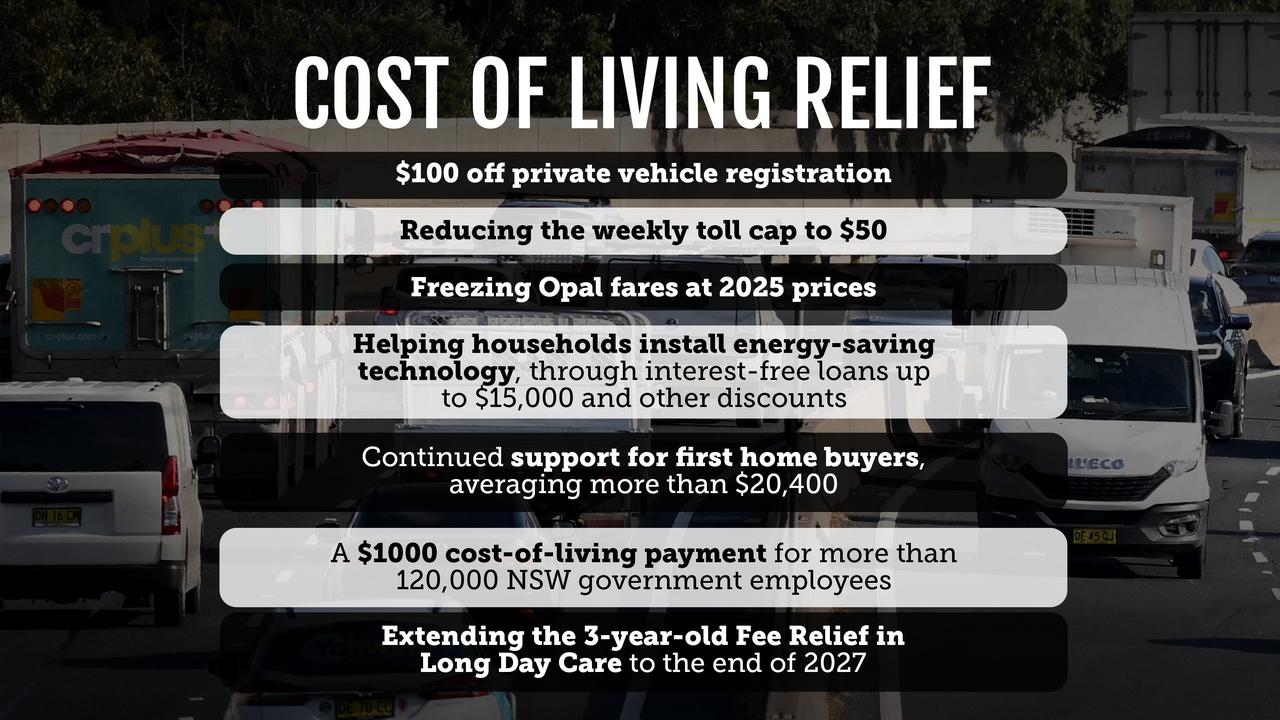
About one million motorists will benefit from a reduction in their maximum weekly toll spend from $60 to $50, announced in the NSW budget handed down on Tuesday.
Labor campaigned heavily in 2023 on the scale of the charges, branding Sydney “the most tolled city in the world”.
Vehicle registration costs, which can run to more than $1500, will also be slashed by $100 as part of a transport package worth $561 million.
“There’s more help for families at the toll gate, there’s more help for families with their registration, there’s more help for families at the train station, and there’s more help for families with their power bill,” Mr Mookhey told reporters on Tuesday.
“This is a budget that meets people where they are (and) that appreciates how much pressure working families are under.”
But it is also attracting criticism for not going further or stimulating enough economic growth.
“Families are working harder than ever but too many are going backwards, meanwhile businesses are facing rising costs and a government that is taking more off them in payroll tax,” Opposition Leader Kellie Sloane said.
Echoing a similar sentiment, Ben Pike from Business NSW said business confidence was at an all-time low since 2009 and payroll tax reform was necessary to prevent 6000 businesses from going under annually.
Greens MP Abigail Boyd said the treasurer was “managing optics, not the (cost-of-living) crisis”, pointing the finger at tax breaks for foreign commercial landlords, property developers, and poker machines.
“People are sick of token gestures,” she said.
“The people holding this state together are the people this budget left behind.”
Road users group NRMA welcomed the toll relief but suggested it would make a substantial difference to automate it so that time-poor families on the go can easily claim their rebates.
Mr Mookhey foresees another deficit of $2.3 billion in the coming year before a slender $1.1 billion surplus in 2027/28.
NSW is the only state still running operating deficits since the pandemic.
But Mr Mookhey said the focus of his fourth budget was on NSW families paying off mortgages and spending more on the groceries, fuel, and other bills.
“They are the people who this budget is for,” he told state parliament.
“And they are the people who this budget is about.”
Planned spending includes an eye-watering $22.2 billion towards health, making it the largest single commitment in the 2026/27 budget.
This will be split into a $10.3 billion bucket in recurrent funding, including recruiting 9000 more health workers and delivering historic pay rises to nurses and midwives.
A record $11.9 billion in infrastructure spending is earmarked to build and upgrade 32 hospitals in regional NSW and western Sydney, including Liverpool in southwest Sydney and the Shellharbour region.
Some 260 schools will be built or upgraded under a $9.2 billion education infrastructure program.
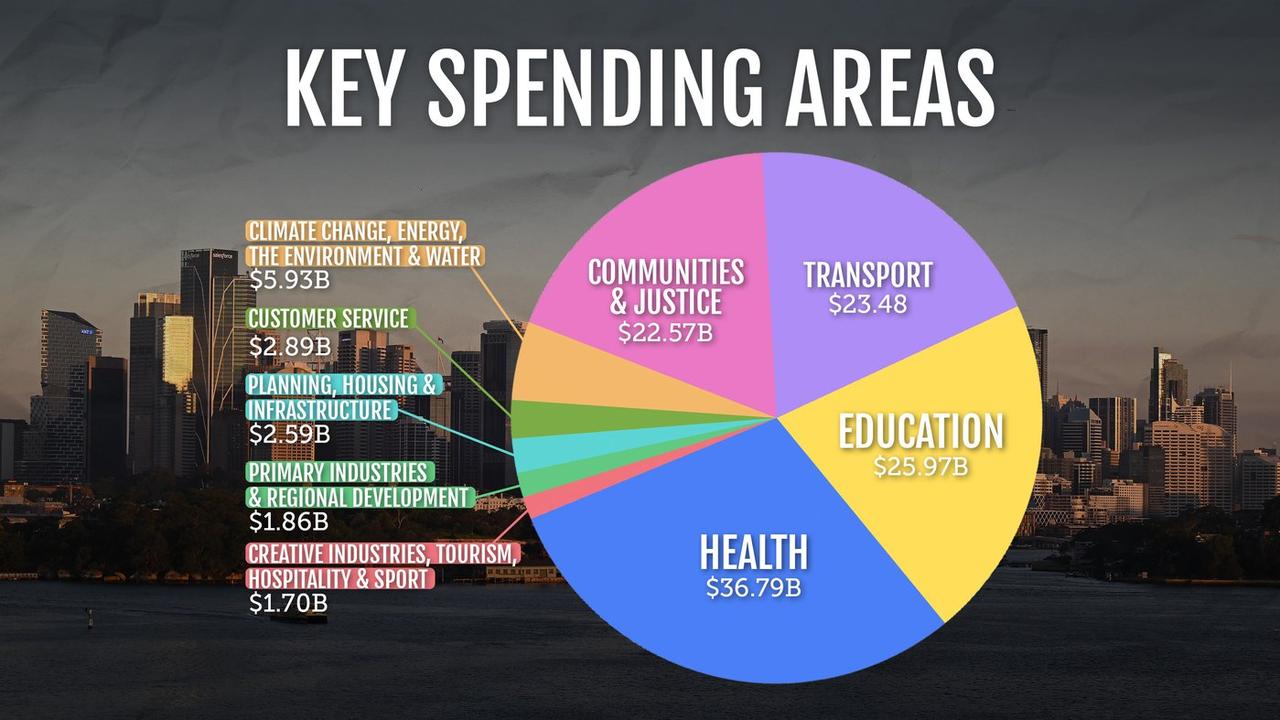
Another $2.1 billion will be spent on maintaining Sydney’s massive train network to curb delays with a further $6.5 billion over 10 years to deliver thousands of new electric buses.
In a period of high electricity prices, Labor is also spending $557 million on an energy efficiency program for low to middle income families.
The government is investing an additional $184.1 million in funding for domestic and family violence programs to keep more women and children safe.
Mr Mookhey spruiked a $1.1 billion special kitty for contingencies, including the bailout of Rio Tinto’s Tomago aluminium smelter and the federal gun buy-back scheme introduced after the Bondi terrorist attack.
AAP