More cost relief on table as Aussies asked to save fuel
Grace Crivellaro and Poppy Johnston |
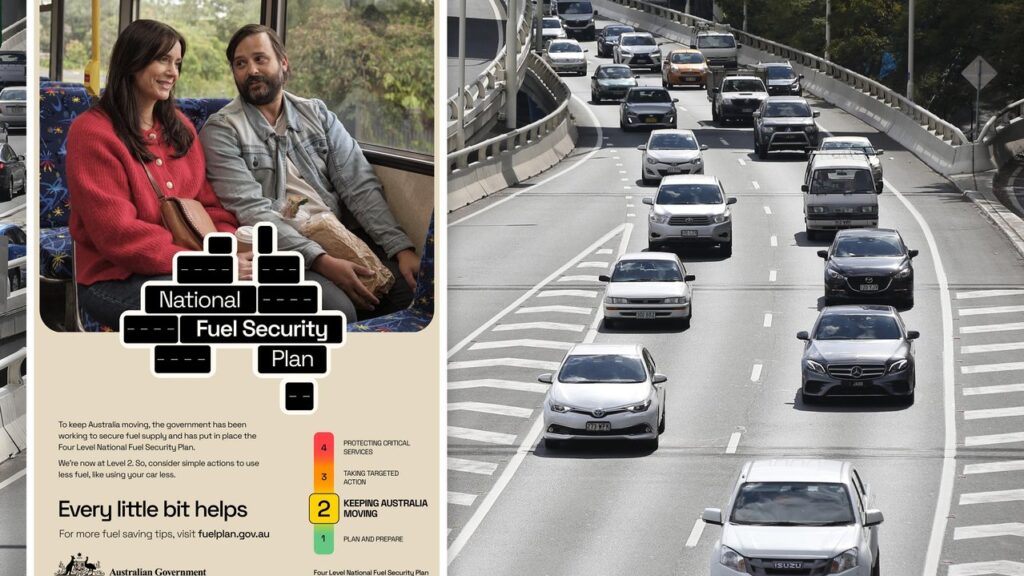
Australian motorists are being asked to conserve fuel in a multimillion-dollar ad campaign as the government weighs up further relief for cash-strapped households.
Transport Minister Catherine King said there would be an ongoing hit to the Australian economy despite a tentative ceasefire in the Middle East and ongoing peace talks between the US and Iran.
Even if the ceasefire held and regular oil shipments recommenced through the Iran-blockaded Strait of Hormuz, a “long tail” would impact Australians, she warned.

The Albanese government was considering extra relief measures for households and businesses in the May budget, Ms King said, after a three-month cut to the fuel excise was introduced to lessen the impact of high petrol and diesel prices.
“They’re all things that we’re contemplating as part of the budget process,” she told ABC’s Insiders program on Sunday.
The government will roll out a $20 million ad campaign titled “every little bit helps” on Monday across television, radio, online channels, billboards and posters.
The ads ask members of the public to consider using their cars less by walking or taking public transport, and provide tips to improve fuel efficiency, from “driving smoothly” to “unloading excess weight”.
The government was trying to provide information amid “a lot of anxiety” about the global conflict and fragile Iran war ceasefire, Ms King said.

But Liberal frontbencher James Paterson said Australians did not want to be lectured in “taxpayer-funded political propaganda about driving less”.
It comes two weeks after national cabinet met and announced a fuel security plan.
Ms King flagged a series of measures to improve Australia’s resilience to future energy shocks but did not endorse calls for the nation to expand domestic oil exploration.
It was “nuts” that locally grown canola was exported to be turned into biofuel and then imported when that process could be handled onshore, she said.
The government was also looking to accelerate electrification to ensure economic security, including in hard-to-abate sectors such as heavy freight.

The minister also left the door open to changes surrounding taxes on electric vehicles, which have surged in popularity during the fuel crisis.
She said it “was a matter for the budget” whether an existing fringe benefit tax incentive on battery-powered cars would be maintained.
Her department also continued to work on a model for an EV-targeting road user charge, although Ms King added the government didn’t want to disincentivise uptake of the vehicles.
More than 170 service stations were without diesel across Australia on Saturday after Iran choked shipping through the strait in response to US and Israeli strikes.
Australia has 38 days’ supply of petrol, 31 days of diesel and 28 days of jet fuel.
While the government assures ships are still arriving in Australia and 4.1 billion litres of fuel have been locked in, prices at the pump remain elevated and some service stations remain dry, particularly in regional areas.

Australia has been ramping up diplomatic efforts to secure fuel supplies, including through an agreement with Singapore to continue trading large quantities of fuel and gas between the two nations.
The nation has also been working to diversify its fuel supply chains beyond Southeast Asia, securing supplies from South American countries and Algeria.
The federal opposition has been calling for better energy self-reliance, with National Party leader Matt Canavan suggesting Australia should make better use of its oil and gas resources rather than relying on trading partners.
AAP