Undersupply, oil supply crisis fuel more housing pain
Jacob Shteyman |
Buyers and renters are between “a rock and a hard place” as rising inflation and interest rates interact with low housing supply in markets across Australia.
While the Middle East conflict will take some steam out of price growth, Australia’s chronic undersupply of housing continues to support property values across the country.
Cotality’s home value index climbed 0.7 per cent in March, with a median property at a record $933,137, the data firm reported on Wednesday.

It follows a rise of 0.8 per cent in February and takes the annual growth rate to 9.9 per cent.
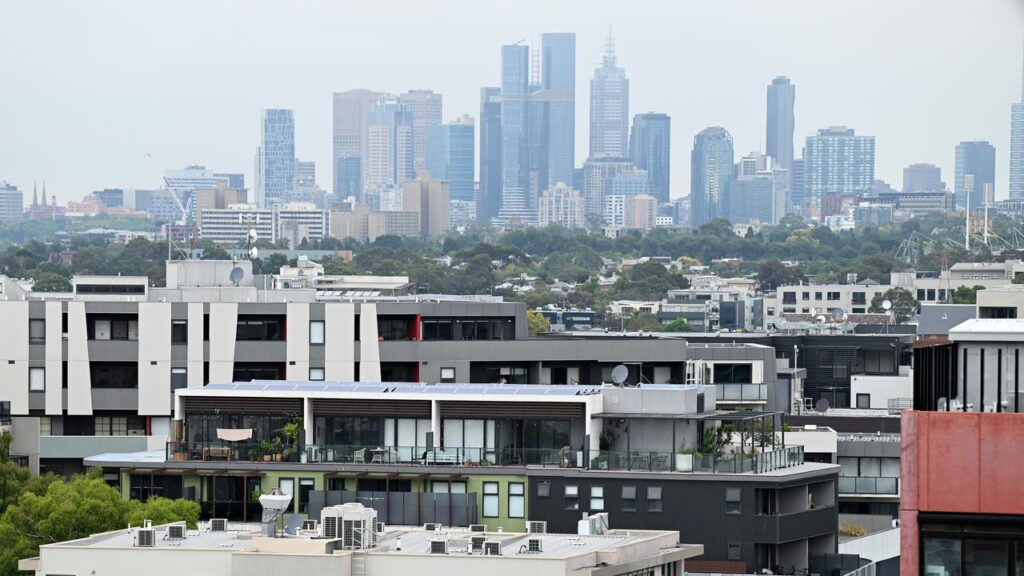
But divergences are widening between the larger capitals of Sydney and Melbourne, which fell 0.1 per cent and 0.2 per cent respectively in March, and the mid-sized markets, where growth continues apace.
Home price growth accelerated to 2.5 per cent in Perth, which became the third market to crack the seven-figure club with a median dwelling value of $1,017,698.
Mid-tier markets have been outperforming Melbourne and Sydney for a number of years, but the gulf was widening due to the scale of the supply deficit in Perth, Adelaide and Brisbane.
“Sydney and Melbourne are now seeing listings above average, so there’s more choice,” Cotality research director Tim Lawless told AAP.
“There’s less urgency for buyers. They can negotiate.
“Whereas in Perth, listings are still about 40 per cent below average.”

With up to three more interest rate rises predicted in 2026, prospective buyers would be feeling a sense of urgency to get into the market despite low confidence and vacancy rates.
“So for a lot of buyers or renters, they’re probably between a rock and a hard place,” Mr Lawless said.
Markets will inevitably slow down as a result of the Middle East conflict.
Higher inflation will eat away at household disposable incomes and higher interest rates will diminish borrowing capacity, softening demand.
But the supply side of the equation was also threatened.
Rising fuel prices and the shortages of construction materials such as PVC pipes would push up building costs and make projects less viable.
“When you have this ongoing undersupply of new housing, it generally implies a housing downturn may not be as deep as what it might have been otherwise,” Mr Lawless said.
Within housing markets, conditions were also diverging, with the lower quartile outpacing more expensive properties.

As borrowing capacity falls, buyers are pushed towards less expensive homes where they compete with investors and first-home buyers taking advantage of the government’s expanded five per cent deposit guarantee scheme.
But the growth in first-home buyers’ credit was unlikely to be sustained as they struggled to prove they could service a 95 per cent loan-to-value ratio mortgage, Mr Lawless said.
For those unable to get a foot on the property ladder, the rental market offers no respite.
Rental affordability is already at record levels and set to become even worse.
Rents grew 5.7 per cent in the past 12 months, the fastest annual rate of growth since October 2024.
“What’s driving the acceleration is simply that vacancy rates remain close to record lows at 1.6 per cent,” Mr Lawless said.
“So you have to imagine there’s going to be upwards pressure on rents when you have such a shortage of availability of rental stock.”
AAP