Owl be damned: regulator stops short of rat poison ban
Andrew Stafford |
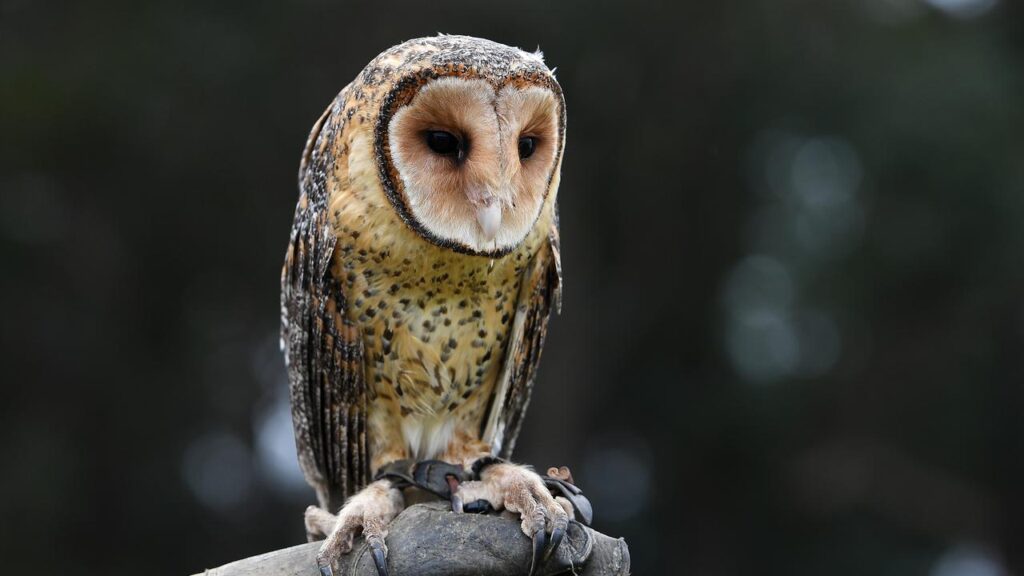
Back in 2015, wildlife conservationist Rob Davis was talking to a prospective PhD student with a passion for Australian owls.
Originally from Pennsylvania, Mike Lohr was concerned about the impacts of a common class of rodenticides readily available in Australian hardware stores and supermarkets.
Professor Davis, a disturbance ecology expert at Perth’s Edith Cowan University, was sceptical.
Then Mr Lohr said something that made him sit up and take notice.
“He told me, ‘Rob, in the US we can go buy guns and ammunition but we sure as heck can ‘t go and buy second-generation anticoagulants,'” Prof Davis recalls.
SGARs had been banned in the USA since 2013 and their sale highly restricted in Canada and the European Union.
So, Mr Lohr chose a common and familiar Australian owl, the boobook, and made a call-out to wildlife carers and others around Perth to send him specimens, most of which were roadkill.
He then conducted post-mortem examinations of their livers, revealing that more than 70 per cent had ingested second-generation anticoagulant rodenticides.
Eighteen per cent had lethal levels of the poison in their systems, while more than 30 per cent were in the dangerous to fatal range.
Something was clearly up.
More studies followed, with an examination of deceased powerful owls around Melbourne showing 83 per cent had ingested SGARs; for masked owls, it was over 90 per cent.
Both are threatened species.
With evidence mounting, Australian Pesticides Veterinary Medicines launched a review into the use of SGARs in 2022, finally handing down its report in December last year.
After considering more than 1500 scientific studies, it proposed banning over 30 SGAR products, while allowing for the ongoing sale of more than 130 others.
While the review accepted the “unacceptable” risk posed to non-target animals by SGARs, it recommended a “risk mitigation” approach, shifting some of the onus for their use on to consumers.
It claimed its proposed measures were “comparable to or stronger than, those of equivalent international regulators”.
Among its recommendations were tamper-proof bait boxes and labels urging users to dispose of dead rodents themselves.
Birdlife Australia’s Christina Zdenek says this is a patently unrealistic expectation, given the spread of rodents throughout ecosystems.
“The regulator expects fine print and packaging, and placement can make these chemicals safe but unfortunately you can’t escape chemistry and biology with wishful thinking,” she says.
Dr Zdenek – a toxicologist who keeps taipans as pets and runs snake-handling courses as a side-hustle – should know, having studied the effects of anticoagulant snake venom in humans for her PhD.

Anticoagulants work by blocking the vitamin K pathway, which enables blot to clot.
She says the nub of the problem with SGARs is that they take up to 18 days to work.
Despite being advertised as fast-acting, a rat has to exhaust its natural stores of vitamin K before succumbing to internal bleeding.
Until it does, it’s a dead rat walking – and easy prey.
“A rodent that’s delirious, wandering around in the daytime and slow to react is going to be the first thing that’s taken,” Dr Zdenek says.
The same goes for an owl that consumes the rodent: as the toxins build up in their system, the birds become confused and disoriented – and more vulnerable to being struck by vehicles.
And it’s not just owls that are impacted.
In 2025, Dr Lohr (now an adjunct lecturer at Edith Cowan) and Prof Davis published a study showing pervasive levels of SGARs in quolls and devils in Tasmania.

Dr Davis says that raised questions about other potential impacts of SGARs including whether it was a contributing agent to devil facial tumour disease.
Yet more studies showed wedge-tailed eagles and other diurnal birds of prey, tawny frogmouths, possums, goannas and domestic dogs and cats have all been affected by the spread of SGARs.
But the Australian Pesticides Veterinary Medicines review argues SGARs remain crucial to control non-native rodents, particularly in plague situations, due to their resistance to first-generation rodenticides.
Andrew Dinwoodie, the project co-ordinator for BirdLife Australia’s Powerful Owl project, says SGARs should be banned in urban and peri-urban areas.
“We’re not calling for them to be banned from use by farmers who have an economic interest in protecting their crops and livelihoods,” he says.
But they should be administered by licensed professionals, comparing SGARs to 1080, a poison used to target wild dogs and foxes.
“You can’t go to your local hardware shop and buy 1080 and spread it around your backyard,” he says.
Dr Zdenek says the irony of using SGARs is that they exacerbate the very problem they’re supposed to solve: fewer owls and other birds of prey means more rodents.

She calls for a more integrated pest control approach that protects natural predators, pointing to other countries that have already taken SGARs from the shelves.
“We’re on the wrong side of history with this,” she says.
Minister for Environment Murray Watt referred questions from AAP to the Minister for Agriculture and Australian Pesticides Veterinary Medicines.
In a statement, it confirmed the impact of SGARs on native wildlife.
It noted non-compliance with label instructions on registered chemicals can result in enforcement action by state or territory agencies.
“They are not fine print,” the statement says.
“They are important instructions which must be followed to ensure the safe use of the chemicals.”
It says submissions on its proposed changes can be made until March 16 via the APVMA website.
AAP