Rio Tinto misses profit view on iron ore challenges
Roushni Nair and Melanie Burton |
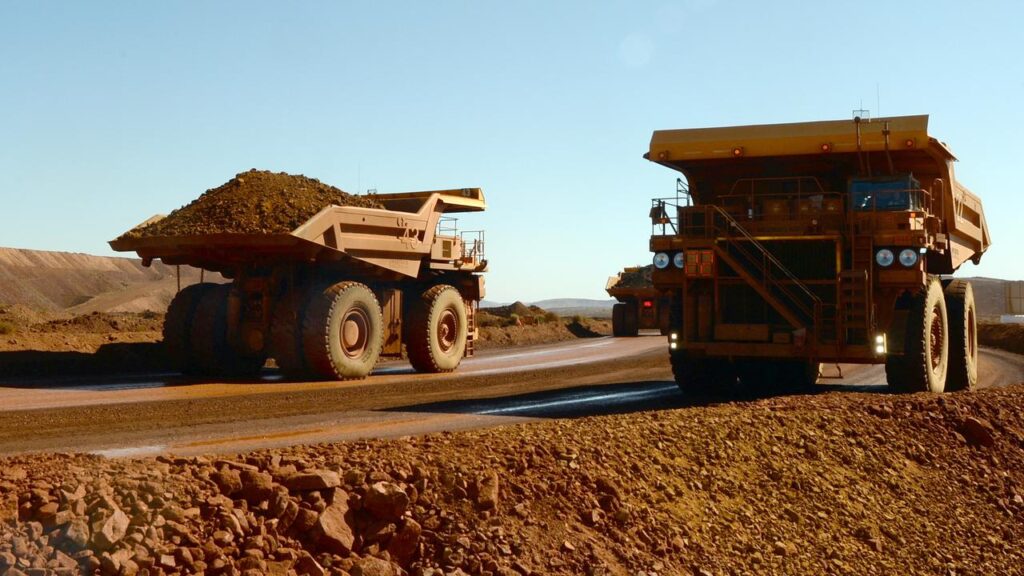
Rio Tinto has reported flat annual earnings that missed expectations as its mainstay iron ore business suffered from lower prices, which were offset by a strong performance from its copper division.
The world’s largest iron ore producer, which recently walked away from merger talks with Glencore, posted underlying earnings of $US10.87 billion ($A15.43 billion) for the year ended on December 31, unchanged from a year earlier and below the Visible Alpha consensus of $US11.03 billion.
The miner on Thursday also declared a final dividend of 254 US cents per share, implying a payout ratio of 60 per cent of underlying earnings, up from 225 US cents in 2024.
The results highlight miners’ increasing focus on copper as demand grows, driven by the expansion of power-hungry AI data centres and the shift toward cleaner energy.

That strategic pivot has fuelled a wave of deal-making across the sector as companies try to secure long-life copper resources.
The British-Australian mining giant’s own talks with Glencore collapsed in February after the companies failed to agree on valuation and ownership terms, ending discussions that would have created the world’s largest listed mining company and significantly boosted copper exposure.
Copper overtook iron ore in rival BHP’s earnings for the first time, the world’s largest listed miner reported on Tuesday.
“A good result, perhaps as not as impressive as BHP, particularly with capital liberation,” said Andy Forster of Argo Investments in Sydney, referring to its plans to sell stakes in infrastructure and other assets.
Both major miners have pledged to tap existing assets to raise capital for reallocation and returning to shareholders, with BHP this week announcing a deal with Wheaton Precious Metals to provide silver from a mine in Peru for an upfront payment of $US4.3 billion.
Rio Tinto said it was gauging interest from the market for a sale of its titanium and borates division and looking at ways to monetise portions of its existing infrastructure across all divisions.
Rio’s iron ore earnings shrank to about 60 per cent of the group total, down from 70 per cent a year ago, as earnings from the copper division doubled on the year to account for about 30 per cent of earnings, with aluminium and lithium accounting for the remainder.

The iron ore earnings were affected by higher annual unit costs for its Pilbara iron ore output in Western Australia, which were about $US0.50 per tonne higher than in 2024 due to inflationary pressures and weather-related disruptions.
Pilbara unit costs are forecast to rise further to between $US23.50 and $US25 a tonne in 2026.
The copper division reported average realised prices in 2025 rose 17 per cent from a year earlier and output climbed by 11 per cent from 2024, supported by a ramp-up at the Oyu Tolgoi mine in Mongolia.
Rio Tinto’s shares on the ASX closed 2.0 per cent higher at $168.55 on Thursday, before the results were released.
Reuters