UK artist pips homegrown musicians to top annual poll
Andrew Stafford |
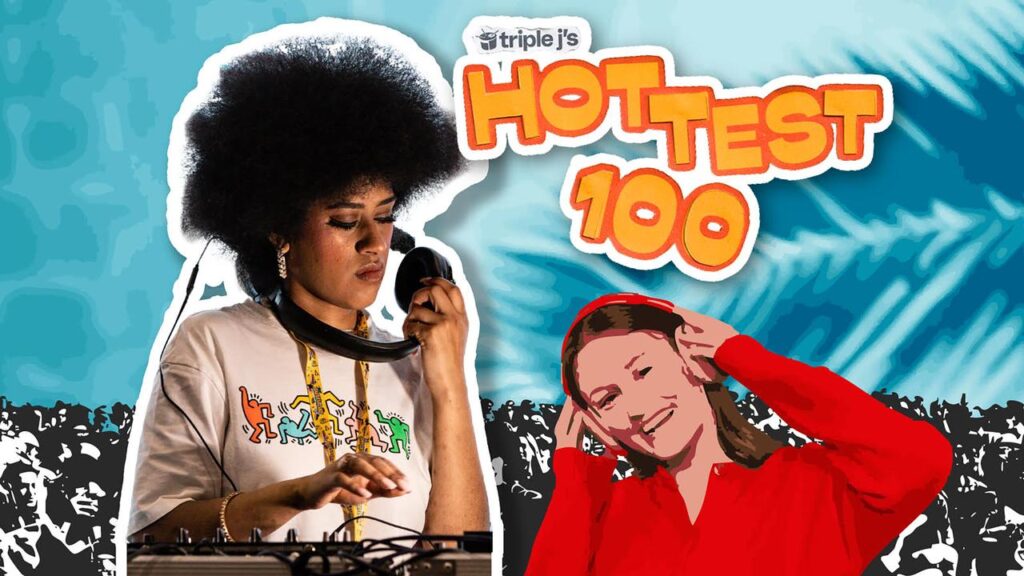
It’s an Australian summer musical tradition that’s been starting and stopping barbecues since 1989 – but increasingly, something is missing.
The 2024 Triple J Hottest 100 featured just 27 Australian artists, the lowest level of Australian representation in the annual poll since 1994.
It’s a steep drop from the years 2014 to 2022, when Australian music made up more than 50 per cent of the playlist.
And while there was some hope of a correction for the 2025 Hottest 100 revealed on Saturday, UK soul singer Olivia Dean pipped local artists to take top spot with her hit Man I Need.
Dancing2 by Keli Holiday, the solo project from Adam Hyde of Australian duo Peking Duk, was second, with homegrown hitmakers Tame Impala’s party anthem Dracula third.
Melbourne “bogan funk” group Playlunch came in fourth with their rollicking track Keith – the viral video for which features former AFL star Barry Hall as a cranky neighbour – while their cover of It’s Raining Men made the cut at 73.
UK soul singer Raye rounded out the top five with Where Is My Husband, which topped the UK charts on release.
The results come as a new analysis shows the longer-term outlook for Australian music is grim.
Data gathered by the Australia Institute showed the decline in Australian artists in the Hottest 100 mirrored the decline in local representation on global streaming services.
“It’s really fallen off a cliff in the last couple of years,” the institute’s Rod Campbell said.
He said streaming algorithms differentiated by language, not geography, meaning Australians were effectively treated as English-speaking music fans.
The result was that Australians were given English-speaking music without geographical considerations.
Campbell said Australian musicians were at a huge disadvantage to American and British artists working in far bigger markets with global publicity machines behind them.
“It’s not that Australians don’t want to listen to Australian music, or that Australian music is not as good as it was three or four years ago,” Campbell said.
“It’s really the increasing dominance of streaming and social media like TikTok.
“That’s how people are getting their new music, but the algorithms are not giving them Australian music to sample.”
In 2025, Triple J held a mid-year poll, the Hottest 100 Australian Songs – a celebration of Australian music, that appeared to act as a nostalgic corrective to the 2024 result.

More than 2.5 million votes were cast, with INXS’s Never Tear Us Apart taking top spot.
There was some hope of a rise in Australian representation in this year’s countdown, with songs by Tame Impala, Ball Park Music, Keli Holiday and Spacey Jane all featuring.
But Campbell said Australian music would continue to suffer without further government support.
“We’re far below countries like Spain, the Netherlands, Germany in terms of the funding that we put into culture in general, and music in particular,” he said.
Unlike Australian radio stations, streaming services are under no obligation to play Australian music. There are no quotas.
Ben Eltham, a lecturer in media and communications at Monash University, said “the cliff had been coming for a while”.
“The entire architecture of cultural regulation in this country was written for the 80s for an analogue world,” Dr Eltham said.
“Regulators and politicians have done nothing, even as the internet’s completely upended our cultural life.”
AAP