Hot or not? Strong spending complicates rate picture
Jacob Shteyman |
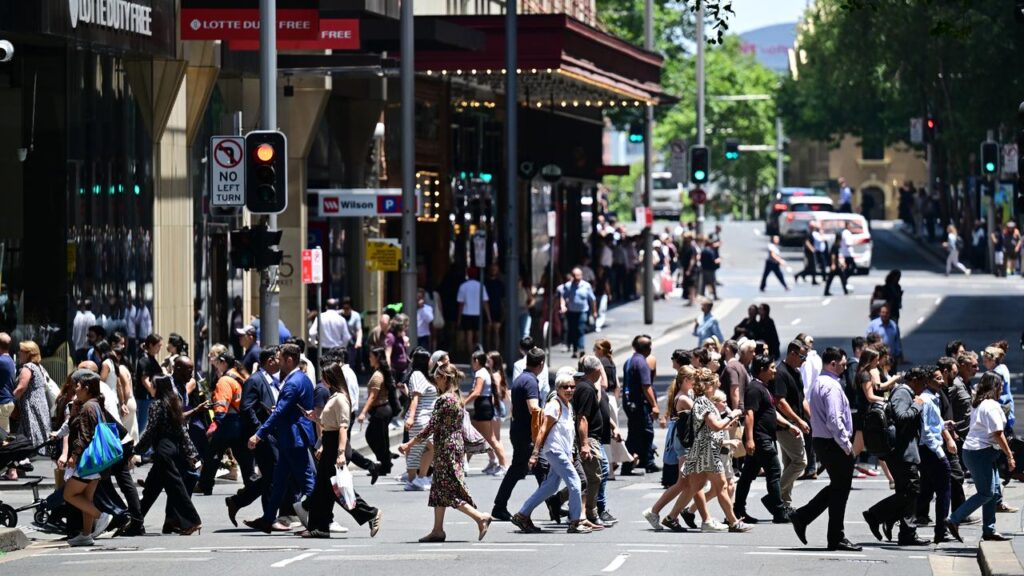
Household spending continues to build momentum, heightening expectations of a Reserve Bank rate hike.
After official figures released on Monday showed stronger-than-expected spending in November, data from Commonwealth Bank revealed no let-up in consumption despite a gloomier outlook for interest rates.
CBA’s household spending insights report, derived from de-identified payments data from seven million retail customers, rose another 0.7 per cent in December.
The strong lift comes despite some analysts predicting a slowdown in December spending data, due to Black Friday discounting bringing forward spending to November and a slump in the Westpac-Melbourne Institute consumer confidence index in December.

Annual spending growth climbed to 6.3 per cent in Australian Bureau of Statistics data, suggesting real household consumption is tracking above expectations.
“The strength in household spending late in the year was more robust than anticipated and points to a willingness to spend that exceeds our earlier forecasts,” Commonwealth Bank head of Australian economics Belinda Allen said.
Entertaining and eating out in the lead-up to Christmas underpinned spending growth, with food and beverage spending up one per cent in the category’s strongest monthly rise since April.
“This momentum adds to concerns the economy may be running above its speed limit, supporting our expectation for a February rate hike.”
A key theme for 2026 will be whether capacity constraints limit the growth rate of Australia’s economy and contribute to a sustained resurgence in inflation.
In a speech in November, Reserve Bank of Australia deputy governor Andrew Hauser warned Australia could be “boxed in” by low productivity unless policymakers found a way to create more supply capacity.

Low unemployment and high capacity utilisation rates, as measured in NAB’s business survey, backed the RBA’s assessment of little spare capacity left in the economy, Bank of Queensland chief economist Peter Munckton said.
But is was not yet clear whether that meant the RBA needed to raise interest rates.
“The data in coming months will confirm whether the rise of inflation in the second half of last year reflected a series of one-off price rises or a result of excess demand,” he said.
“If it is the former then the cash rate likely won’t rise and economic growth could be about as good as it was last year.
“If it is the latter then interest rates will likely rise this year (probably by a half percentage point) resulting in a modestly weaker economic outcome in 2026 than in 2025.”
Official spending data for December won’t be released until after the Reserve Bank’s February 2-3 board meeting, with fresh jobs data and, crucially, December quarter inflation figures to instead guide the RBA’s decision.
AAP