AI is boosting scientific careers but shrinking studies
Jennifer Dudley-Nicholson |
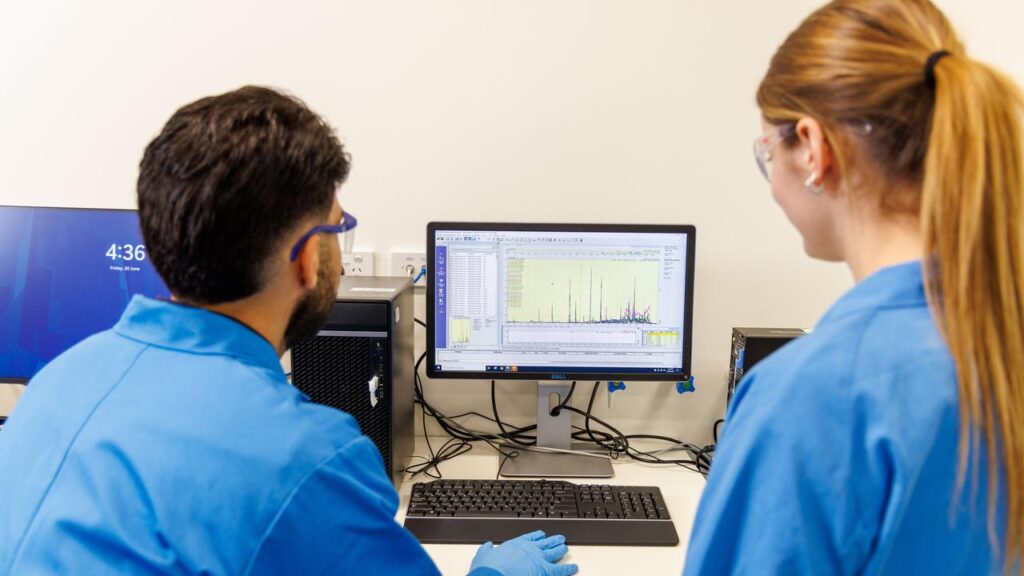
Scientists who use artificial intelligence tools publish three times as many papers and climb the academic ranks more than a year faster than peers who do not use the technology.
But AI could be having a detrimental impact on scientific research as the technology shrinks the number of topics studied by almost five per cent.
Researchers at the University of Chicago and Tsinghua University in China published their findings on Thursday after analysing more than 41.2 million research papers for signs of AI use.
The results come months after Stanford University held the world’s first open conference for research created with and reviewed by AI tools, and after the Australian government released its National AI Plan with a focus on boosting use of AI technology.

The study, published in the journal Nature, investigated research papers covering six natural science topics: biology, medicine, chemistry, physics, materials science and geology.
The researchers used a natural language model from Google to identify papers that deployed AI and used human researchers to validate the results, finding 310,957 publications showed signs of AI use.
But the technology’s impact was more significant than the numbers suggested, as scientists who used AI tools published 3.02 times as many papers as those who did not use it.
They also received 4.85 times as many citations as their scientific peers and became research leaders 1.37 years earlier than their colleagues.
The impact of artificial intelligence on the industry was not all positive, however, as researchers found AI-augmented papers focused on a narrower range of topics, contracting study areas by 4.63 per cent.
The shrinking basis for scientific exploration could be explained by a lack of data, researchers said, as AI worked best in areas with plenty of existing information to extract.

“Adoption of AI in science presents what seems to be a paradox: an expansion of individual scientists’ impact but a contraction in collective science’s reach,” the paper said.
“AI tools seem to automate established fields rather than explore new ones, highlighting a tension between personal advancement and collective scientific progress.”
Potential solutions to widen scientific research could include incentives, the authors said, or changes to generative AI models.
The findings come after Stanford University held its Agents4Science event in October, billed as the first conference in which AI served as both research authors and reviewers.
The event highlighted the increasing use of technology in the field of science, Flinders University researcher Professor David Powers said, but AI posed significant challenges, including distinguishing hallucinations and maintaining quality.
AAP