Massive cattle deaths feared from Queensland flooding
Derek Rose |
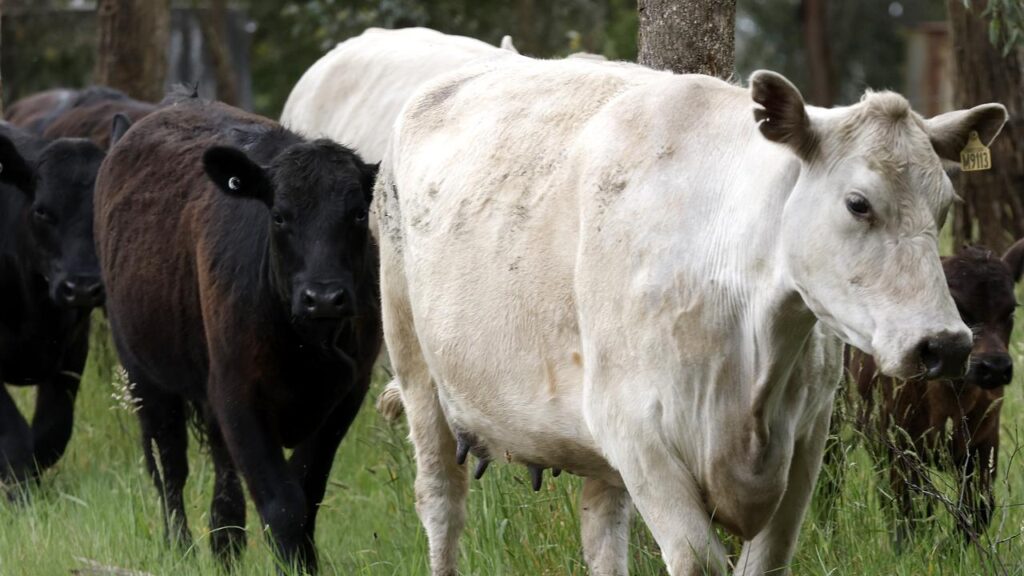
Flooding has hit three cattle stations in northwest Queensland, where seven years ago thousands of cows drowned in similar severe weather.
Australian Agricultural Company said on Monday that it was monitoring its Carrum, Dalgonally and Canobie aggregation stations and taking all possible steps to handle the situation.
All staff and their families on the impacted properties were safe, but there was no way currently to make a credible assessment of the impact on livestock and infrastructure.
“People’s safety and animal welfare, as well as support for our local communities, will continue to be of the highest priority,” it said on Monday.
Flooding in early late January and early February of 2019 killed an estimated 457,000 head of cattle, 43,000 sheep, 710 horses and 3,000 goats across 11.4 million hectares in northwest Queensland, according to a 2020 report by the Queensland government.
For Australia’s largest listed beef producer, the 2019 disaster resulted in the loss of 43,000 head of cattle, costing it $47 million.
“Any comparisons between the 2019 event and the current event should be approached with caution, due to current cattle valuations, operating practices, property and livestock conditions, weather and rainfall variations and seasonality,” it cautioned in a statement to the stock exchange.
The three properties impacted by the 2025-2026 flooding carry a total of approximately 55,000 head of cattle, significantly less than in 2019.

Australian Agricultural Company, which has a stock market value of almost $900 million, said it doesn’t have flooding event insurance for its herd and infrastructure, given the prohibitive cost.
While the impact on its bottom line was likely to be material, its balance sheet and financial position remained strong, it added.
The weather in southwestern Queensland, and the Northern Territory – where most of the company’s 27 stations and 456,000 head of cattle are located – remains favourable, it said.
Australian Agricultural Company shares were down 2.4 per cent to $1.42 in early afternoon trading
The group, which listed in 2001, was set up in 1824 and bills itself as the oldest continuously operating company in Australia.
AAP