Weeks wait for social media ban data to come online
Grace Crivellaro and Tess Ikonomou |
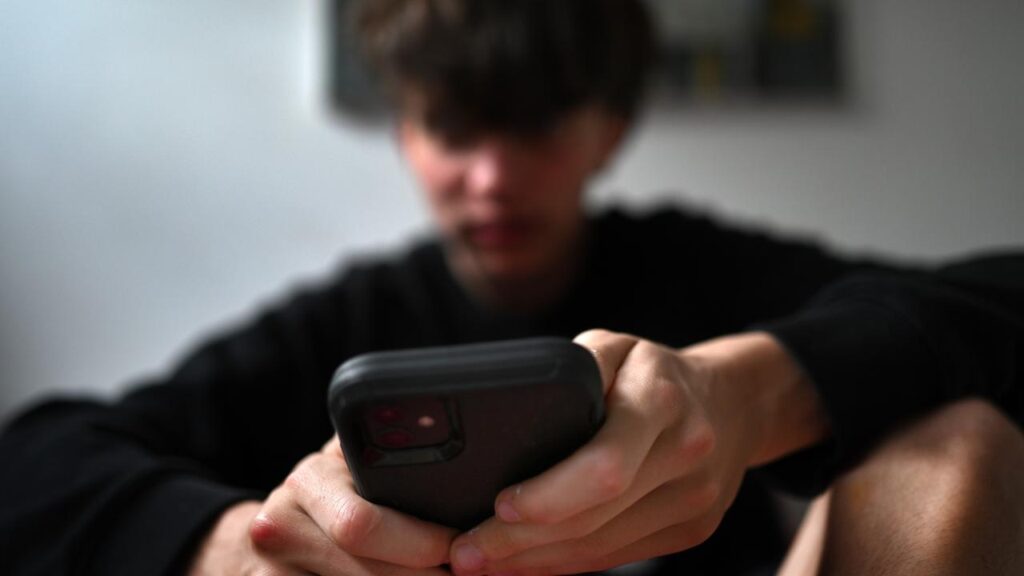
Australia won’t know until Christmas how many children have sidestepped a social media ban for under 16s.
The nation has become the first to introduce age restrictions for 10 social media platforms including YouTube, TikTok, Snapchat and Instagram.
Tech companies are required to block anyone under 16 from holding an account.
Prime Minister Anthony Albanese and Communications Minister Anika Wells met with a group of school students at St John Paul II College in Canberra the day after the ban kicked in.

Ms Wells said eSafety Commissioner Julie Inman Grant would write to the platforms considered age-restricted to check their numbers, before coming back each month for an update on accounts being removed.
“She will be giving you an update on that before Christmas, before more nuanced information across the new year,” the communications minister said.
Mr Albanese said world leaders had been in contact over the ban as several other countries, including Malaysia, planned to introduce similar restrictions.
“This is Australia leading the world, as we have in so many other areas, and that’s why I see it as a source of national pride,” he said.
“This is a national journey that we’re embarking upon here in the interests of this but importantly as well, in the interests of future generations.”

Rachael Sharman, senior lecturer in psychology at the University of the Sunshine Coast, is “hugely in favour” of the ban, but said its success would be difficult to measure.
“We know that taking teens off screens and putting them in a camp shows improvements in their social ability and emotional recognition skills within a matter of a week,” she said.
Dr Sharman said she expected under-16s would become less hooked on social media within three years, but it could take a generation for a cultural shift to occur.
“Kids who are nature babies will start to outnumber the kids hanging on for dear life to their apps, but it won’t happen overnight,” the academic said.
“I would suggest this will take a generation or two.”

RMIT University information sciences professor Lisa Given has heard from teens who circumvented age assurance checks, including a 13-year-old who was detected as being 34.
“If success looks like getting us talking about these issues and identifying a problem, I think that’s been successful,” Professor Given said.
” … if parents are looking for this as a silver bullet to help them deal with the harm their kids are facing, this isn’t really the solution they were hoping it would be.”
One teenager told AAP he had been kicked off platforms owned by Meta, but still had access to Snapchat.

But 13-year-old Ballarat girl Pippa Martin’s attempts at putting on extra make-up to look older failed to circumvent Snapchat’s facial verification.
“I got some make-up and put it around my wrinkle lines trying to make myself look really old,” she told AAP.
Despite teens finding workarounds, Mr Albanese has already hailed the ban a success as parents and children are discussing the impacts of social media.
Platforms must take “reasonable steps” to block the age group from accessing their accounts and from making new ones or they face fines of up to $49.5 million.
AAP