Vanishing gun marks on body probed in officer’s trial
Tom Wark |
A jury will determine whether gun marks seen on Jesse Baird’s body when it was found – but not at his autopsy – are consistent with an “execution-style” murder.
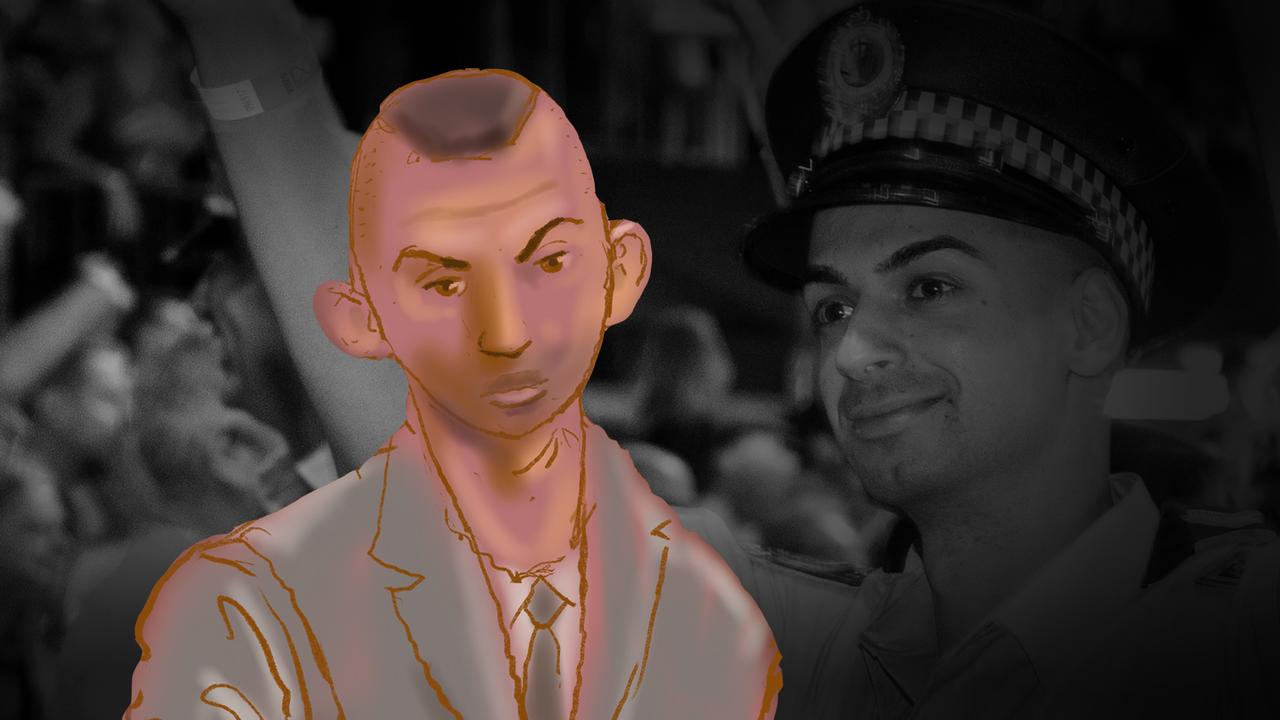
Former senior constable Beau Lamarre-Condon, 31, is contesting two murder charges relating to his ex Mr Baird, 26, and Luke Davies, 29.
Prosecutors allege Mr Baird, a TV presenter and AFL goal umpire, was killed “execution-style” in February 2024 with a gunshot wound to the temple, and say marks known as stippling were found on his body.
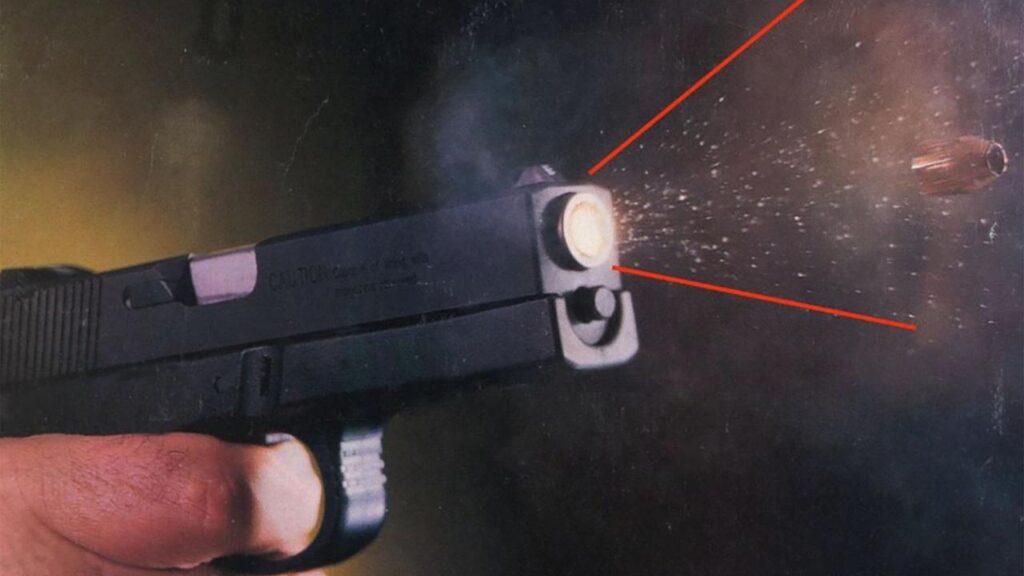
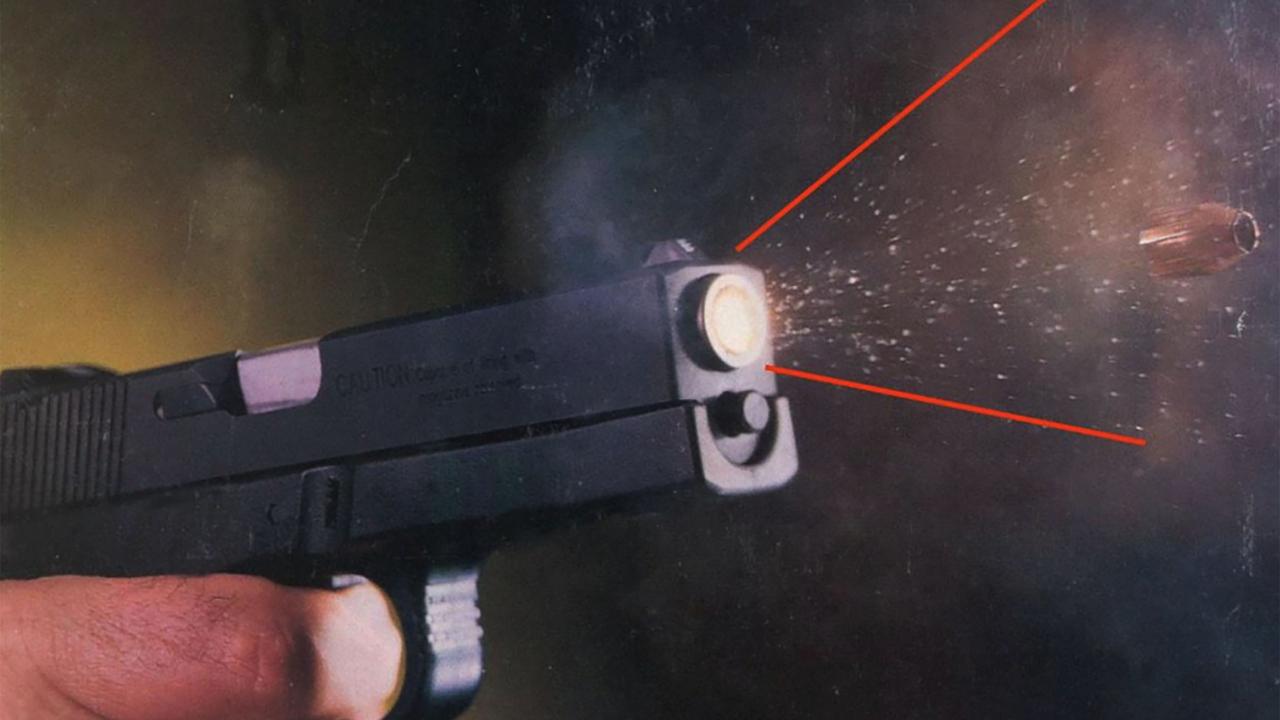
Stippling occurs when gunpowder particles ejected by a fired gun cause a cone pattern on a surface depending on the distance from the firearm to the surface, jurors have been told.
But the police officer says he killed his ex in self-defence during a violent struggle for the gun when he entered Mr Baird’s Sydney home heavily disguised.
Crime scene officer Greg Moon has told the jury he had observed and photographed stippling marks on Mr Baird’s body when it was discovered in Bungonia.
The photographs of those marks were only shown to the jury and not the public gallery.
But the same marks were not seen by the forensic pathologist who conducted Mr Baird’s autopsy when she examined him two days later.
“No fragments could be found under the microscope … I can’t confirm it but also can’t exclude it,” Kendall Bailey said.
Dr Bailey said the body’s continued decomposition may have contributed to the disappearance of stippling.
But she also found no muzzle imprint suggesting the pistol was pressed against Mr Baird when it fired.
Lamarre-Condon’s barrister says Mr Baird was killed in a violent struggle after which Lamarre-Condon’s police pistol was flung across the room.
Mr Davies then picked up the pistol and a second struggle with the police officer ended in the 29-year-old pulling the trigger, accidentally killing himself, according to the defence case.
But Dr Bailey said Mr Baird would not have been able to make a meaningful effort to throw the gun after being shot.
Mr Baird sustained two bullet wounds, including one travelling through significant portions of his brain and central nervous system, the jury heard.
“Someone shot through that area of the brain … wouldn’t be able to fling a gun across the room?” prosecutor Brett Hatfield SC asked the pathologist.
“It would be instantly incapacitating,” Dr Bailey said.
“I don’t think that person is making any conscious movements.”
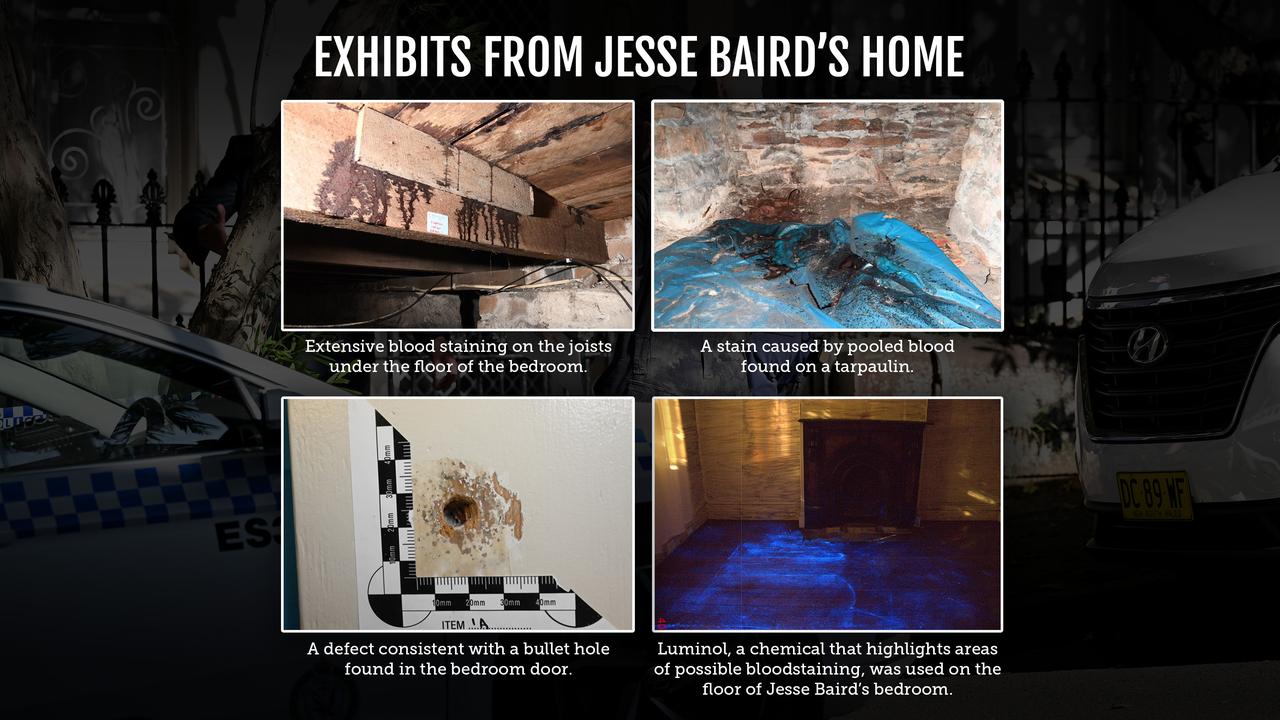
Mr Moon earlier disagreed with Lamarre-Condon’s barrister about the likelihood of DNA being able to travel through a hole in a door.
“The possibility of biological material finding its way from a wound to the deceased through a hole in the door … and into the barrel of a gun – the likelihood of that approaches zero,” defence barrister John Stratton SC suggested.
“I disagree … I believe it can still happen,” Mr Moon said.
“I’m putting to you it’s very improbable,” Mr Stratton said.
“I disagree,” Mr Moon replied.
Mr Moon said biological material would not be found in the barrel of a gun if it was fired again, due to the high heat killing any DNA.
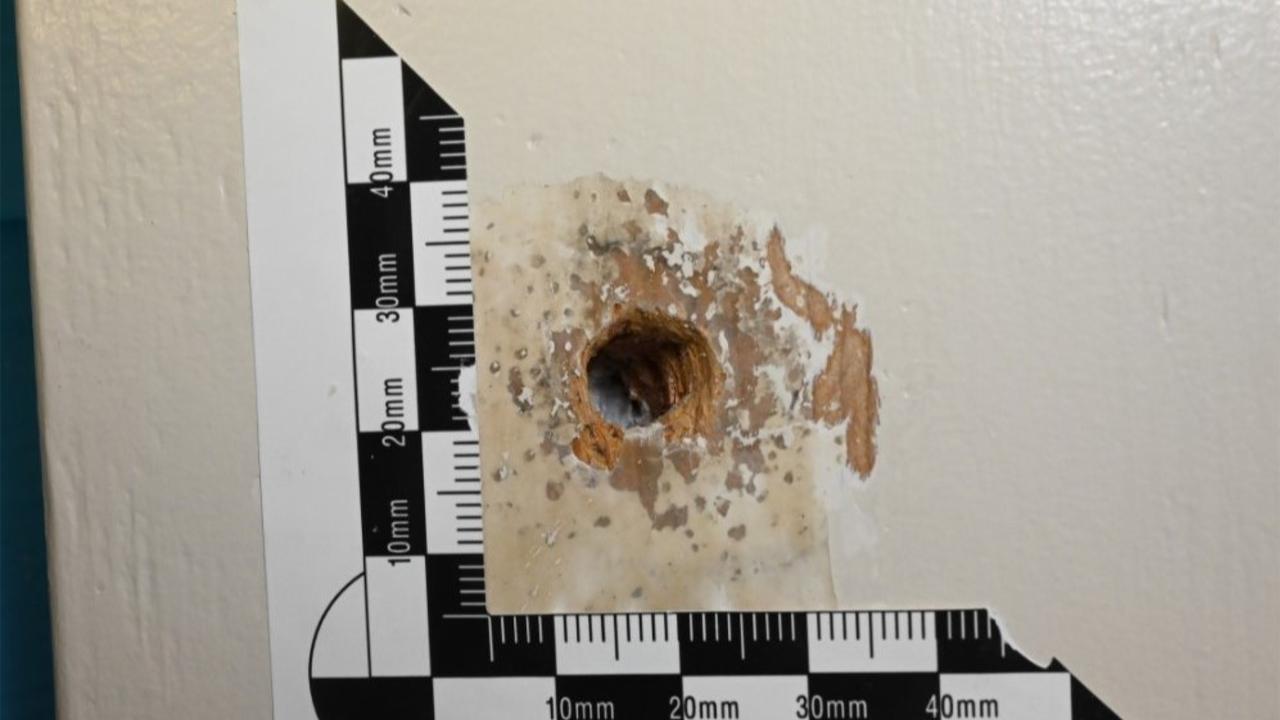
The bullet hole allegedly caused by the shot that killed Mr Davies was only found in July, more than two years after the men died, the jury of 15 has been told.
The hole was less than one centimetre in diameter.
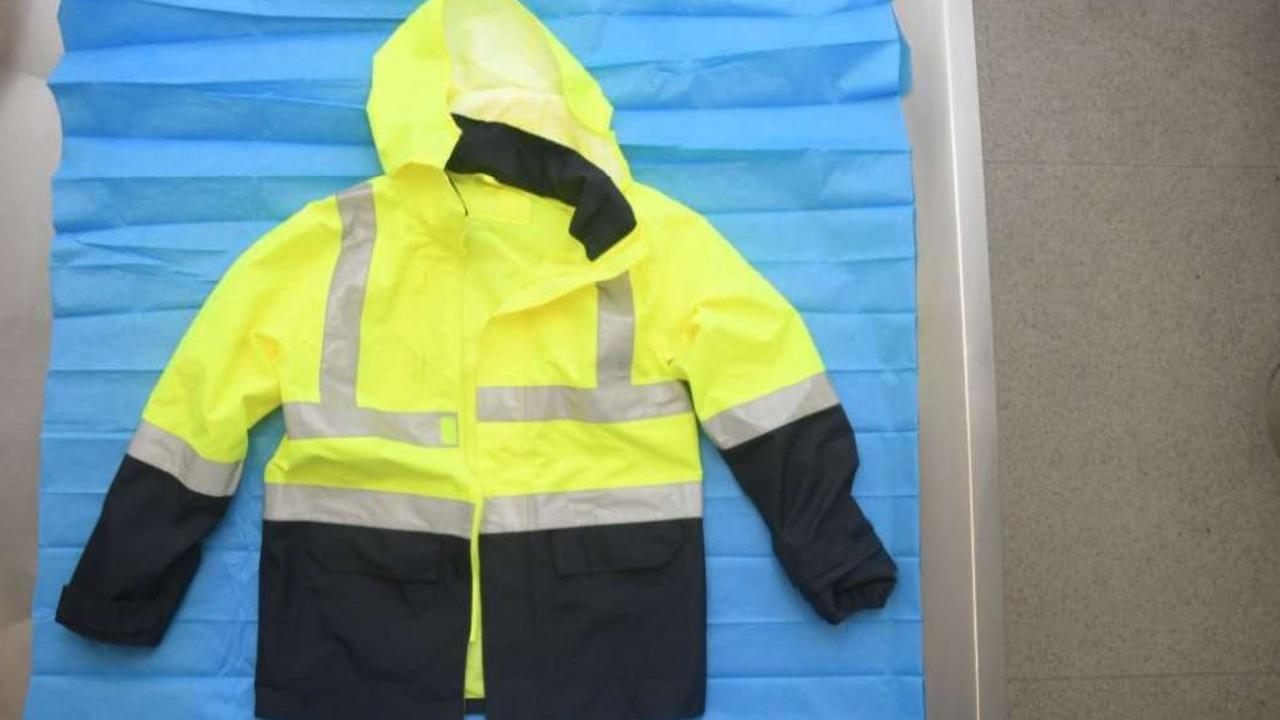
Lamarre-Condon, 31, accepts he shot Mr Baird, who’d months earlier called time on a brief, second relationship.
But he argues he acted in self-defence after entering the home in disguise in February 2024 to retrieve personal items.
The Crown argues Lamarre-Condon murdered Mr Baird out of jealousy and then eliminated the witness, Mr Davies, as the 29-year-old tried to make a triple zero call.
Both parties agree Mr Baird was killed first with two gunshot wounds before Mr Davies was killed with a third shot.
The former officer has pleaded not guilty to both murders.
1800 RESPECT (1800 737 732)
Lifeline 13 11 14
Men’s Referral Service 1300 766 491
AAP