‘Only do it together’: PM’s call to arms to UN leaders
Andrew Brown |
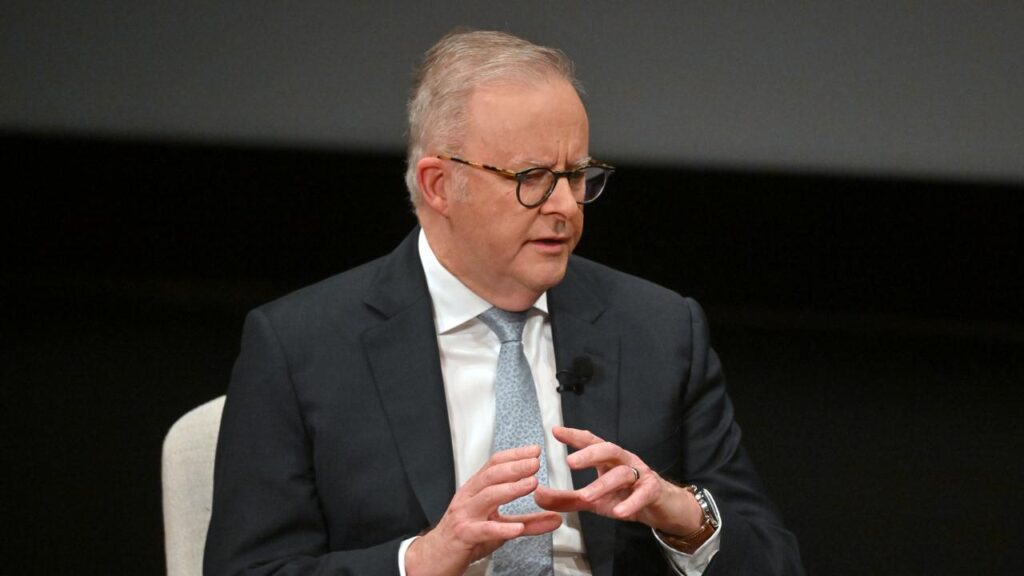
The prime minister has issued a call to world leaders to work together to confront growing issues of unchecked artificial intelligence and climate change.
In his address to the United Nations in New York on Friday, Australian time, Anthony Albanese laid out the case for reining in artificial intelligence through additional safeguards.
At a time when the global order was being tested and trust in institutions like the UN were on the decline, the prime minister said it was critical for countries to work together.
“Whether it is climate change or artificial intelligence, there is always the temptation to say that our generation is being confronted by issues our predecessors could not have imagined,” he told the UN General Assembly.
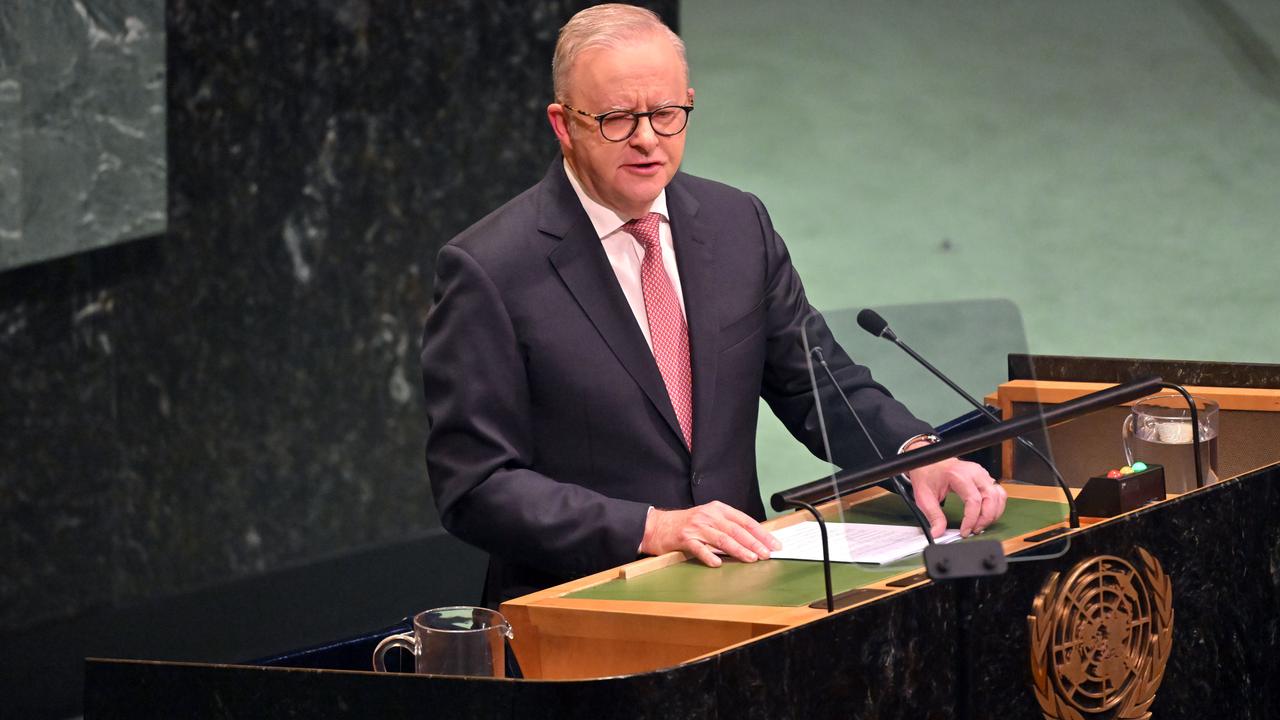
“But for all the transformation the past eight decades have brought, the fundamental stakes have not changed.
“We can rise to meet these new challenges now. We can reaffirm our national sovereignty and our shared humanity … but we can only do it together.”
The speech came a day after it was revealed an Open AI agent hacked into a Medicare statistics website, leading to concerns about the technology.
Mr Albanese said the emerging tool was evolving at a “furious pace”.
“The technological development that must now be the subject of discussion is artificial intelligence,” he said
“(The Medicare hack) is unacceptable, and it is why Australia has been leading the way in establishing Australian standards for AI.
“Standards to ensure AI will work and deliver for people, not the other way around. We can’t ignore AI or prevent it.”
Mr Albanese was among more than 20 signatories of a joint statement calling for more safeguards to be put in place on AI, which was put out on Tuesday, Australian time.
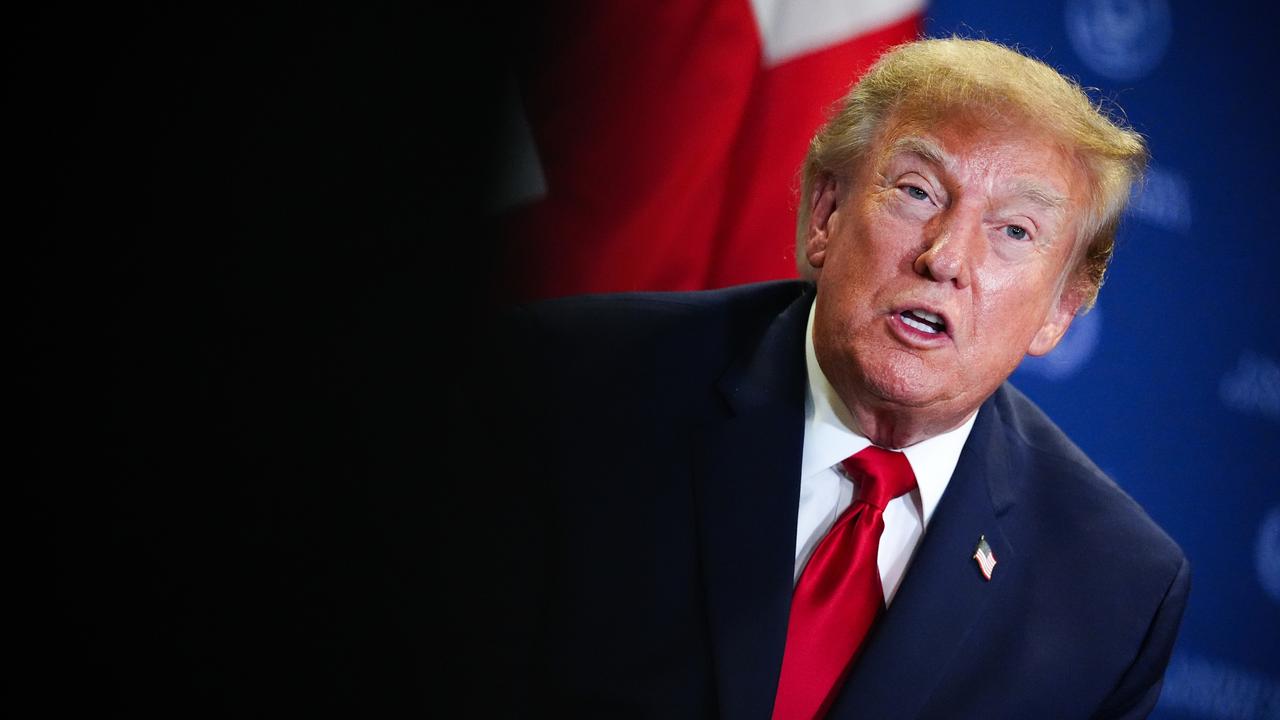
It was a stark contrast to US President Donald Trump’s speech to the UN, who rejected calls by nations to rein it in.
A significant portion of the speech was used to make the case for Australia securing a non-permanent seat on the UN Security Council.
Australia is seeking a two-year term on the council in 2029 and 2030, with intense lobbying happening on the sidelines of the UN.
A vote is not scheduled to take place until mid-2028.
Mr Albanese said Australia would elevate the perspectives of middle powers and smaller nations.
“We understand the UN mission cannot be entrusted solely to the great powers, or the biggest countries, or even the loudest voices alone,” he said.
“Nor can it be sub-contracted to the world’s richest companies or dictated by the pace of technology.”
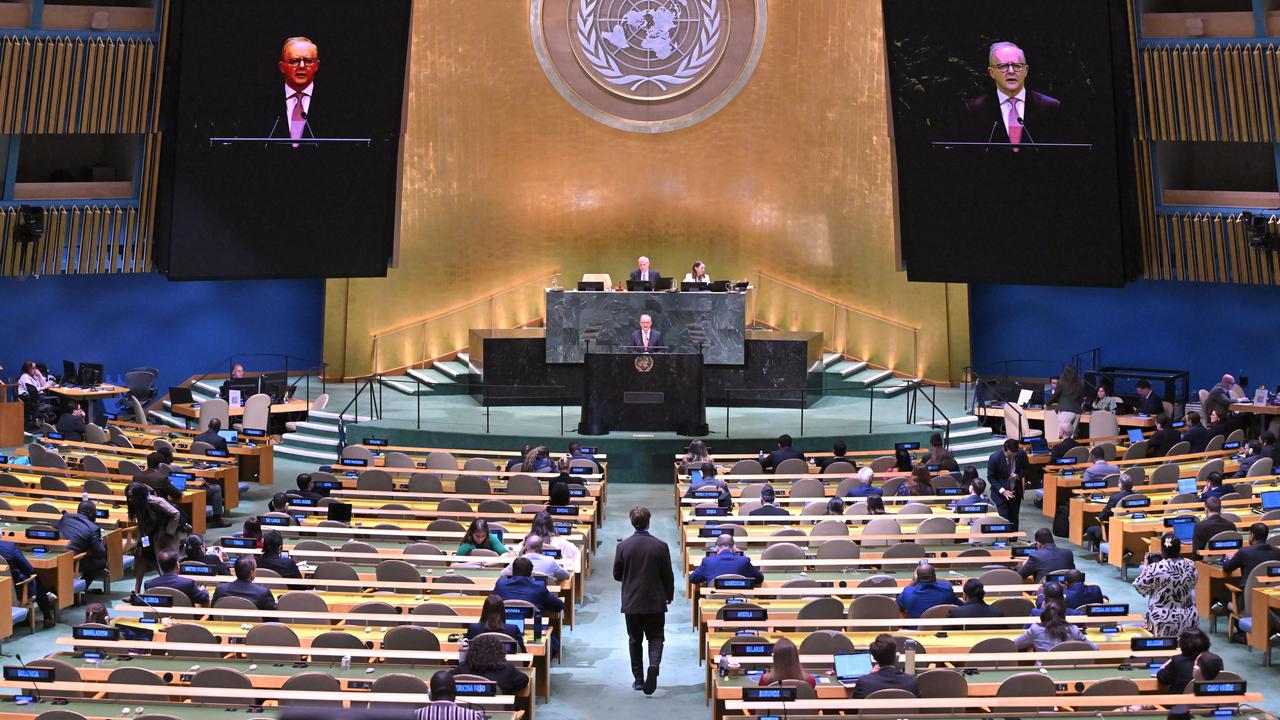
The prime minister also argued the UN needed to adapt to meet modern times.
“Clearly, the multilateral system we have all known and benefited from is under immense strain,” he said.
“To protect the peace, to create a world of human dignity, to do justice to the UN’s mission, we must embrace change and reform.”
One year on from Mr Albanese touting Australia’s world-leading social media ban for under-16s, he provided an update to the UN on how the measures were progressing.
“Australian parents spoke to world leaders about their campaign resulting in our nations’ social media ban for under 16s,” he said
“Those parents channelled their personal grief into a powerful call for global action, and the world has answered.”
Since the ban came into effect in December, more than 20 countries have unveiled their own measures to limit social media access for teenagers.
Mr Albanese also raised the killing of Australian aid worker Zomi Frankcom, who was killed in an Israeli strike in 2024 while working in Gaza, in his address.
He praised the work of Australia and eight other countries to set up a declaration for humanitarian worker protection.
“That declaration outlines practical measures to ensure stronger accountability, safer access, and better protection for aid workers operating in conflict zones,” he said.
“Again, listening, partnering, protecting. Australian values at work.”
AAP